


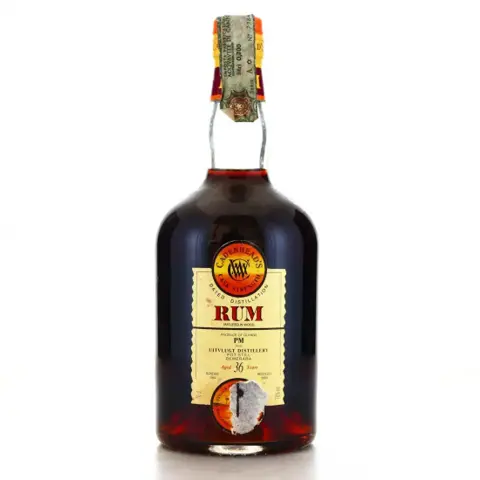
Cadenhead's Uitvlugt PM 1964
 Cadenhead's Uitvlugt PM 1964
Deep, bitter old Demerara pot-still classic
Guyana is the last home of the wooden still, and the only rum country where the place on the label is almost never the place the rum was made. Its rum, called Demerara after the river, went from 109 distilleries to one, and the estates that closed live on as marks: codes for a recipe, not for a machine. Reading them is the whole skill.
RumX market intelligence
As of September 2026
The community's favourite for every occasion, from 320,000 ratings — next to it every bottle that fits.
Ranked by community score, available bottles first.
Cadenhead's Uitvlugt PM 1964Deep, bitter old Demerara pot-still classic
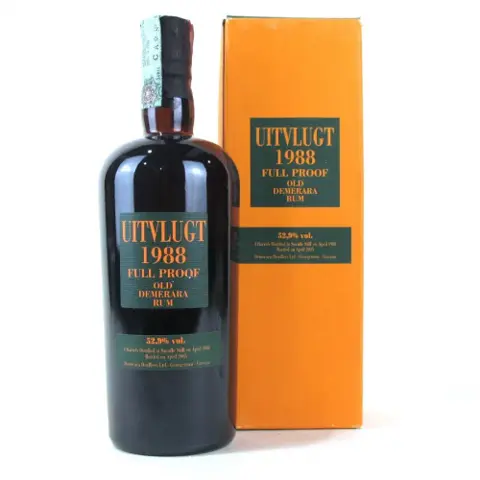 Velier Uitvlugt SP - ICBU SP - ICBU 1988
Deep, balanced tropical-aged Demerara sipper
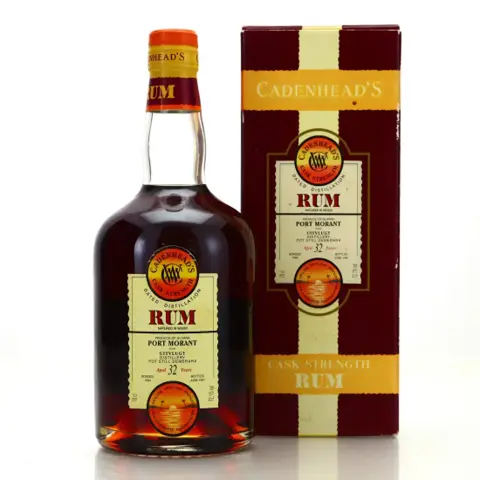 Cadenhead's Uitvlugt (Port Mourant) PM PM 1964
Old Port Mourant, huge proof, drinks round
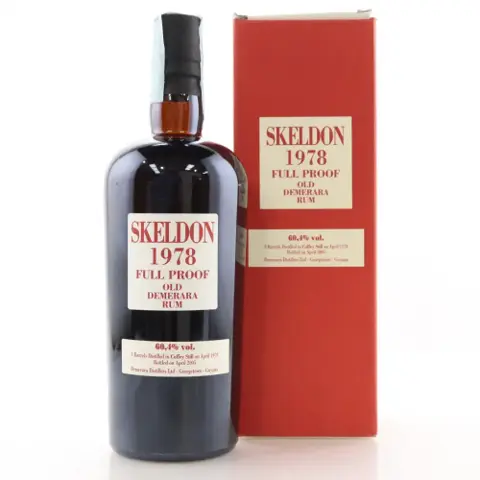 Velier Skeldon SWR 1978
Dark, intense old Demerara with big oak
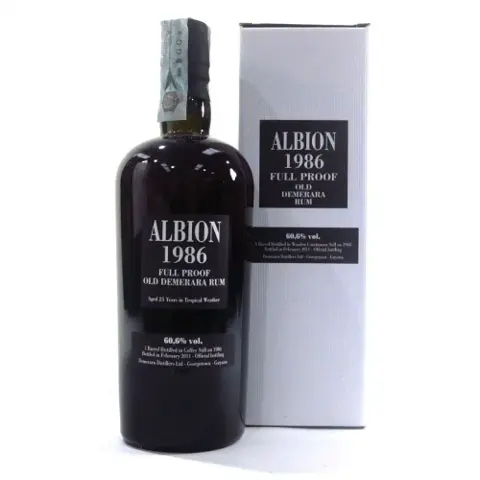 Velier Albion AW 1986
Oily, complex old Demerara sipper
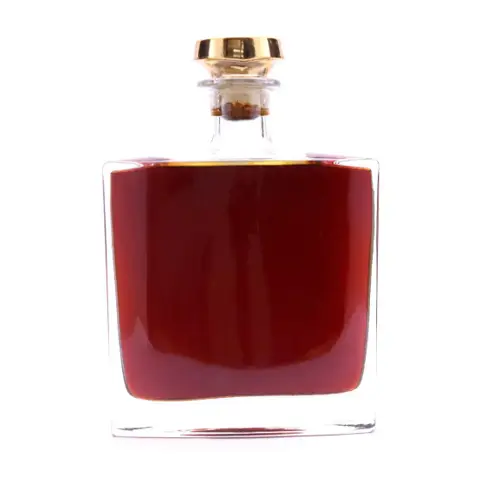 Norse Cask Port Mourant Demerara 1975
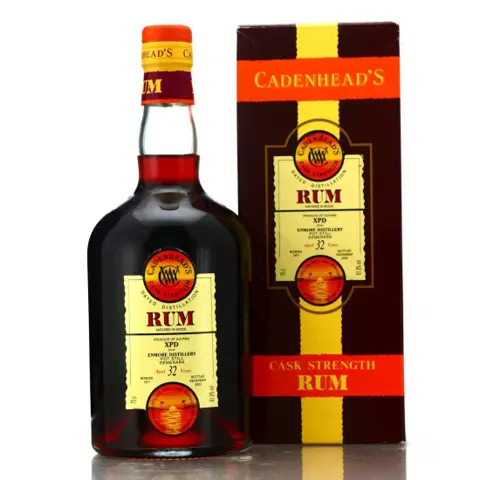 Cadenhead's Enmore XPD XPD 1971
Old Demerara: leather, coffee, burnt sugar
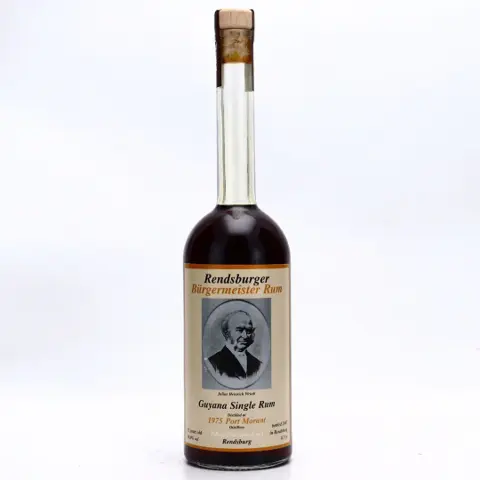 Whisky Krüger Port Mourant Rendsburger Bürgermeister Rum PM 1975
Deep, oily old Port Mourant with heavy wood
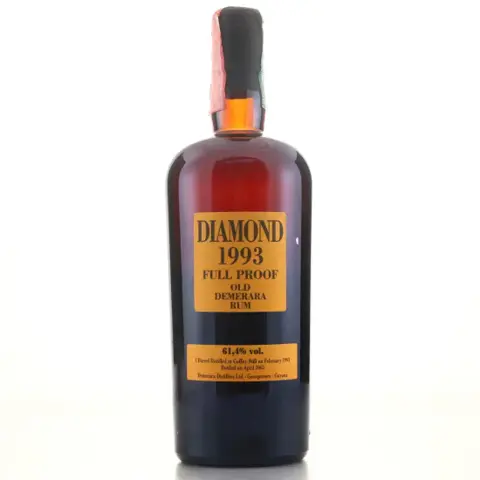 Velier Diamond <>W 1993
Oily, fruity old Demerara at full proof
Added to the most collections recently.
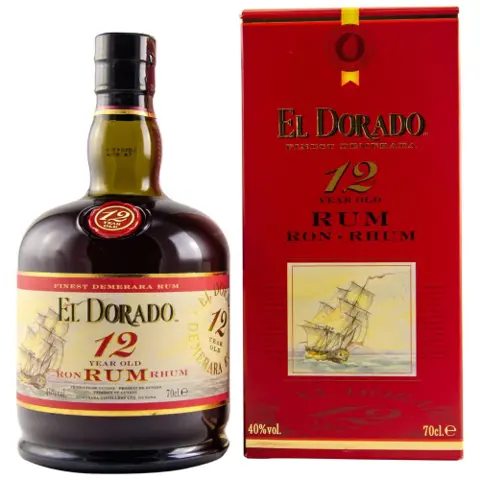 DDL El Dorado 12
Soft, sweet caramel-and-vanilla starter Demerara
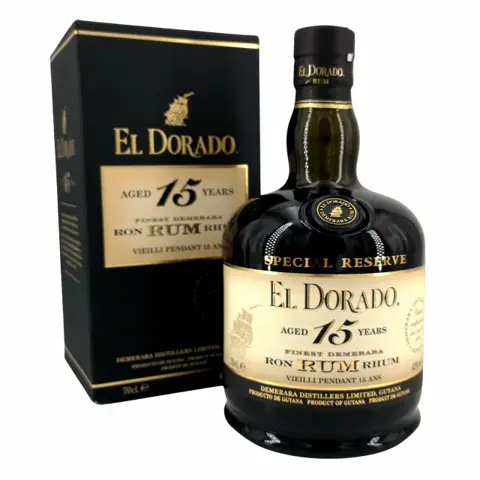 DDL El Dorado 15 (2020 Release)
Easy Demerara daily sipper, wood-forward
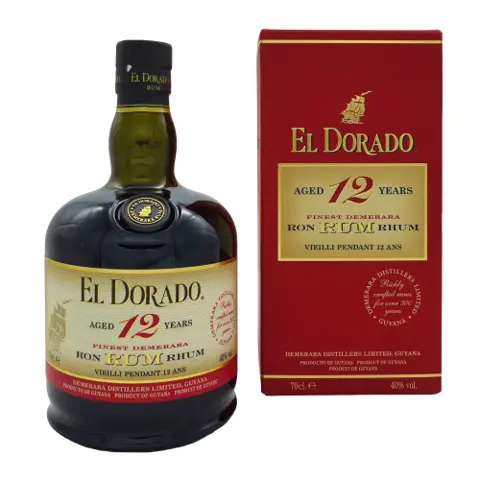 DDL El Dorado 12 (2020 Release)
Easy, caramel-and-raisin Demerara sipper
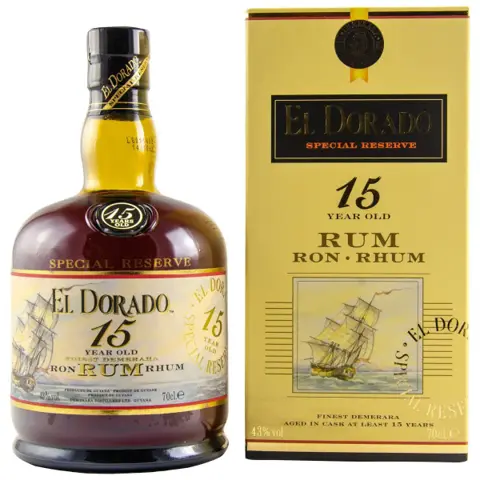 DDL El Dorado 15
Sweet, caramel-rich Demerara starter sipper
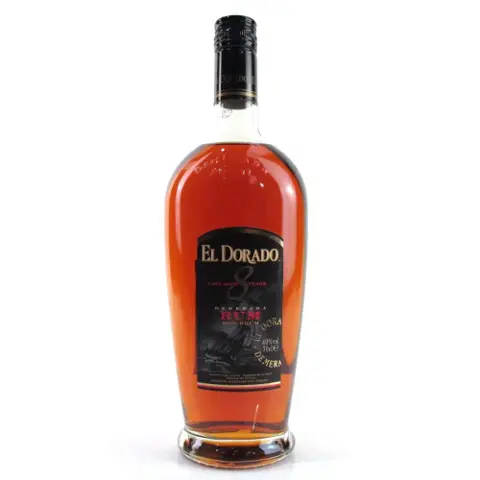 DDL El Dorado 8
Sweet Demerara mixer, simple sipped neat
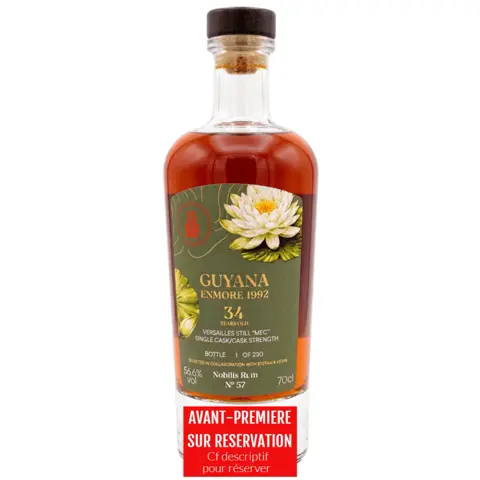 Nobilis Enmore #57 Guyana Enmore 1992 "Bottled for German Rum Fest 2026" Selected in collaboration with Stefan & Kevin MEC
Deep, woody old Enmore for patient sippers
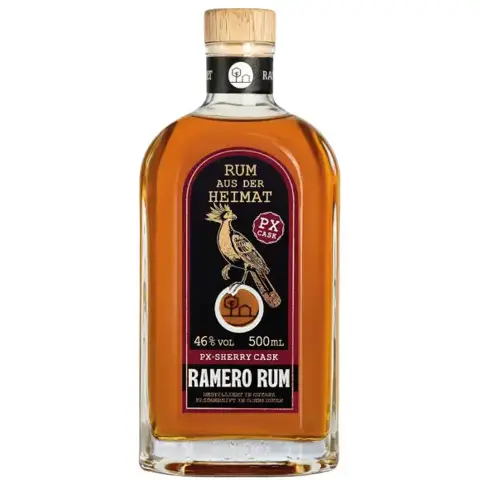 Heimat Distillers DDL Ramero Rum PX-Sherry Cask
Raisin-rich Guyana rum with a PX sherry stamp
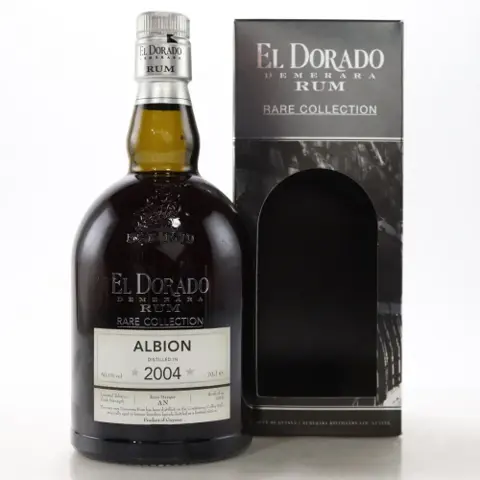 Albion El Dorado Rare Collection AN 2004
Rich, oily Demerara: chocolate, caramel, oak
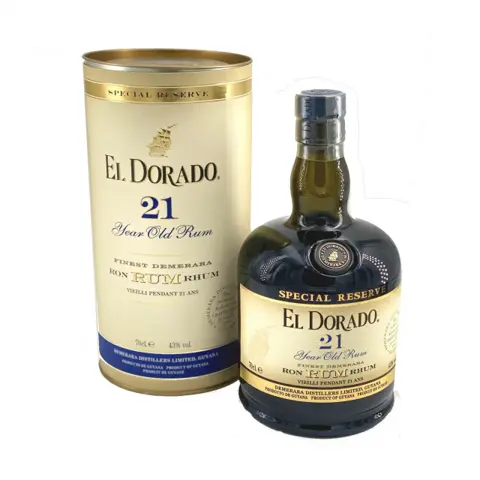 DDL El Dorado 21 (2020 Release)
Dry, woody Demerara sipper, less sweet now
Explore our complete collection. Filter by price, rating, distillery, age, and more to find your perfect rum.
DDL El Dorado 12Soft, sweet caramel-and-vanilla starter Demerara
DDL El Dorado 15Sweet, caramel-rich Demerara starter sipper
Albion El Dorado Rare Collection AN 2004Rich, oily Demerara: chocolate, caramel, oak
DDL El Dorado 15 (2020 Release)Easy Demerara daily sipper, wood-forward
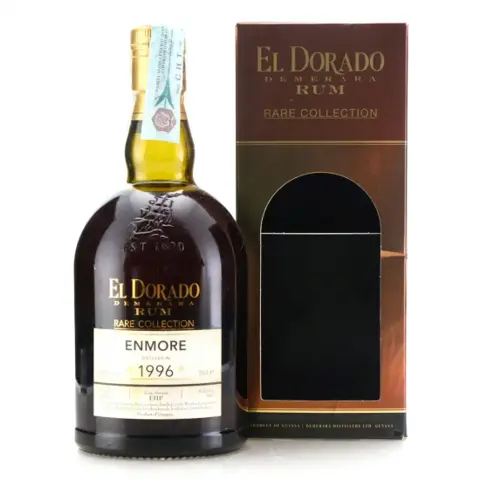 Enmore El Dorado Rare Collection EHP 1996
Complex tropical-aged Enmore, dark fruit and glue
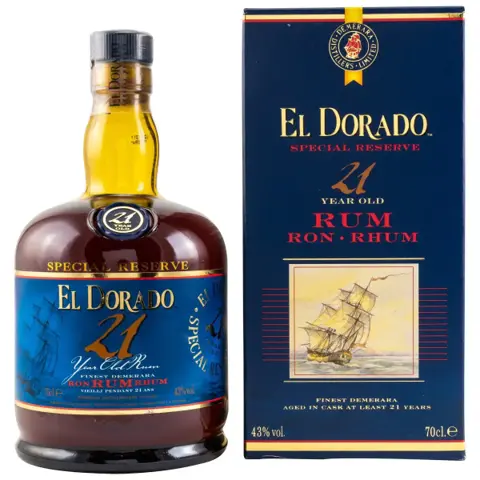 DDL El Dorado 21
Sweet, rounded Demerara sipper with oak
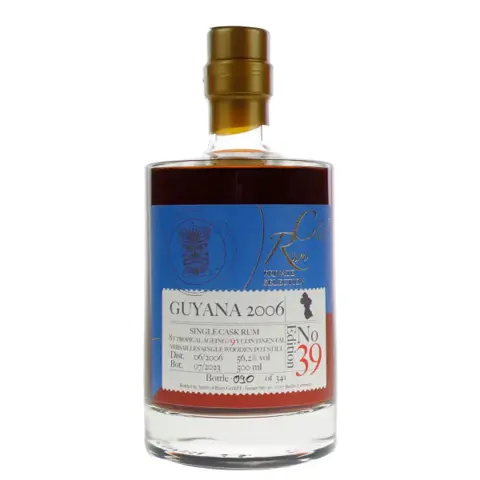 Enmore Rumclub Private Selection Ed. 39 Guyana REV 2006
Heavy, roasted Guyana with prune and licorice
DDL El Dorado 8Sweet Demerara mixer, simple sipped neat
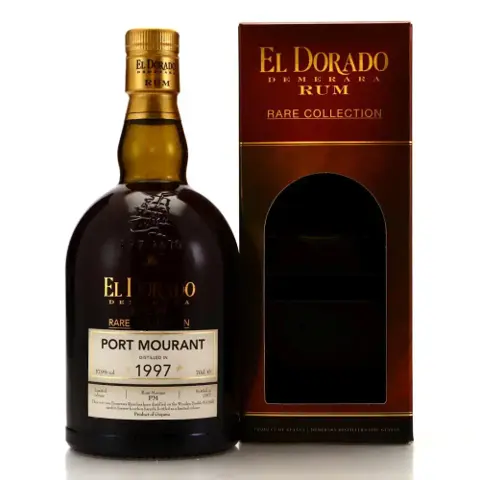 Port Mourant El Dorado Rare Collection PM 1997
Woody, licorice-heavy PM that needs time
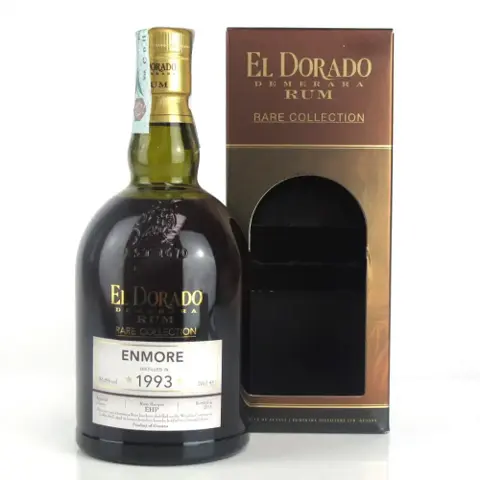 Enmore El Dorado Rare Collection EHP 1993
Warm Demerara sipper, nose beats palate
DDL El Dorado 12 (2020 Release)Easy, caramel-and-raisin Demerara sipper
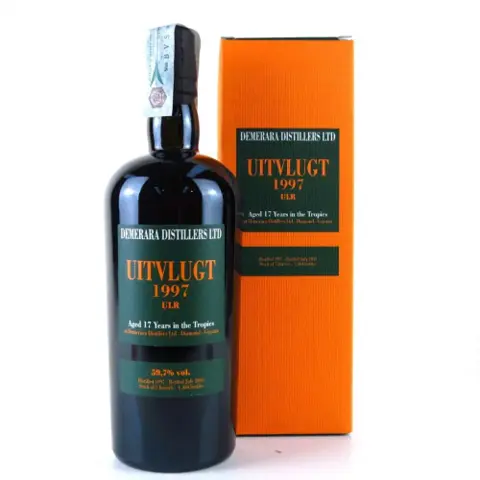 Velier Uitvlugt ULR ULR 1997
Coconut-and-glue Demerara, light yet deeply complex
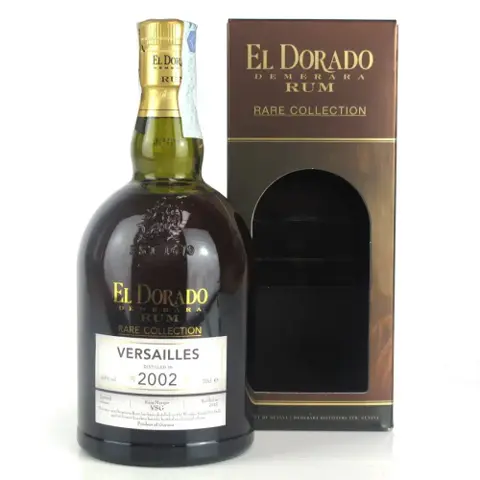 Versailles El Dorado Rare Collection VSG 2002
Dark, dry Versailles with licorice and prunes
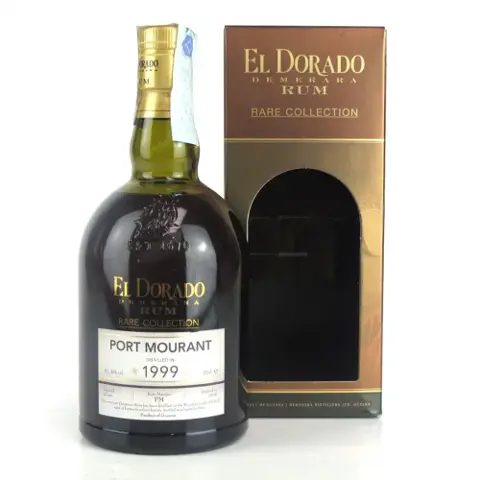 Port Mourant El Dorado Rare Collection PM 1999
Bold tropical-aged Port Mourant for PM fans
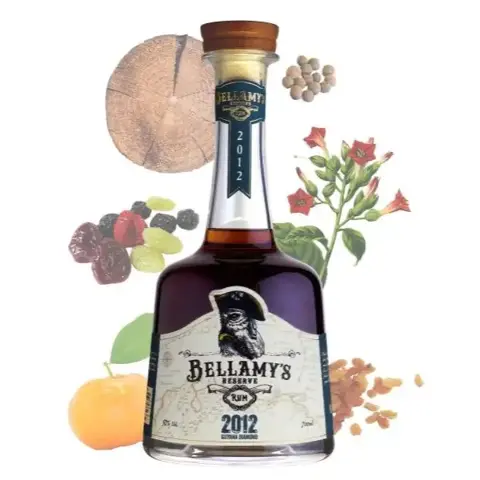 Perola Diamond Bellamy's Reserve MDR 2012
Dark, roasted Guyana daily sipper
 DDL Plantation One-Time Limited Edition 2007
Easy, chocolate-vanilla Guyana sipper, a bit thin
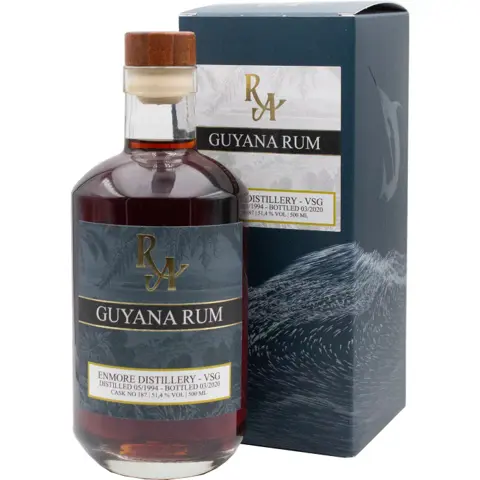 Enmore Rum Artesanal Guyana Rum REV 1994
Oily, plum-and-leather Enmore, deep and balanced
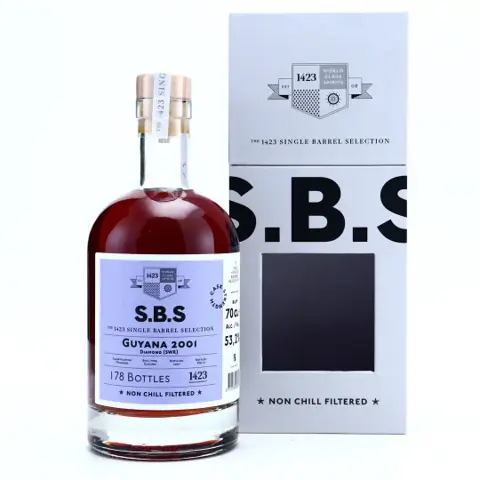 Skeldon S.B.S Guyana SWR 2001
Round, chocolatey Guyana toffee bomb
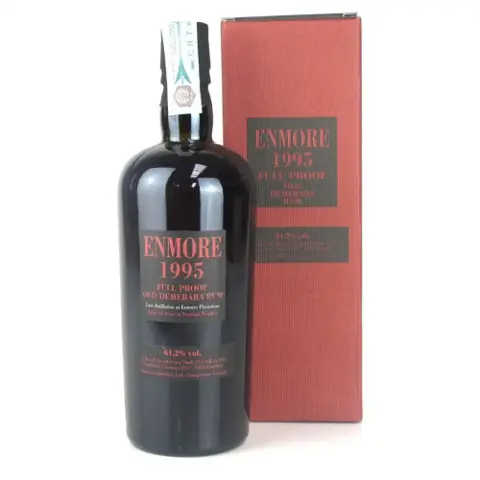 Velier Enmore ELCR ELCR 1995
Dark, complex old Enmore with heat well hidden
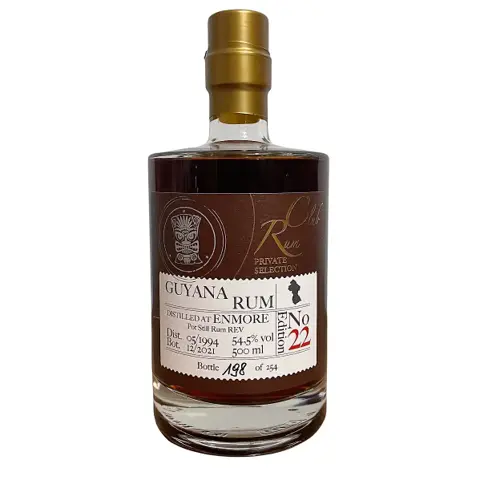 Enmore Rumclub Private Selection Ed. 22 REV 1994
Deep, oily Enmore: plum, black tea, dark chocolate
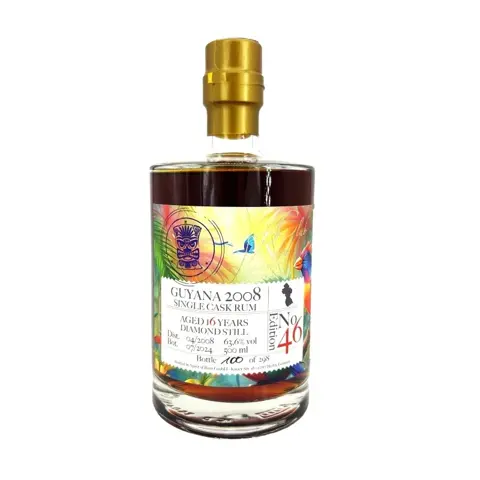 Diamond Rumclub Private Selection Ed. 46 MDS 2008
Heavy dark Demerara, licorice and burnt sugar
DDL El Dorado 21 (2020 Release)Dry, woody Demerara sipper, less sweet now
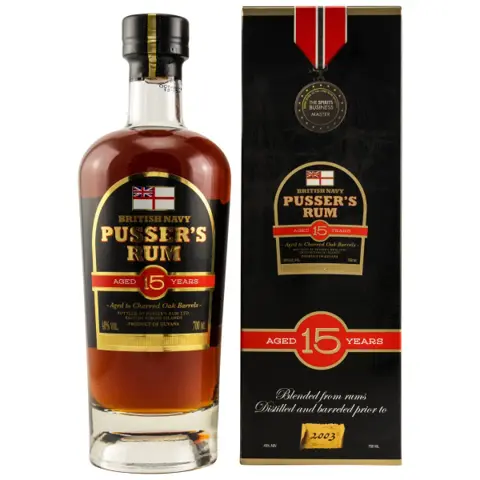 Pusser's Rum Aged 15 Years 2003
Woody, low-sweet Demerara, gentle at 40%
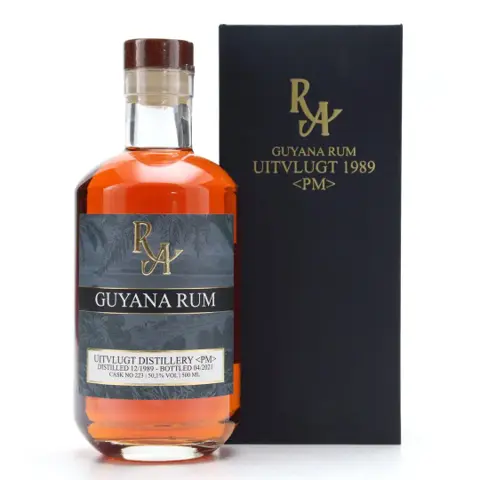 Uitvlugt Rum Artesanal Guyana Rum PM 1989
Mature, herbal PM that trades power for balance
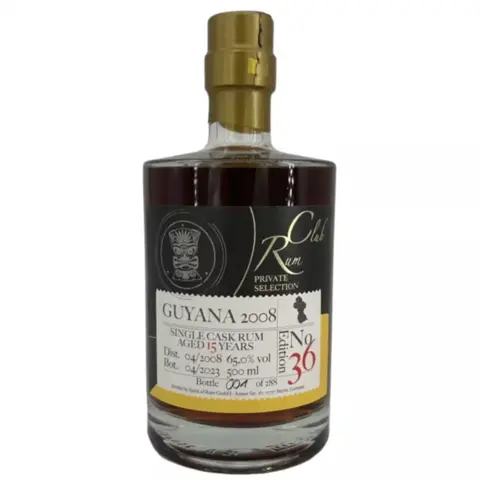 Diamond Rumclub Private Selection Ed. 36 MDS 2008
Heavy, roasty dark Guyana, needs water
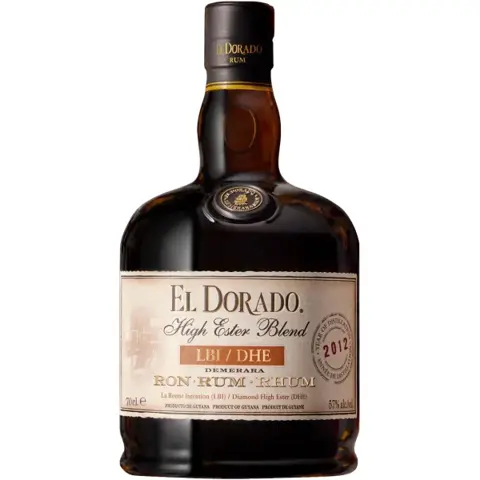 DDL El Dorado High Ester Blend LBI/DHE 2012
Rich chocolate Demerara, not the ester bomb
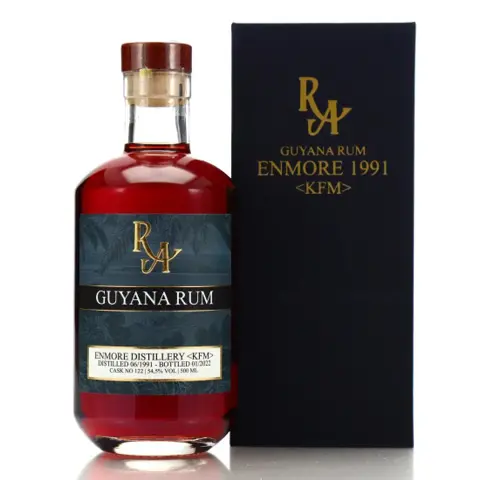 Enmore Rum Artesanal Guyana Rum KFM 1991
Dark, woody old Enmore with a minty edge
 Port Mourant S.B.S Single Origin Rum PM 2021
Salty, unaged Port Mourant, great for mixing
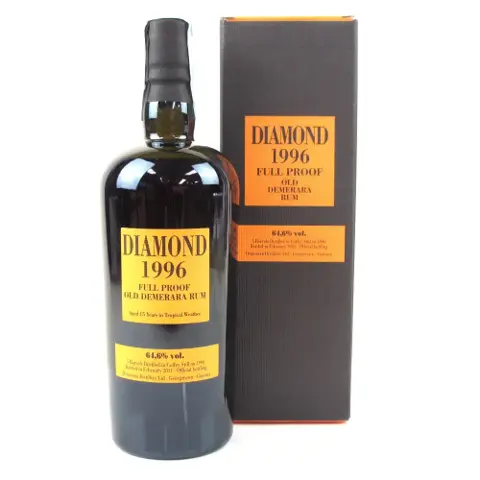 Velier Diamond SVW SVW 1996
Rich, roasted Demerara at full proof
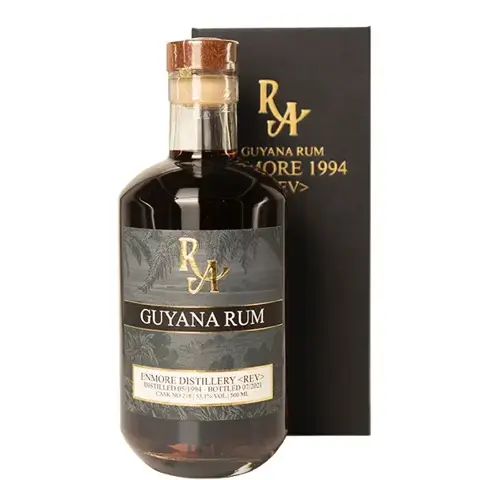 Enmore Rum Artesanal Guyana Rum REV 1994
Deep, herbal old Enmore for sipping
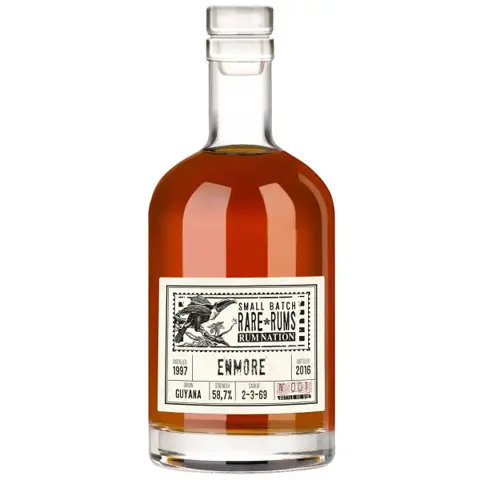 Rum Nation Enmore Small Batch Rare Rums 1997
Ester-heavy Enmore with a spot-on sherry finish
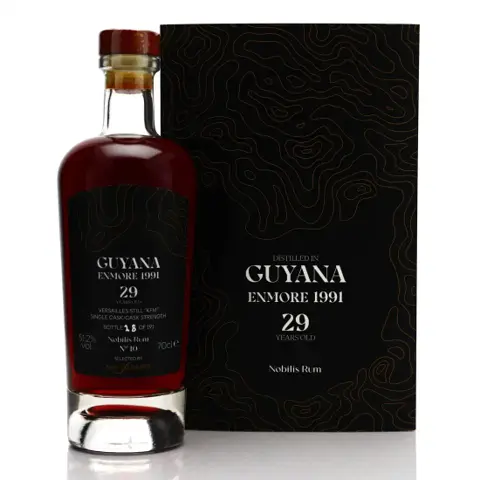 Nobilis Enmore No. 10 (Rum Exchange) KFM 1991
Dark, bitter old Enmore for wood lovers
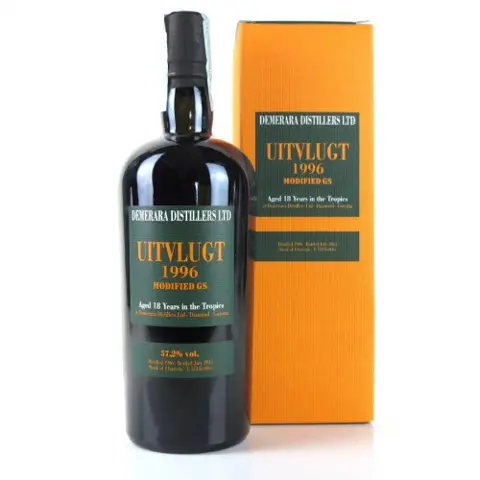 Velier Uitvlugt Modified GS MGS 1996
Oily, coconut-and-spice tropical Demerara
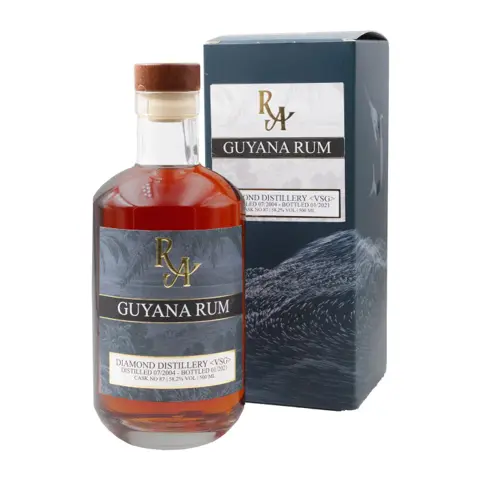 Diamond Rum Artesanal Guyana Rum VSG 2004
Dark, woody Guyana sipper with bite
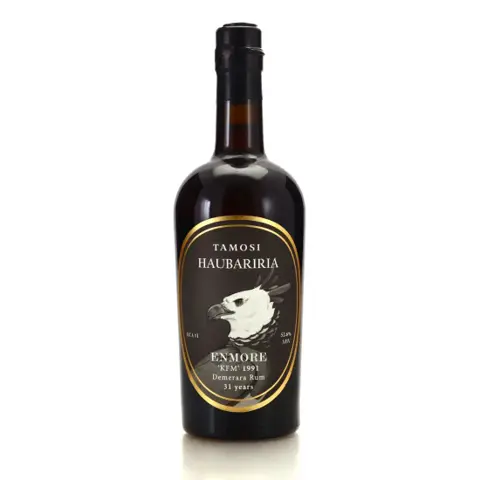 Levy Lane Enmore Tamosi Haubariria KFM 1991
Dark, oily, wood-and-leather Enmore beast
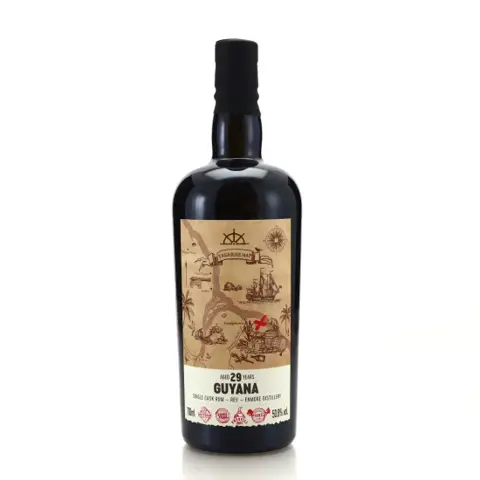 Enmore Flensburg Rum Company Guyana REV 1994
Dark, woody, herbal old Enmore REV
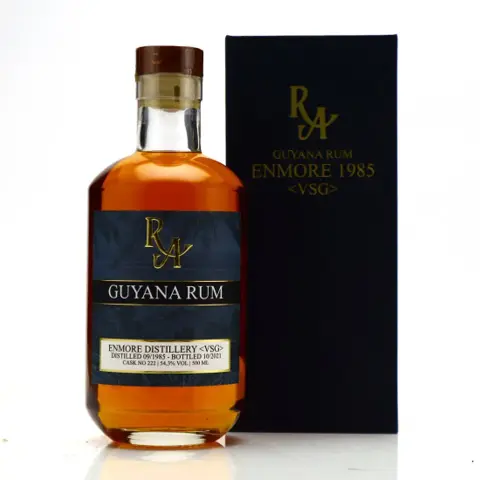 Enmore Rum Artesanal Guyana Rum VSG 1985
Intense graphite-and-herb Enmore, singular stuff
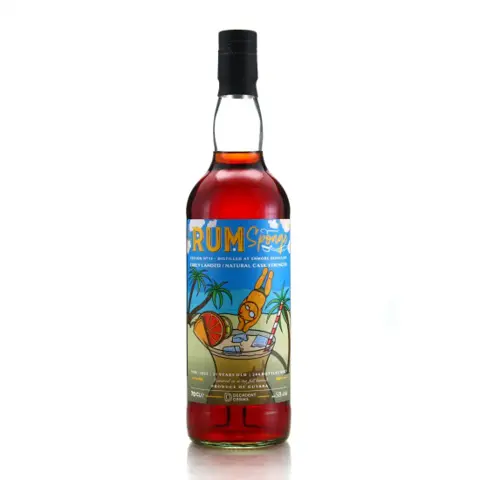 Enmore Rum Sponge No. 15 1992
Balanced old Enmore, licorice and leather
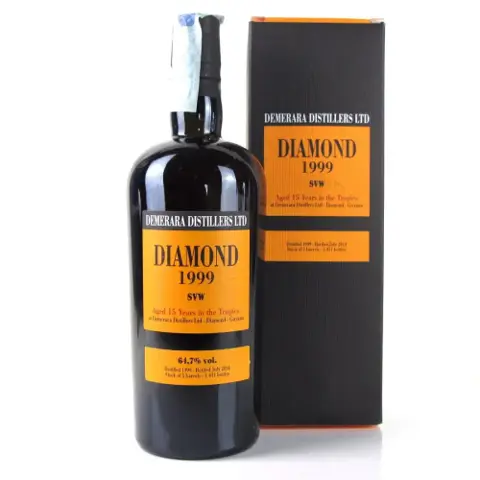 Velier Diamond SVW SVW 1999
Deep coconut-and-chocolate cask-strength Demerara
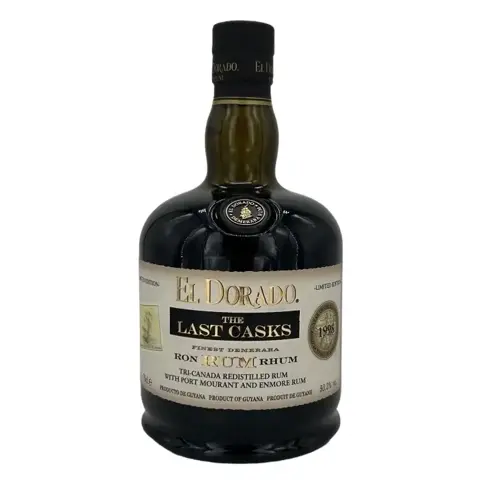 El Dorado The Last Casks (Black) 1998
Oily Demerara sipper, chocolate and dried fruit
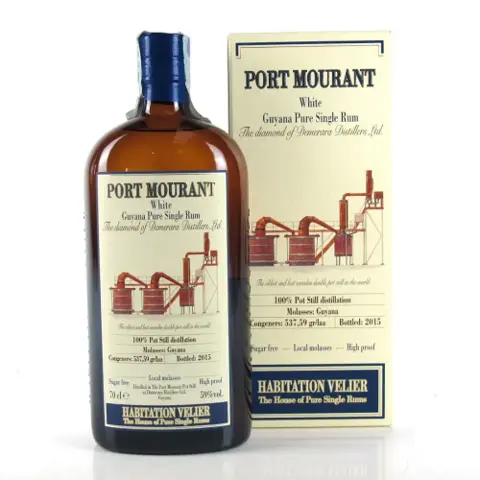 Habitation Velier Port Mourant White 2015
Smoky, green unaged Port Mourant, oddly refined
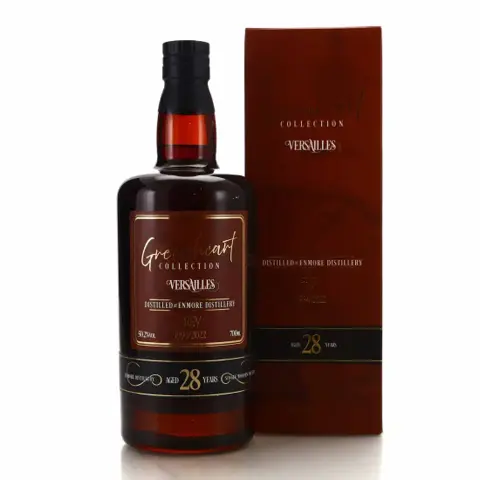 Distilia Enmore (Versailles) Greenheart REV 1994
Dark, woody old Versailles with dried plum
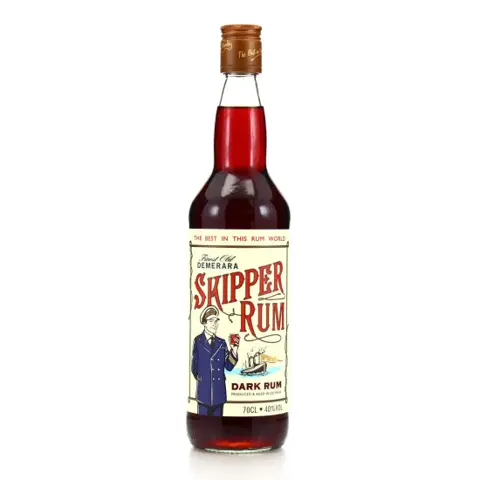 Skipper Dark Rum
Sweet, thin Demerara-style mixing rum
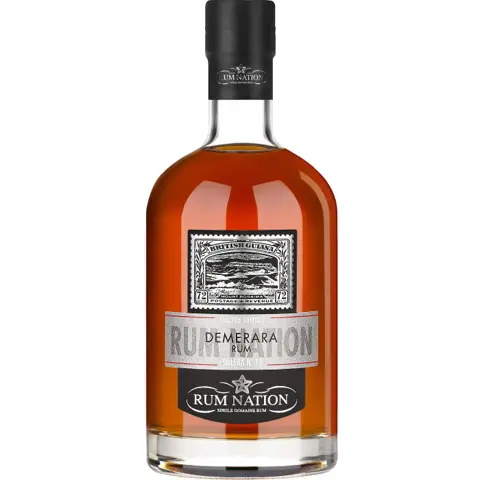 Rum Nation DDL Demerara Rum Solera No. 14 2016
Sweet, chocolate-coffee Demerara, best sipped slow
 DDL El Dorado 15 Vintage
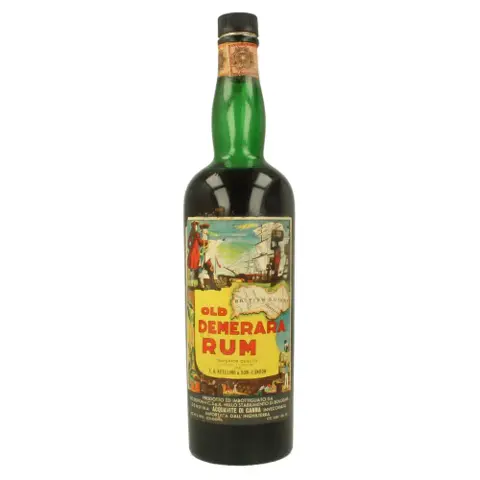 Keeling & Son Diamond Old Demerara Rum (Lic. N°3)
Old-school Demerara, dark and dried-fruity
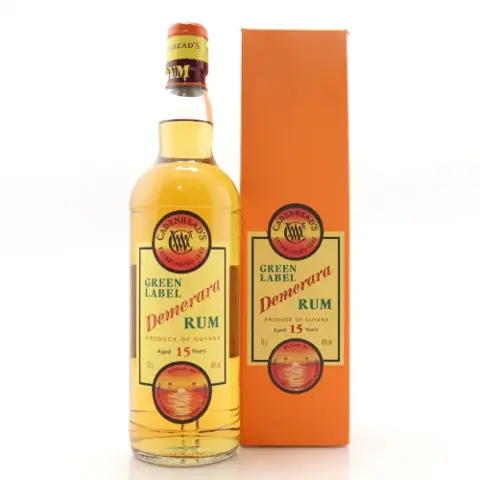 Cadenhead's DDL Green Label
Dry, woody Port Mourant with pencil-shaving edge
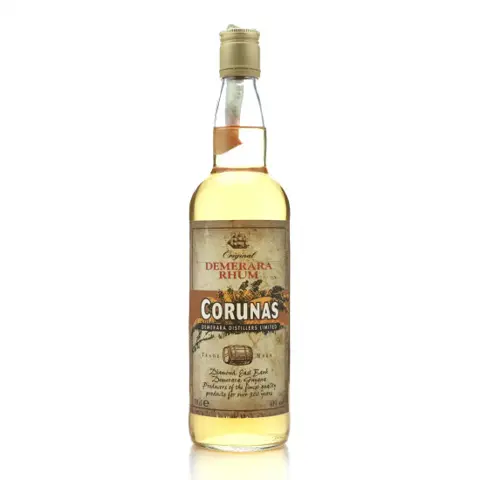 Diamond Corunas Demerara Rum 1990s
Light, fruity Demerara that fades fast
Try adjusting your search criteria or clearing some filters.
Highest community ratings for the price, from live offers.
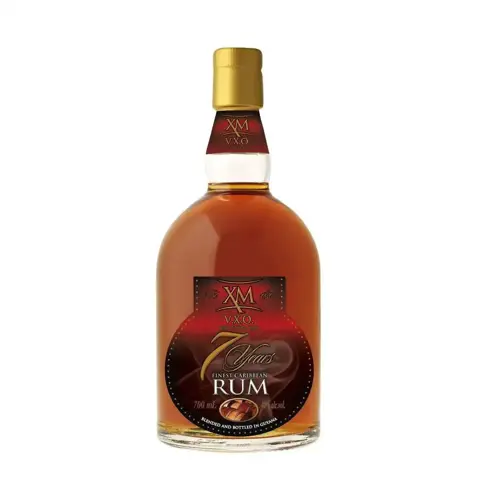 XM VXO
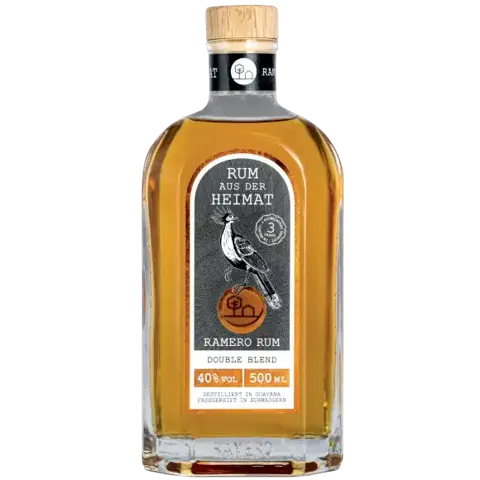 Heimat Distillers Ramero Rum Double Blend
Great nose, watery palate — a divisive young Guyana
Skipper Dark RumSweet, thin Demerara-style mixing rum
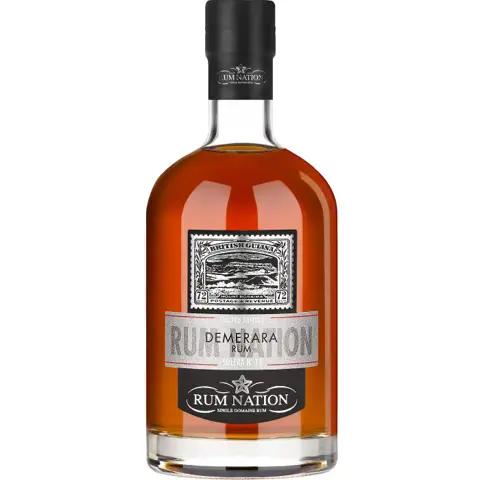 Rum Nation DDL Demerara Rum Solera No.14 2019
Sweet, roasted Demerara with a short finish
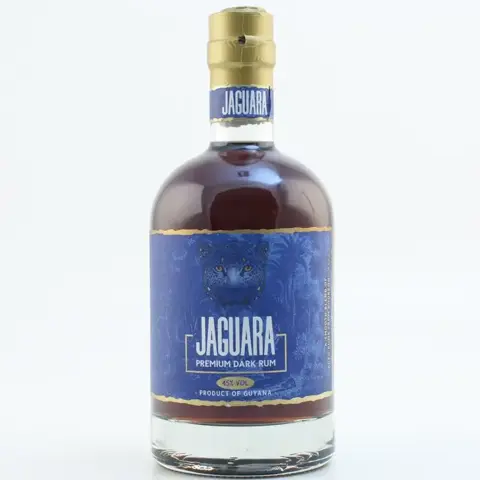 Jaguara Premium Dark Rum
Sweet, caramel-and-coffee everyday Guyana sipper
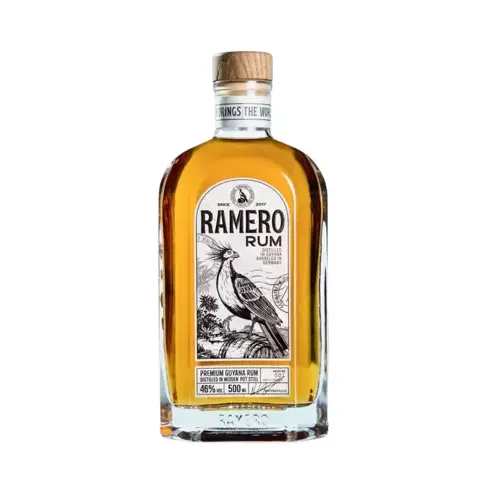 Heimat Distillers Ramero Rum Cask Selection
Roasty, chocolatey nose but thin, young palate
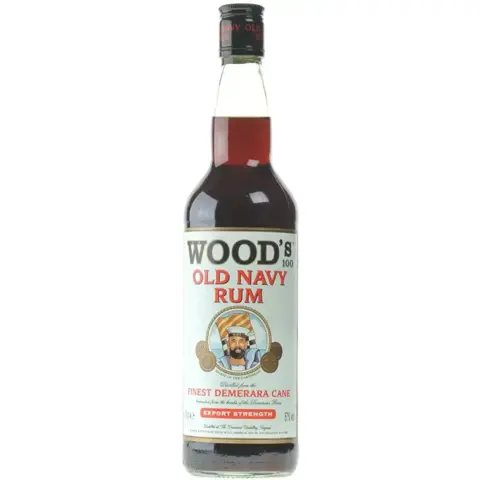 William Grant & Sons Diamond Wood's Old Navy Rum
Dark, heavy Demerara mixer with licorice bite
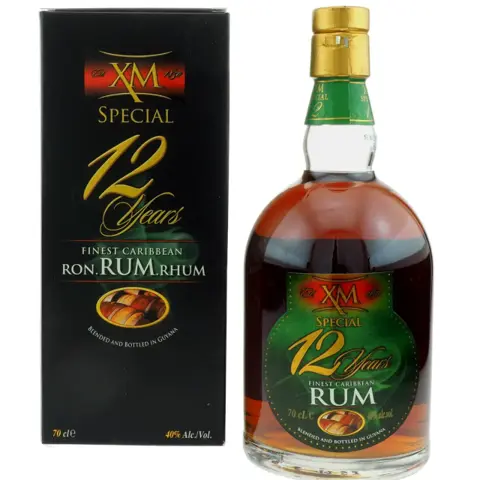 XM Special 12 Years
Sweet, silky Guyana entry sipper
Port Mourant S.B.S Single Origin Rum PM 2021Salty, unaged Port Mourant, great for mixing
20,109 bottles from Guyana bought by the community.
+519 purchases in the last 3 months.
Added to collections, last 12 months — dark bars are the last 3.
as of
Wochenendtripp mit meinem Bruder in unsere alte Heimat Oelde in Gedenken an unseren Vater. Wow, ein übelst überragender Enmore. Sehr röstig, wie erwartbar, dunkle Schokolade ist erkennbar, aber auch Malz, Holz und Fass. Sehr lecker.
Quick edit: as I said, just an 8.8 for me, but since I’m not a big fan of the MECs, that’s a really good rating from me. Tasted together with the Franconian Tasting Gang. Thanks to Jakob for providing the sample. Thanks also to Stefan and Kevin, you really picked a good cask. …
After finding out that Guyana rum without added sugar was on offer here, as a Guyana fan I simply had to try it. It was more than worth it. Roasted coffee with caramelized fruit and chocolate shavings. For me, this is THE rum profile par excellence. A little more mature and …
From memory, I like it a bit more than the other Eldorado blend. I also find the drinking strength of 51.7% quite appropriate and more than enough here. I was really positively surprised.

Zuckerrohr & Destillation in Guyana und später in Süddeutschland in PX (Pedro-Ximénez) Fässern endgelagert. Leider keine zeitlichen Angaben zu beiden Prozessen. Die Nase ist recht schwach, der Gaumen jedoch umso erfreuter. Die 46% sind wirklich hervorragend mit den Aromen …
#6566 28.03.2026 - Part 3 The first online tasting of 2026 of the group we had in Shanghai. Funny that we are now living in different parts of the world again. Singapore, Sweden, UK, Denmark and Thailand 😊 Thank you for the samples Petter. Another good bargain once rested for a …

Great color. The nose is very nice with dark aromas, full, round, and inviting. Dried plum and then a fruity note on top. On the palate, clearly stronger notes of licorice, spiciness, some wood, and again dark dried fruits. The finish has a slight bitter licorice note, but not …
Surprisingly fruity, fresh Enmore! Very unusual, almost Spanish-like! Raspberry, fig, mint, orange peel, glue, and plum on the nose, less wood than expected. On the palate, fig, light coconut, raisin, wood, and grapefruit. In the finish, the raspberry comes back with mint, …
RumX’s 0–10 scale is strict: 8.4 sits in the “Very good” band. 91% of tasters rate it Good or better; only 1% rate it below average. See the full rating guide →
Guyanese rum is sold as Demerara rum, named for the river and region around the capital. Its signature is a heavy, dark, pot-still character. The reason is wood: greenheart, a local timber so hard it cannot be cut with ordinary tools and does not rot underwater, was used to build the stills.
Calling them pot stills is the market's shorthand. A contemporary description from 1908 is more precise: a vat still is a cylindrical wooden vessel of staves hooped with wrought iron, topped by a copper dome, fed into a retort of the Jamaican pattern, with a rectifying column downstream. It is heated by injecting steam, not by fire underneath. Even the Port Mourant still has a column behind it.
And wood was not a quirk, it was the national technology. In 1914, 27 of Guyana's 36 distilleries still ran pot or vat stills, and a 1919 source counts ten large continuous stills built mostly on site from local greenheart. Guyana is simply the last place where any of them survived.
The collapse is documented year by year. Guyana had 109 distilleries in the 1880/81 fiscal year. Then 55 by 1898/99, 42 still active in July 1906, 36 in 1914, 30 in 1921, and just nine from 1938 onwards. Five were left at independence in 1966, three by 1971, and today exactly one: Demerara Distillers at Diamond.
The first and steepest fall had nothing to do with rum. European governments poured subsidies into beet sugar through the 1880s, the United States put a tariff on sugar in 1893, and cane colonies that lived off one crop were hit at the root. Half of Guyana's distilleries died in twenty years because the sugar under them did.
What makes Diamond a living museum is not that everything was saved. Most of it was scrapped. Four sets of apparatus survived: the Port Mourant double wooden vat still, the Versailles single wooden vat, the Enmore wooden Coffey still, and the French Savalle columns from Uitvlugt. Everything else lives on as a recipe.
The estate names are people, mostly. Blairmont belonged to Lambert Blair, an Irish merchant, and started out as Blair Mount. Versailles came from a French owner, Pierre L'amirault, and locals say it Ver-sales. Skeldon is named after a Scottish estate in Ayrshire that William Ross left behind when he sailed for Berbice at seventeen. Diamond traces to a land grant made to John Carter in 1753.
Every closed estate lives on as a mark, a short code stamped on the cask. It is tempting to read a mark as a machine, and almost every guide does. That is wrong, and the exceptions prove it: the mark KFM belongs to the Lusignan estate, but a Cadenhead bottling from 1991 carrying it was distilled on the Versailles wooden pot still. The Albion mark AW has been made on at least three different stills over the decades.
A mark tells you the intended style. Which machine produced it has changed, sometimes more than once. That is the useful thing to know, because it means a mark can outlive its distillery, its still, and its estate, and still taste like itself.
The scores back this up. The highest median on RumX belongs to XPD at 9.5/10 across three bottles, then AN and ELCR at 9.1/10, and REV at 9.0/10. These are marks, not brands, and you will not find them on a front label.
| Code | Estate | Where the code comes from | Made today on |
|---|---|---|---|
| PM | Port Mourant | The estate name | The double wooden vat still, the original |
| EHP | Enmore | E. Henry Porter, who gave the estate its name | The wooden Coffey still, the original |
| VSG | Versailles | Versailles plus the estates it swallowed, Schoon Ord and Goed Fortuin | The single wooden vat still, the original |
| REV, MEV, MEC | Enmore and Versailles | Styles from the years the Versailles still stood inside Enmore | The surviving wooden stills |
| KFM | Lusignan | Kenneth Francis Mackenzie, who bought the estate around 1790 | A wooden still, though never Lusignan's own |
| SWR | Skeldon | Disputed: Skeldon William Ross, the founder, or Sir William Russel | A recreation. Skeldon's own stills did not survive |
| AN, AW | Albion | AN for Albion and Nigg, neighbouring estates listed together in 1841 | The French Savalle column. Albion's wooden Coffey was scrapped |
| ICBU, ULR | Uitvlugt | Disputed: a garbled form of the Dutch founder Boode's name. ULR is Uitvlugt Light Rum | The French Savalle column, the original |
| SVW, DLR | Diamond | Diamond's own marks, SVW documented there in the 1950s | The metal Coffey and column stills |
| B, LBI | Blairmont, La Bonne Intention | The estate names, B usually drawn inside a diamond | Recreations. Neither estate's stills survived |
Here is the part nobody tells you when you buy a bottle labelled Albion or Skeldon. Those distilleries were already closed. Not recently, decades before the rum in the bottle was distilled.
We can check this, because we hold both halves: the archive says when each distillery stopped, and our catalogue says when each bottle was distilled. For six of the eight closed estates, not a single bottle with a recorded vintage predates the closure. The El Dorado Skeldon SWR 2000 was distilled forty years after Skeldon shut. The Velier Blairmont 1991 came twenty-nine years after Blairmont did.
This does not make them fake, and it is not a reason to avoid them. Both of those score 9.0/10 with our community. It changes what you are buying. Where the still survived, you get the same machine in a different building. Where it did not, you get a careful recreation of a style on other equipment. Both are real Demerara. Only one is the original machine.
| Estate | Distillery closed | Oldest vintage we list | What that means |
|---|---|---|---|
| Port Mourant | 1955 | 1964 | Same still, moved twice |
| La Bonne Intention | 1959 | 1985 | Style recreated elsewhere |
| Skeldon | 1960 | 1973 | Style recreated elsewhere |
| Blairmont | 1962 | 1982 | Style recreated elsewhere |
| Albion | January 1968 | 1983 | Style recreated on the Savalle column |
| Versailles | November 1978 | 1984 | Same still, moved to Enmore |
| Enmore | April 1994 | 1962 | Real estate rum exists, 17 vintages before the closure |
| Uitvlugt | December 1999 | 1964 | Real estate rum exists, 16 vintages before the closure |
Not from the wood. Demerara's colour is a tradition of addition, and we know the recipe because a planter wrote it down. Alexander Mac Rae ran the Lusignan estate, the one behind the KFM mark, and in 1856 he published how to make colouring for rum: take the best sugar, melt it over its own fire, stir it constantly with a wooden paddle so it never picks up "a singed taste or flavour", then thin it not with water but with high wines, rum feints, until it reaches the consistency of thick cream.
It was then settled in a cask fitted with two taps, one two inches from the bottom and one six, so the sediment could drop out below and the clear colouring could be drawn off above. About three pints per 100 gallons of spirit. Mac Rae's warning is the one that still matters: too much and the rum turns cloudy, "and when rum is cloudy the value of it is very greatly deteriorated".
Colour was a market specification, not a quality signal. A 1949 government report is blunt about it: Canada and northern Britain wanted their rum dark, true Nelson's blood, the Midlands wanted a paler shade, and the south of England preferred it almost white. Same rum, different customers, different amount of burnt sugar. The modern version of that argument is about sweetening rather than colouring, and if you would rather avoid both, start with the unsweetened rums.
Guyanese used to joke that British Guiana should really be called Bookers Guiana. Josias Booker arrived in 1815 and founded Booker Brothers in 1834. By 1917 the group owned Port Mourant, Skeldon, Uitvlugt, La Bonne Intention and more, and a merger in 1939 added Albion and Enmore. Then in 1947 it absorbed United Rum Merchants, which held the rights to Lamb's Navy Rum, Lemon Hart, Red Heart and Black Heart.
So when a guide tells you those navy brands relied on Demerara rum, that undersells it. They were not customers, they were the same company. Bookers owned the cane, the distilleries, the blend and the label, with only Seagram's OVD and Wood's opposite them. It was a Diageo before Diageo existed. And it was Bookers' own rationalisation that killed the estates: Uitvlugt was rebuilt in 1960 to absorb the output of four distilleries, and La Bonne Intention, Skeldon, Blairmont and Albion were shut to feed it. Nationalisation ended the group's grip in 1976.
The other half of that story belongs on the same page. This industry ran on enslaved people until 1838, and the compensation paid at emancipation went to the owners, not the enslaved: 83,530 pounds to the Blairmont estate's owner for 1,598 people, 35,960 to Enmore's for 569. What followed was indenture, 238,909 workers brought from India between 1838 and 1917. Strikes over pay were answered with gunfire more than once, at Rose Hall in 1913 and at Ruimveldt in 1924. In June 1948, five workers were shot dead at Enmore. The memorial to the Enmore Martyrs still stands where the sugar estate does.
Guyana runs to 1,671 bottles and 24,345 community ratings on RumX, at a median of 8.2/10. The gateway is El Dorado, especially the 12 Year and the 15 Year.
The interesting part is the ranking. The official brand scores lowest of any Guyanese producer page we run, at 7.8/10, while the dead estates sit at the top: Albion and Blairmont both at 9.0/10, Skeldon at 8.9, Enmore at 8.8. That is not an independent-bottler reflex, it has a mechanism. Those estate names only ever reach the market through independents buying single marks at cask strength. There is no supermarket version of Blairmont. Meanwhile the official range is blended, cut to 40 to 43 percent and sweetened.
One more thing changes what you are holding. Since 1978 rum has left Guyana almost entirely in stainless steel tanks, not casks. Whoever fills the barrel is the European buyer, not the distillery, which is why cask quality on independent Demerara is the bottler's responsibility, and why the occasional bottling comes out oddly pale. It is also the real reason a bottle says tropical or continental ageing.
Love rums from Guyana? The journey doesn't stop here. Download the RumX app to explore an even more extensive selection of rums from Guyana and around the world. With features like collection management, personalized recommendations, tasting notes, and a bustling community of rum enthusiasts, our free app offers the ultimate rum experience, right in your pocket.


