
Damoiseau VO

Damoiseau
Damoiseau VO6.9/10 (120 reviews)
Dried fruit · Vanilla · Grass
8.0/10 (1,375 reviews)
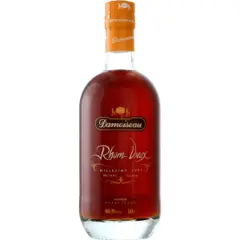 Damoiseau 1995
8.8/10 (117 reviews)
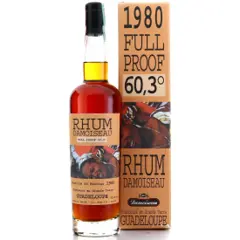 Velier Damoiseau Full Proof 1980
9.2/10 (98 reviews)
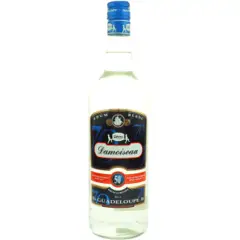 Damoiseau Blanc
7.0/10 (68 reviews)
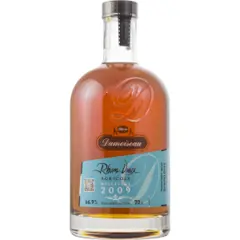 Damoiseau 2009
8.1/10 (63 reviews)
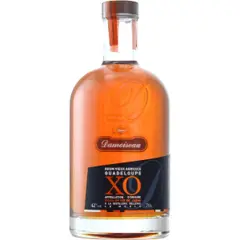 Damoiseau XO
7.5/10 (61 reviews)
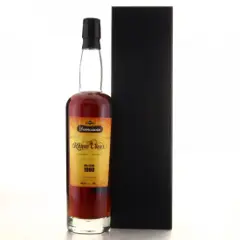 Damoiseau Rhum Vieux 1980
9.3/10 (57 reviews)
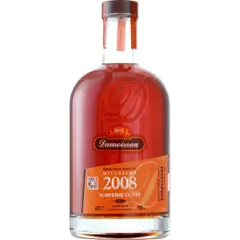 Damoiseau Subprime Cuvée 2008
8.2/10 (55 reviews)
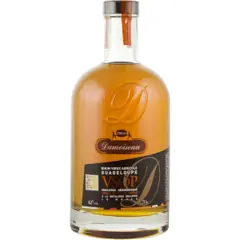 Damoiseau VSOP
7.0/10 (54 reviews)
Damoiseau is the last working distillery on Grande-Terre, family-owned since 1942 and holder of Guadeloupe's largest agricole export quota. Behind its everyday shelf stands an archive of cask-strength vintages, and almost nobody buying the first knows about the second.
95 bottlings, 30 of them available, prices from 40 partner shops. As of October 2026.
Prices incl. VAT and shipping to incl. VAT & shipping to How we rank
By default, what matches your search and filters comes first. Where the match is equal, the rums currently most popular on RumX come first, then those with more ratings. The “Sort” menu shows which order applies and lets you sort by score, number of ratings or price.




Change your search or remove some filters.
Among rums with at least 30 ratings, Damoiseau Rhum Vieux 1980 leads with 9.3/10 from 57 ratings. The most rated is Damoiseau VO with 6.9/10 from 120. The 95 bottlings with a known strength range from 18 to 69% ABV; half of them sit between 42 and 50%.
| Bottling | Age | ABV | Rating | Priceincl. shipping |
|---|---|---|---|---|
| Damoiseau Rhum Vieux 1980 | — | 60,3% | 9.3/10 (57 reviews) | not available |
| Velier Damoiseau Full Proof 1980 Column Still Rum | 18 years | 60,3% | 9.2/10 (98 reviews) | 861.90 € 1,212.86 € per litre |
| Damoiseau Rhum Vieux 1980 Column Still Rum | 18 years | 60% | 9.1/10 (21 reviews) | not available |
| Velier Damoiseau 1991 Column Still Rum | 15 years | 56,3% | 9.1/10 (19 reviews) | not available |
| Velier Damoiseau 1995 Column Still Rum | 10 years | 66,5% | 9.1/10 (11 reviews) | not available |
| Velier Damoiseau 1989 Column Still Rum | 17 years | 58% | 9.0/10 (16 reviews) | 1,194.50 € 1,672.14 € per litre |
| Damoiseau 1995 Column Still Rum | 14 years | 66,9% | 8.8/10 (117 reviews) | not available |
| Roots Damoiseau Bellevue 1998 | 24 years | 51,5% | 8.8/10 (40 reviews) | not available |
| Damoiseau 1989 Column Still Rum | 20 years | 58,4% | 8.7/10 (50 reviews) | not available |
| Damoiseau 1991 Column Still Rum | 18 years | 54,4% | 8.7/10 (30 reviews) | not available |
| Damoiseau Rhum Vieux Vintage 1953 Column Still Rum | 31 years | 42% | 8.6/10 (39 reviews) | 1,302.90 € 1,842.86 € per litre |
| TCRL Damoiseau Grande-Terre Le Moule 1998 Column Still Rum | 19 years | 59,3% | 8.4/10 (38 reviews) | not available |
| Damoiseau Rhum Vieux Cuvée du Millénaire 1986 Column Still Rum | 15 years | 42% | 8.4/10 (18 reviews) | 267.90 € 364.29 € per litre |
| Damoiseau Subprime Cuvée 2008 Column Still Rum | 8 years | 47,9% | 8.2/10 (55 reviews) | 88.18 € 106.11 € per litre |
| Damoiseau 2009 Column Still Rum | 7 years | 66,9% | 8.1/10 (63 reviews) | not available |
| Damoiseau 12 ans d'âge Column Still Rum | 12 years | 42% | 8.1/10 (16 reviews) | 119.60 € 156.64 € per litre |
| Damoiseau Rhum Vieux Cuvée du Millénaire 2002 Column Still Rum | 8 years | 42% | 8.0/10 (28 reviews) | not available |
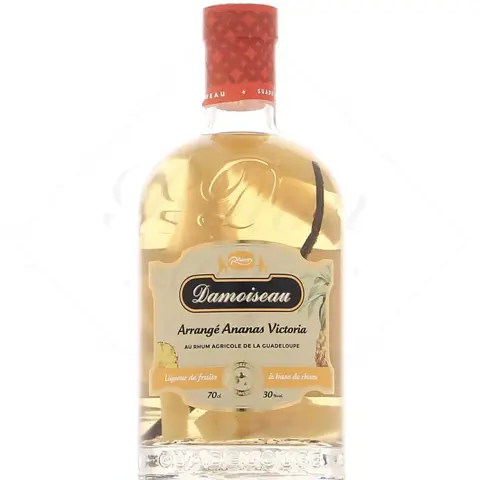
| Damoiseau Les Arrangés Ananas Victoria Rum Based Spirit | — | 30% | 8.0/10 (14 reviews) | 46.85 € 57.00 € per litre |
| Damoiseau Rhum Vieux Agricole | 15 years | 42% | 7.9/10 (19 reviews) | 110.98 € 194.16 € per litre |
| Damoiseau Blanc White Rum | Unaged | 55% | 7.9/10 (13 reviews) | 45.53 € 31.63 € per litre |
| Damoiseau 2009 Column Still Rum | 7 years | 42% | 7.8/10 (16 reviews) | 76.85 € 99.86 € per litre |
| Damoiseau Rhum Vieux Agricole Guadeloupe 8 Ans d'Age Column Still Rum | 8 years | 42% | 7.8/10 (15 reviews) | not available |
| Damoiseau Rhum Vieux Agricole 10 Ans 2001 Column Still Rum | 10 years | 42% | 7.6/10 (28 reviews) | 111.98 € 140.11 € per litre |
| Damoiseau XO Column Still Rum | 7 years | 42% | 7.5/10 (61 reviews) | 77.27 € 90.53 € per litre |
| Damoiseau VO Column Still Rum | 3 years | 42% | 6.9/10 (120 reviews) | 49.50 € 50.86 € per litre |
25 of the 34 bottlings with at least 10 ratings are listed here; the rest are in the catalog above.
The median score is 8.0, which means “Very good”. 81% of ratings are good or better, 2% are below average.
Added to the most collections recently.
Highest community ratings for the price, from live offers.
2,444 bottles logged in tasters' collections, including opened and emptied ones.
+61 additions in the last 3 months.
Additions per month over the last 12 months; dark bars: the last 3.
as of
RumX Guide
Damoiseau, explained
Not under EU rules: the Les Arrangés line, the Shrubb and the Crème au Rhum are flavoured spirits built on rum, and RumX lists them as spirit drinks on a rum base rather than as rum. In the EU a rum may not be flavoured, and that alone decides the different name, not the quality of the rum inside. They are made for serving chilled or in a cocktail, not for judging the distillery by. We explain the rule in the guide to rum.
The VO at three years, the VSOP at four and the XO at seven are blends bottled at 42 percent and made in volume, while the vintages are single years at cask strength, often 55 to 67 percent, aged far longer and released in small numbers. The RumX community finds the VO woody with dried fruit and grass, the VSOP spicy with citrus and cane, the XO woody, vanilla and dry. That is the everyday Damoiseau: a volume product for everyday drinking, not a shelf built around collectors. If you want an aged bottle from the standard range, take the XO, the oldest of the three.
The vintages are the other part of the catalogue and almost a different distillery in the glass, from the house's own Rhum Vieux 1980 to the Damoiseau 1995 at 66.9 percent. Several carry an independent bottler's label: Velier has bottled several Damoiseau vintages, the Full Proof 1980 among them, Maison Ferrand has released casks under the Plantation Old Reserve label, and single casks from Roots, Transcontinental Rum Line, Berry Bros & Rudd and Moon Import sit alongside. Younger vintages such as the Subprime Cuvée 2008 and the Damoiseau 2009 show the same style. The real recommendation is to leave the standard shelf early.
The Damoiseau family has owned the distillery since 1942, and since the mid-1990s the third generation has run it: Hervé Damoiseau as president, his brother Jean-Luc in charge of production and master distiller since 1978, their sister Sandrine on the brand. Roger Damoiseau père, a trained engineer, bought the abandoned Domaine de Bellevue in Le Moule in 1942 and went deep into debt to do it. The estate had been founded at the end of the 19th century by Rimbaud, an emigrant from Martinique, and the old sugar factory's windmill still stands on the grounds. In the early years the business also made sweets and jam alongside rum, and rum quickly became the main job. Roger Damoiseau fils took over in 1968 and paid off that debt selling rum in bulk.
The family business is not a small one. By the house's own account (2014), Damoiseau holds more than half of Guadeloupe's own rum market and ships to over 40 countries, and it holds the island's largest agricole export quota: 43 percent of it for 2026.
In a Ti Punch: cane syrup, a squeezed strip of lime peel and the rum, no ice, and of the three strengths Damoiseau bottles its white rum at, 40, 50 and 55 degrees, the Blanc 55 is the one that holds up in it. It is also the simplest way to understand what cane juice tastes like before wood gets involved, and the RumX community tastes cane, salt and flowers in it. The Blanc 50 is the one carrying gold medals from the Concours général agricole in Paris. Above them sits L'Experience 69, an unaged white at 69 percent, built for people who want the cane undiluted.
Yes, Damoiseau makes rhum agricole, distilled from the fresh juice of the cane itself, pressed within hours of the cut, which is why it tastes green, peppery and saline where molasses rum tastes of caramel and dried fruit. The cane is shredded and then crushed through a battery of four roller mills to get the vesou, the raw juice. Fermentation runs 24 to 36 hours on locally cultivated yeast, and the house mostly seeds a new tank from the bottom of the last one rather than pitching fresh yeast each time. That gives a cane wine of roughly 5 percent, which goes up the columns. Damoiseau runs three of them: the first, named Speichim at the bottom and Roger at the top, then Iméca and Honoré, distilling double-effect, an energy-saving setup, to just under 90 percent. The scale of the loss is the point: 30,000 litres of juice come out as about 2,200 litres of rum at 55 percent.
What happens next is the part nobody talks about. The white rum is brought down slowly with osmosed water and then left in stainless steel for roughly 90 days to round out before it is bottled, which is why the blanc does not drink like raw spirit. Casks are filled at 60 to 70 percent, and in this climate the angels take up to 8 percent a year against 2 percent in a European warehouse. Across its tasting notes the community reports the same three leads on the nose and on the palate: woody, vanilla and sugar cane, with dried fruit and caramel behind them. The finish is woody, dry and vegetal. That surviving cane note through the wood is the agricole signature, and it is the reason a Damoiseau vieux never quite reads like a molasses rum of the same age.
Guadeloupe does this under a protected geographical indication rather than Martinique's AOC; it also allows molasses rum and lets the spirit come off the still stronger, at up to just under 90 percent. Damoiseau sits on Grande-Terre, the flat limestone wing of the island, while Longueteau and Bologne work the volcanic soil of Basse-Terre: same island group, two different growing conditions. The terroir Damoiseau claims for itself is exactly that, a sunny microclimate and limestone soil that lets the cane ripen fully. From here the neighbourhood is worth the walk: Guadeloupe as a whole for the freedom of its geographical indication, and Martinique next door for what the strict AOC does to the same raw material. If the style is new to you, start from our agricole rums page.
On many collector bottles, yes: the Damoiseau distillery stands on the Domaine de Bellevue in Le Moule, the estate still carries the Bellevue name, and independent bottlers use the site name on labels that never mention Damoiseau. The best-known case is a large 1998 batch, mostly described as molasses rum, that The Main Rum Company in Liverpool bought and named after the estate because Damoiseau is a protected brand. Our own catalogue carries both spellings: the Roots Damoiseau Bellevue 1998 and the TCRL Damoiseau Grande-Terre Le Moule 1998 sit here, while other Guadeloupe casks are listed under Bellevue as their own entry. One warning before you buy on the name alone: there is a second, unrelated Bellevue on Marie-Galante, and its bottles are a different rum entirely. Check the vintage and the island, not just the word.
Free on iOS and Android.