

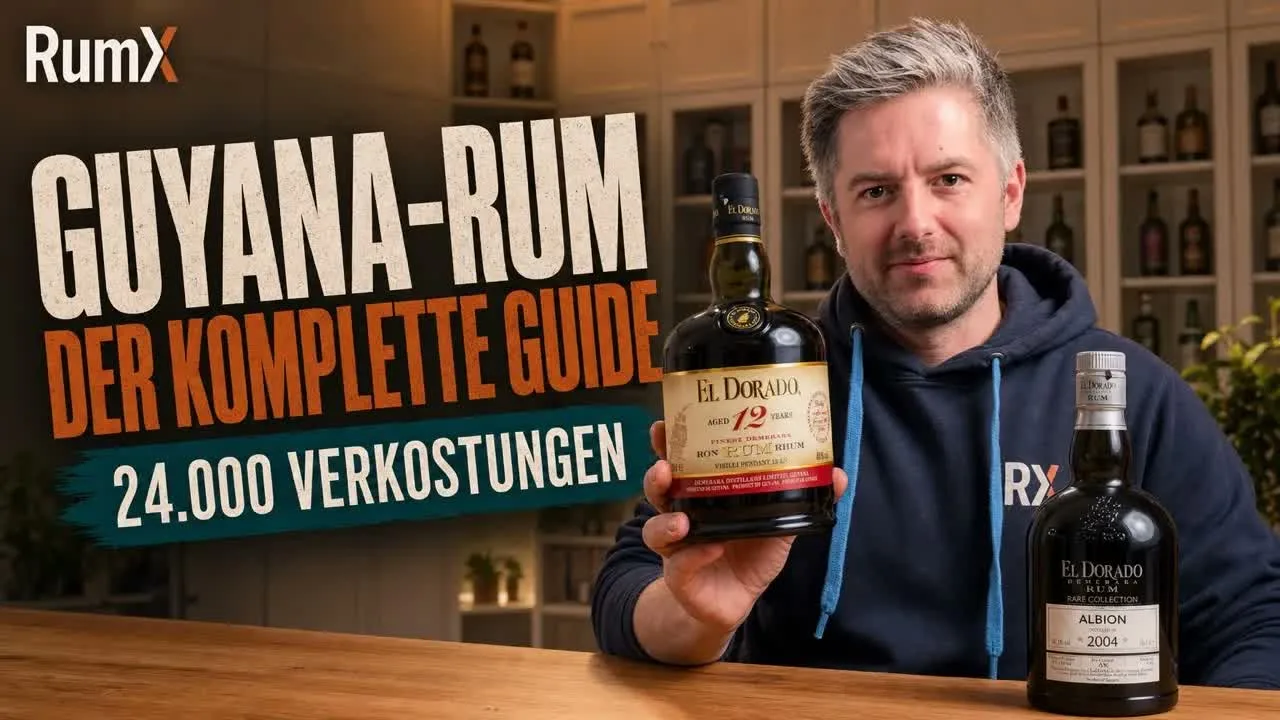
DDL El Dorado 12
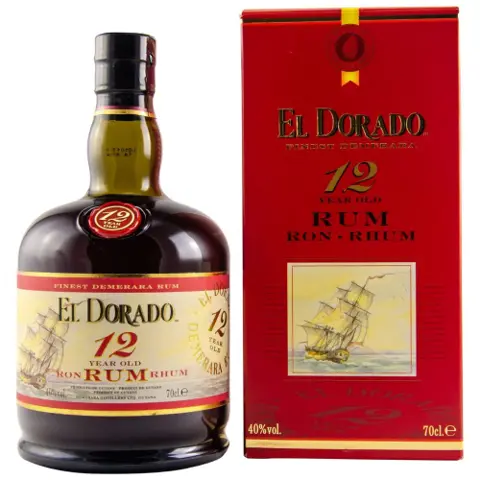
El Dorado
DDL El Dorado 127.3/10 (548 reviews)
Caramel · Vanilla · Molasses
8.4/10 (25,386 reviews)
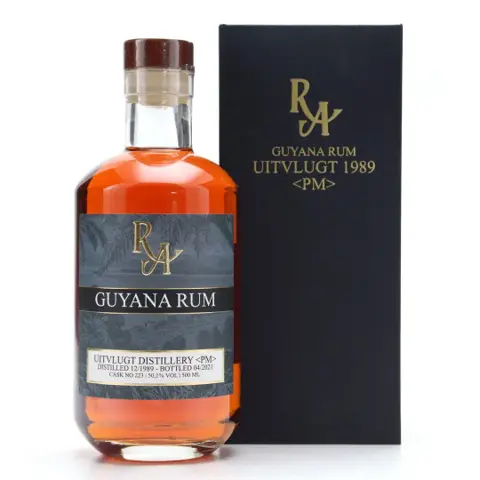
 Cadenhead's Uitvlugt PM 1964
9.8/10 (30 reviews)
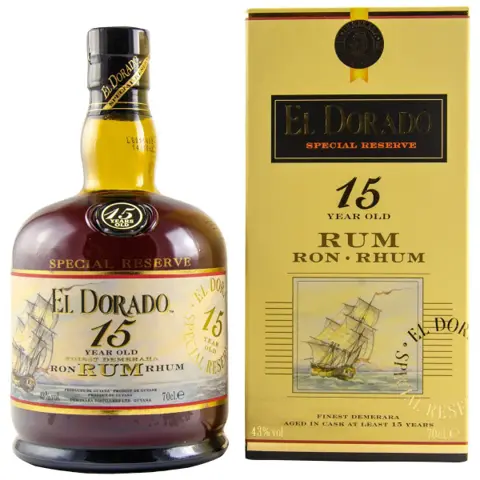
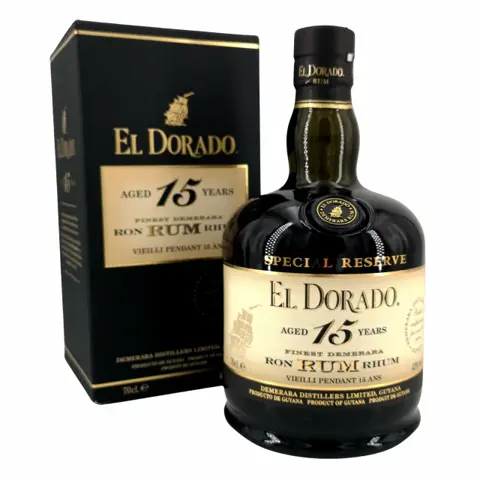
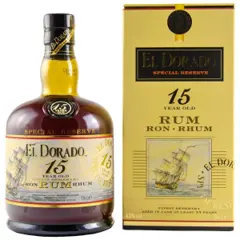 DDL El Dorado 15
7.5/10 (329 reviews)
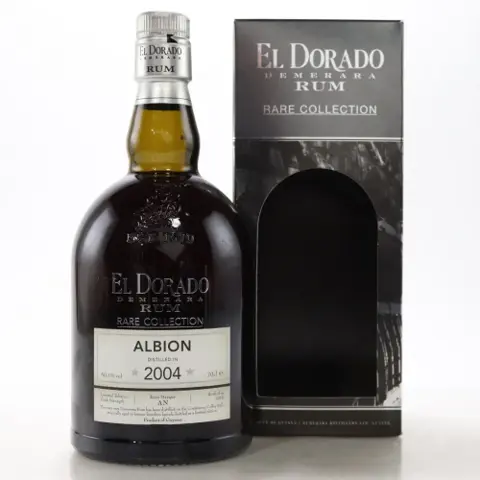
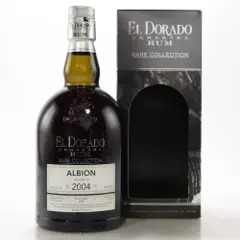 Albion El Dorado Rare Collection AN 2004
9.0/10 (298 reviews)
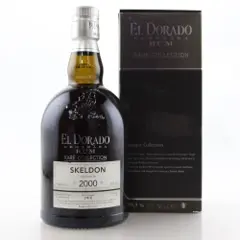 Skeldon El Dorado Rare Collection SWR 2000
9.0/10 (274 reviews)
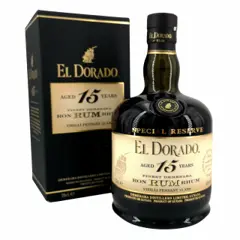 DDL El Dorado 15 (2020 Release)
8.0/10 (266 reviews)
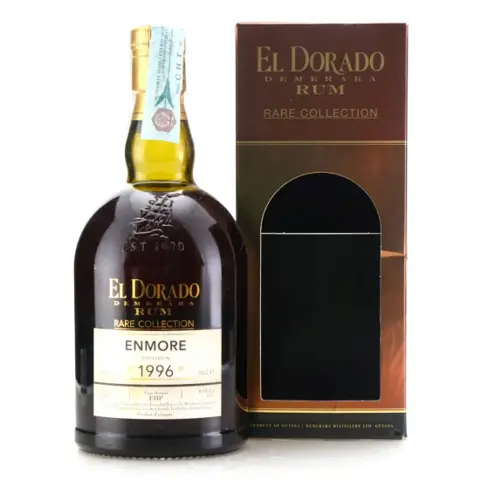
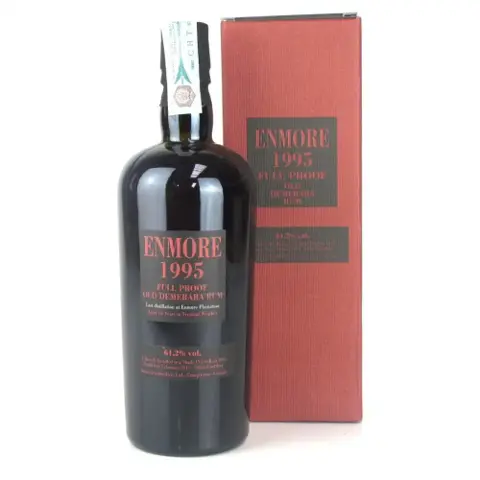
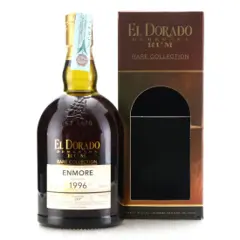 Enmore El Dorado Rare Collection EHP 1996
8.8/10 (195 reviews)
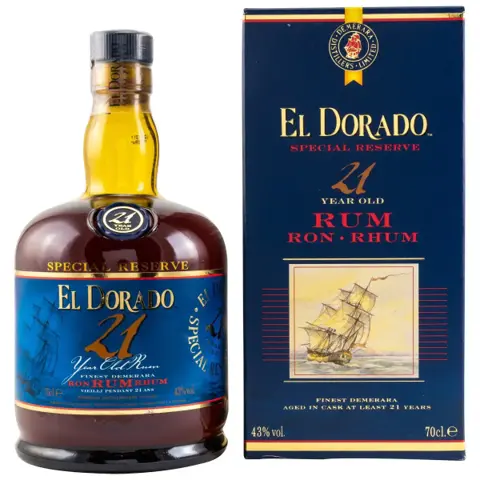
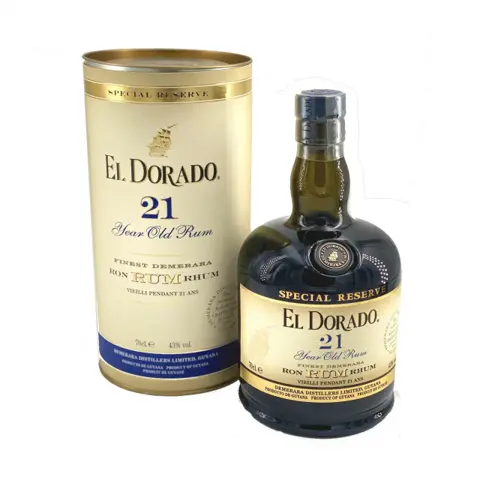
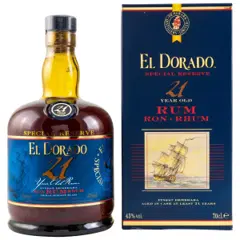 DDL El Dorado 21
7.6/10 (151 reviews)
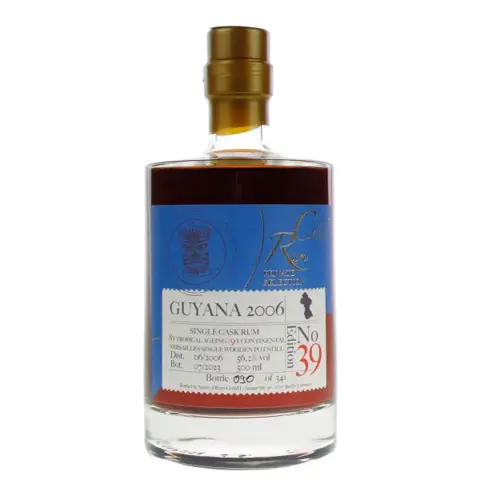
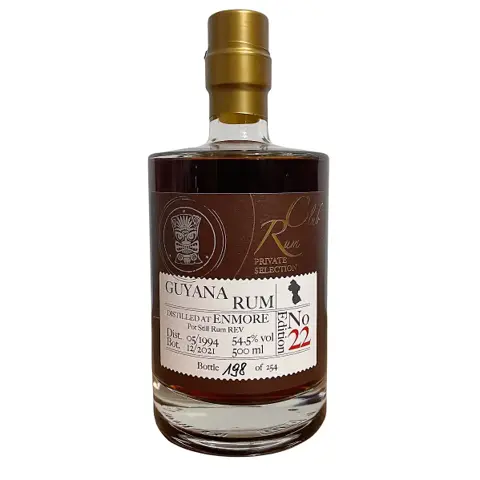
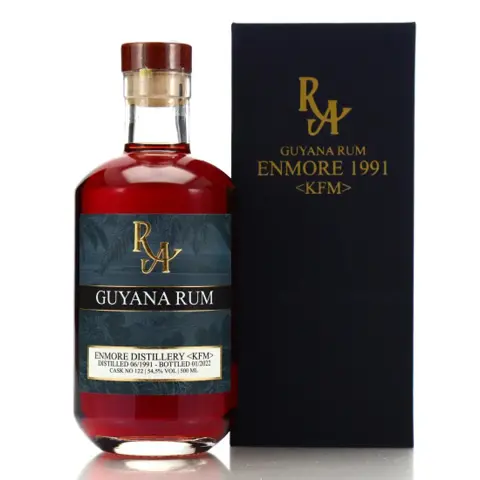
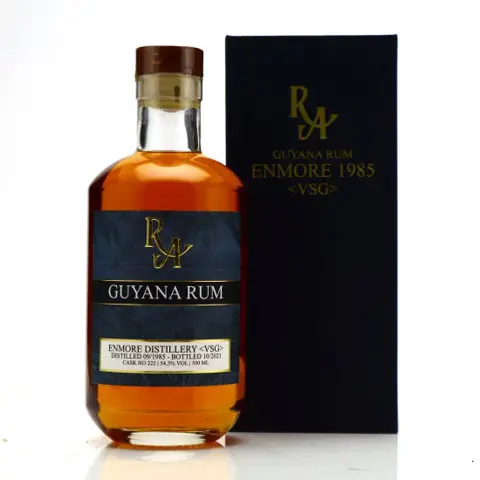
 Enmore Rumclub Private Selection Ed. 39 Guyana REV 2006
8.7/10 (143 reviews)
Guyana is the last home of the wooden still, and the only rum country where the place on the label is almost never the place the rum was made. Its closed estates live on as marks, codes for a recipe rather than a machine, and reading them is the whole skill.
Twenty minutes on Guyana: how 109 distilleries became one, what PM, EHP and KFM mean on a label, and the ladder from El Dorado 12 up to the legends. Spoken in German, with English subtitles.
1,683 bottlings, 464 of them available, prices from 40 partner shops. As of October 2026.
Prices incl. VAT and shipping to incl. VAT & shipping to How we rank
By default, what matches your search and filters comes first. Where the match is equal, the rums currently most popular on RumX come first, then those with more ratings. The “Sort” menu shows which order applies and lets you sort by score, number of ratings or price.
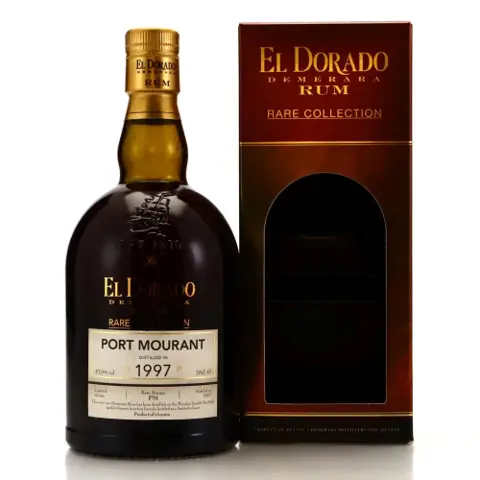
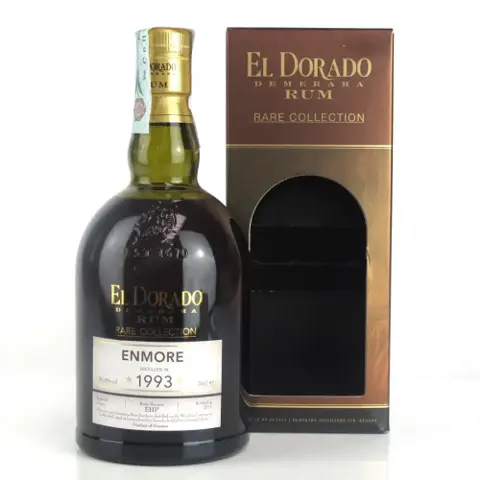
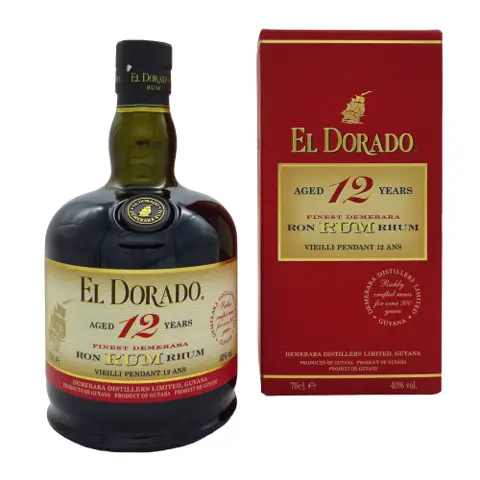
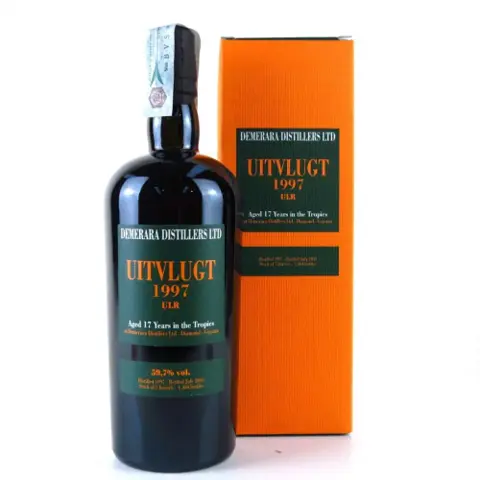
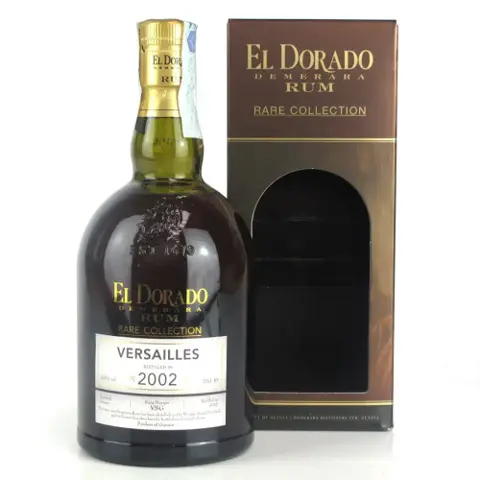
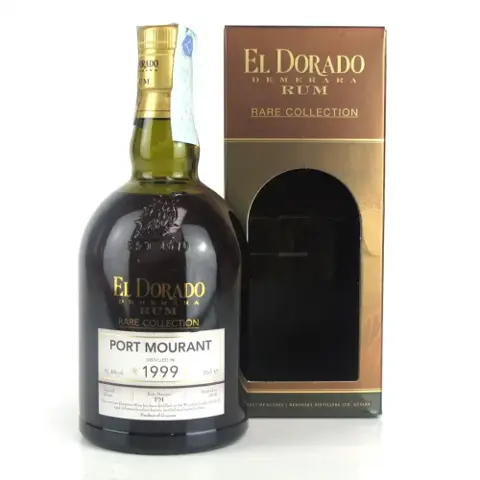
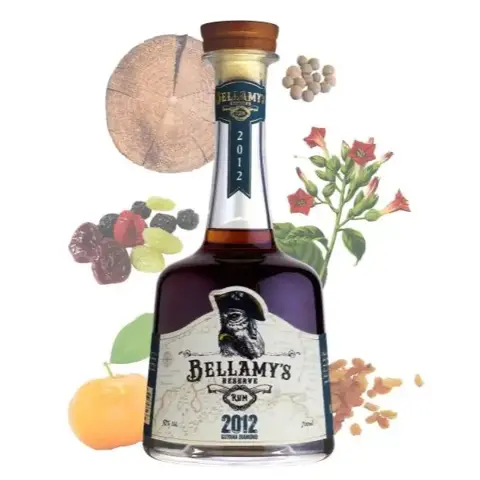

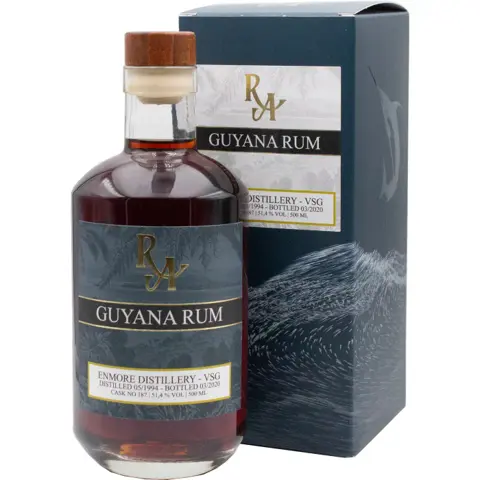

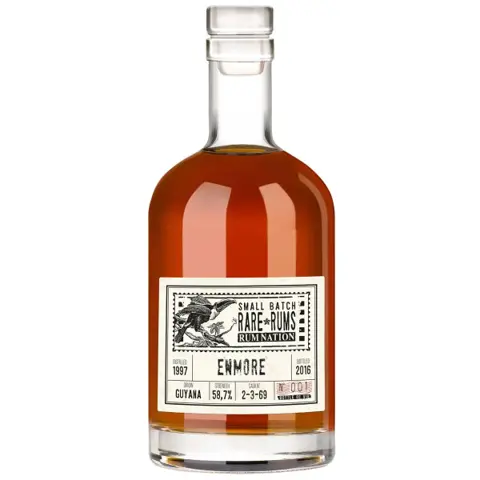
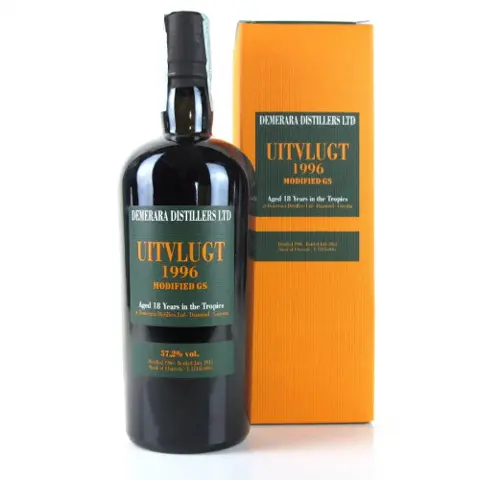
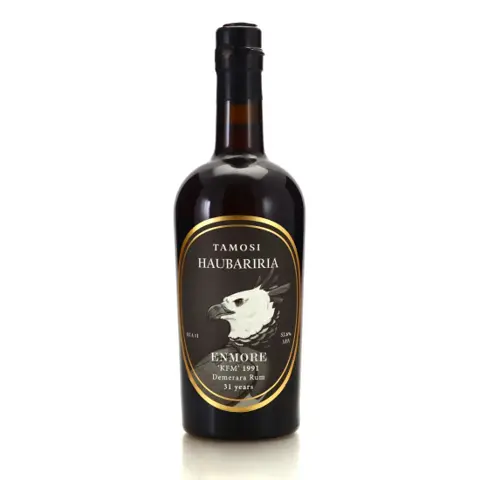
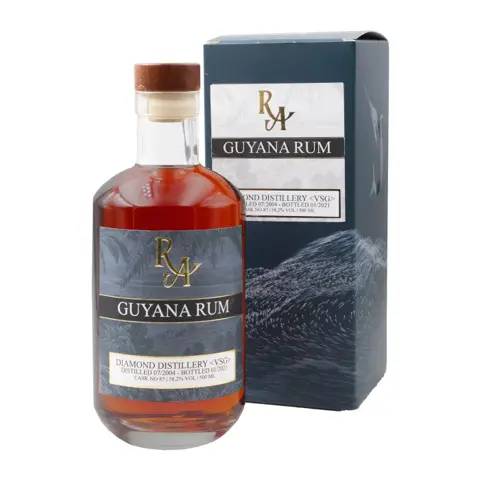

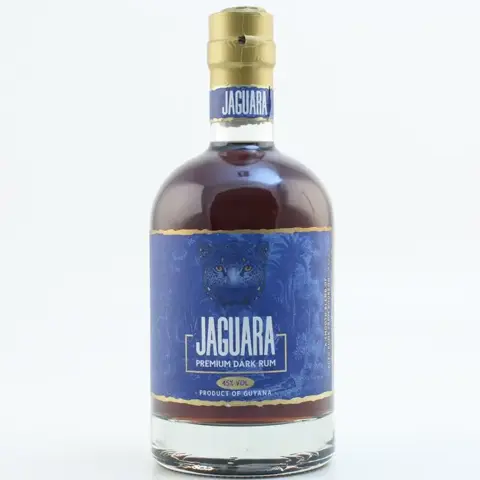 Jaguara Premium Dark Rum
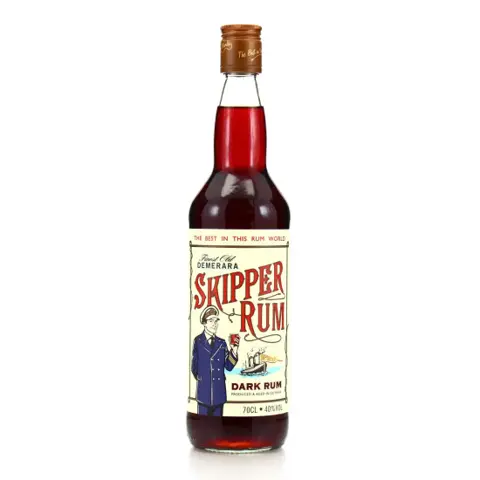 Skipper Dark Rum
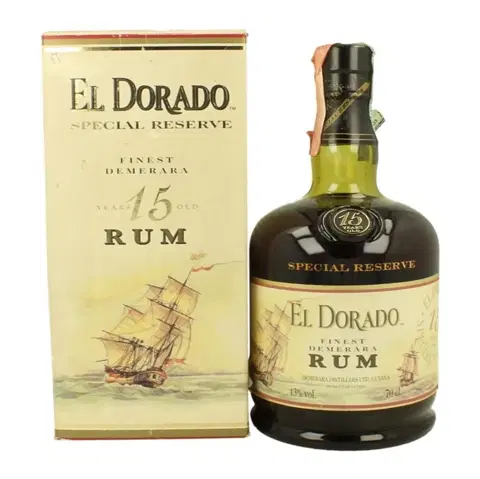
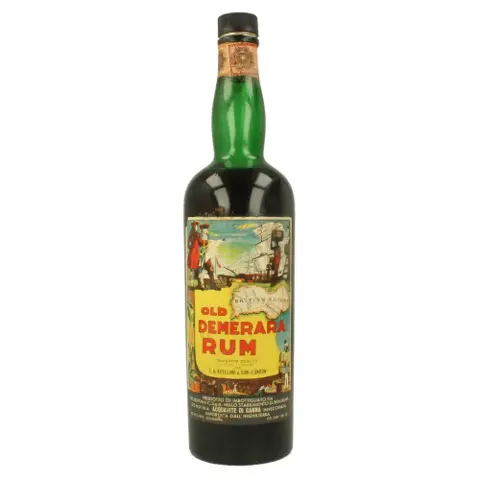

 Old Rum The Finest Demerara Empire Produce (Walker Homfrays Ltd.) 1910s
Change your search or remove some filters.
Rum from Guyana wins the community over: 94% of 25,386 ratings are good or better.
People who like Rum from Guyana also rate these higher than other tasters do: Trinidad +1.8
Buying for someone else? The Rum Finder helps you choose
Based on 25,386 ratings, including 5,755 with a flavour profile and 10,884 with a written review.
Among rums with at least 30 ratings, Cadenhead's Uitvlugt PM 1964 leads with 9.8/10 from 30 ratings. The most rated is DDL El Dorado 12 with 7.3/10 from 548.
| Bottling | Age | ABV | Rating | Priceincl. shipping |
|---|---|---|---|---|
| Cadenhead's Uitvlugt PM 1964 Pot Still Rum | 36 years | 69,3% | 9.9/10 (29 reviews) | not available |
| Cadenhead's Uitvlugt PM 1964 Pot Still Rum | 36 years | 70% | 9.8/10 (30 reviews) | 11,500.00 € 16,428.57 € per litre |
| Velier Diamond Old Demerara Rum SV 1988 Column Still Rum | 18 years | 59% | 9.7/10 (13 reviews) | not available |
| Cadenhead's Uitvlugt (Port Mourant) 1964 Pot Still Rum | 30 years | 73,3% | 9.7/10 (13 reviews) | not available |
| Velier Uitvlugt SP - ICBU SP - ICBU 1988 Column Still Rum | 17 years | 52,9% | 9.6/10 (45 reviews) | 9,500.00 € 13,571.43 € per litre |
| Moon Import Port Mourant Fanciulle dell'800 1976 Pot Still Rum | — | 60,8% | 9.6/10 (23 reviews) | not available |
| Cadenhead's Uitvlugt (Port Mourant) PM PM 1964 Pot Still Rum | 32 years | 72,1% | 9.6/10 (12 reviews) | 11,000.00 € 15,714.29 € per litre |
| Velier Skeldon SWR 1978 Column Still Rum | 27 years | 60,4% | 9.5/10 (51 reviews) | 14,500.00 € 20,714.29 € per litre |
| Velier Albion AW 1986 Column Still Rum | 25 years | 60,6% | 9.5/10 (25 reviews) | 11,101.90 € 15,841.43 € per litre |
| Cadenhead's Enmore XPD 1971 Pot Still Rum | 29 years | 64,7% | 9.5/10 (18 reviews) | not available |
| Norse Cask Port Mourant Demerara 1975 | 32 years | 57% | 9.5/10 (15 reviews) | 4,500.00 € 6,428.57 € per litre |
| Cadenhead's Port Mourant 1975 | — | 70,2% | 9.5/10 (14 reviews) | not available |
| Cadenhead's Enmore XPD XPD 1971 Pot Still Rum | 32 years | 61,8% | 9.5/10 (13 reviews) | 9,800.00 € 14,000.00 € per litre |
| Silver Seal Demerara Rum Wildlife Series No. 1 1971 | 32 years | 67,1% | 9.5/10 (11 reviews) | not available |
| Whisky Krüger Port Mourant Rendsburger Bürgermeister Rum PM 1975 | 32 years | 56,9% | 9.4/10 (53 reviews) | 1,600.00 € 4,571.43 € per litre |
| Velier Diamond <>W 1993 Column Still Rum | 12 years | 61,4% | 9.4/10 (23 reviews) | 15,150.00 € 21,642.86 € per litre |
| Velier Albion AN 1989 | 19 years | 62,7% | 9.4/10 (21 reviews) | 22,000.00 € 31,428.57 € per litre |
| Silver Seal Demerara Rum Wildlife Series No. 1 1971 | 32 years | 71,8% | 9.4/10 (21 reviews) | not available |
| High Spirits Collection Port Mourant 1974 | — | 59,1% | 9.4/10 (20 reviews) | not available |
| Velier La Bonne Intention LBI LBI 1998 Column Still Rum | 9 years | 55,6% | 9.4/10 (19 reviews) | not available |
| Bristol Port Mourant Very Old Demerara Rum 1975 | 35 years | 52% | 9.4/10 (13 reviews) | not available |
| Kingsbury Port Mourant Demerara Rum Single Cask 1974 Pot Still Rum | — | 65,7% | 9.4/10 (10 reviews) | not available |
| Velier Uitvlugt ULR ULR 1997 Column Still Rum | 17 years | 59,7% | 9.3/10 (119 reviews) | 1,490.00 € 2,128.57 € per litre |
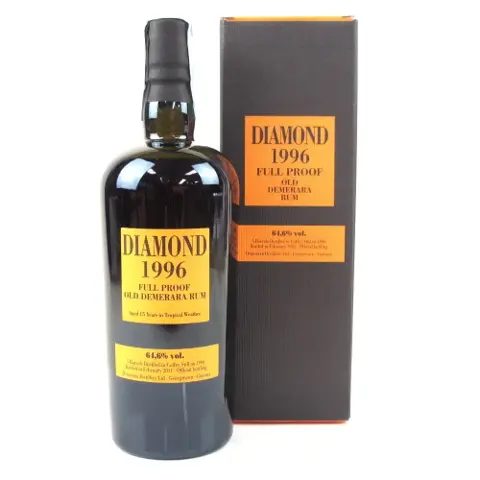
| Velier Diamond SVW SVW 1996 Column Still Rum | 15 years | 64,6% | 9.3/10 (81 reviews) | 1,790.00 € 2,557.14 € per litre |
| DDL El Dorado 12 Rum Based Spirit | 12 years | 40% | 7.3/10 (548 reviews) | 40.48 € 49.40 € per litre |
25 of the 666 bottlings with at least 10 ratings are listed here; the rest are in the catalog above.
Head to head
Here you see how the same people rated two rums from this selection.
 El Dorado Rare Collection SWR
 El Dorado Rare Collection AN
330.00 €incl. shipping · 471.43 € per litre
Of 196 people who rated both, 84 gave El Dorado Rare Collection SWR the higher score, 69 gave it to El Dorado Rare Collection AN.
Your Match Score estimates which of the two is more likely to suit your taste.
The median score is 8.4, which means “Very good”.

#1786 24-04-2026 - Rate 9.5 Got a small sample from our friends at Nobilis. Was picking up some other bottles when Kenneth slipped this one into the box. What a treat. Amazing Enmore. A contender to be the best Enmore I have ever tasted. I love that it’s ABV is 56,6% and not …

An intoxicating nose full of vanilla from the oak, caramel, interwoven spices - the depth of the individual aromas is breathtaking. The palate also offers a fascinating profile - again heavy sweetness full of expression away from any stickiness, dark spices, hints of tobacco and …

Blind tasting RX25870 versus RX26191 (marking under the glass bottom): The more time passes, the more the Distilia (RX26191) sets itself apart from the TRC (RX25870). The latter has the stronger nose at first, but to me it’s over the top, too woody. But if it averages 91 points …

On the nose, deep aromas of plums, tobacco, and leather, accompanied by roasted oak. On the palate, intense dark dried fruits, leathery spice, and a fine bitterness. Despite the power, it feels surprisingly harmonious and focused. A majestic classic that impressively embodies the …
Extremely impressive when enjoyed straight from a fresh bottle. Extremely complex with dark fruits, woody notes, spices, leather, tobacco...the whole spectrum of the old Demerara world. A pleasure.

This one is a bit puzzling for me… I expected this to be my favorite out of the DHE blends I was able to to taste, but can’t quite confirm that at the first try. On the plus side: this one shows the best balance. Tropical PM and DHE work very well together forming a homogeneous …

Surprisingly fruity, fresh Enmore! Very unusual, almost Spanish-like! Raspberry, fig, mint, orange peel, glue, and plum on the nose, less wood than expected. On the palate, fig, light coconut, raisin, wood, and grapefruit. In the finish, the raspberry comes back with mint, …

After finding out that Guyana rum without added sugar was on offer here, as a Guyana fan I simply had to try it. It was more than worth it. Roasted coffee with caramelized fruit and chocolate shavings. For me, this is THE rum profile par excellence. A little more mature and …
Added to the most collections recently.
Highest community ratings for the price, from live offers.
 Jaguara Premium Dark Rum
20,519 bottles logged in tasters' collections, including opened and emptied ones.
+770 additions in the last 3 months.
Additions per month over the last 12 months; dark bars: the last 3.
as of
RumX Guide
Guyana, explained
Demerara rum is rum from Guyana, named for the Demerara river and the region around the capital, and protected by a Geographical Indication. So in practice it is the same thing as Guyanese rum: Demerara is the region and the protected name.
Its signature is a heavy, dark, pot-still character, much of it from greenheart wooden stills. Demerara is also the traditional base of British navy rum, and navy-style brands like Pusser's, Lemon Hart and Lamb's are built on Demerara rum from Diamond.
They are marks, not brands: codes stamped on the cask for the style of a closed estate, so PM is Port Mourant, EHP is Enmore after E. Henry Porter who named the estate, and SWR is Skeldon. Every closed estate lives on this way. It is tempting to read a mark as a machine, and almost every guide does. That is wrong, and the exceptions prove it: the mark KFM belongs to the Lusignan estate, but a Cadenhead bottling from 1991 carrying it was distilled on the Versailles wooden pot still. The Albion mark AW has been made on at least three different stills over the decades.
A mark tells you the intended style. Which machine produced it has changed, sometimes more than once, and one still can produce several marks. That is the useful thing to know, because it means a mark can outlive its distillery, its still, and its estate, and still taste like itself. The table decodes the ones you will actually meet.
| Code | Estate | Where the code comes from | Made today on |
|---|---|---|---|
| PM | Port Mourant | The estate name | The double wooden vat still, the original |
| EHP | Enmore | E. Henry Porter, who gave the estate its name | The wooden Coffey still, the original |
| VSG | Versailles | Versailles plus the estates it swallowed, Schoon Ord and Goed Fortuin | The single wooden vat still, the original |
| REV, MEV, MEC | Enmore and Versailles | Styles from the years the Versailles still stood inside Enmore | The surviving wooden stills |
| KFM | Lusignan | Kenneth Francis Mackenzie, who bought the estate around 1790 | A wooden still, though never Lusignan's own |
| SWR | Skeldon | Disputed: Skeldon William Ross, the founder, or Sir William Russel | A recreation. Skeldon's own stills did not survive |
| AN, AW | Albion | AN for Albion and Nigg, neighbouring estates listed together in 1841 | The French Savalle column. Albion's wooden Coffey was scrapped |
| ICBU, ULR | Uitvlugt | Disputed: a garbled form of the Dutch founder Boode's name. ULR is Uitvlugt Light Rum | The French Savalle column, the original |
| SVW, DLR | Diamond | Diamond's own marks, SVW documented there in the 1950s | The metal Coffey and column stills |
| B, LBI | Blairmont, La Bonne Intention | The estate names, B usually drawn inside a diamond | Recreations. Neither estate's stills survived |
El Dorado, Guyana's flagship brand, is blended, cut to 40 to 43 percent and sweetened, while the names of the dead estates reach the market only through independents buying single marks and bottling them at cask strength. There is no supermarket version of Blairmont. El Dorado is the usual way in, especially the 12 Year and the 15 Year.
Today exactly one: Demerara Distillers at Diamond, the last of the 109 distilleries Guyana had in the 1880/81 fiscal year. The collapse is documented year by year: 55 by 1898/99, 42 still active in July 1906, 36 in 1914, 30 in 1921, and just nine from 1938 onwards. Five were left at independence in 1966 and three by 1971.
The first and steepest fall had nothing to do with rum. European governments poured subsidies into beet sugar through the 1880s, the United States put a tariff on sugar in 1893, and cane colonies that lived off one crop were hit at the root. Half of Guyana's distilleries died in twenty years because the sugar under them did.
What makes Diamond a living museum is not that everything was saved. Most of it was scrapped. Four sets of apparatus survived: the Port Mourant double wooden vat still, the Versailles single wooden vat, the Enmore wooden Coffey still, and the French Savalle columns from Uitvlugt. Everything else lives on as a recipe.
Only if its vintage predates the estate's closure, and for six of the eight closed estates not a single bottle with a recorded vintage does. When you buy a bottle labelled Albion or Skeldon, those distilleries were already closed, not recently but decades before the rum in the bottle was distilled. Albion's distillery closed in January 1968, so an Albion 1994 was distilled somewhere else, almost certainly on the French Savalle column at Uitvlugt or Diamond.
We can check this, because we hold both halves: the archive says when each distillery stopped, and our catalogue says when each bottle was distilled. The El Dorado Skeldon SWR 2000 was distilled forty years after Skeldon shut. The Velier Blairmont 1991 came twenty-nine years after Blairmont did. Compare the vintage on your label with the closure year in the table below and you will know which you have.
This does not make them fake, and it is not a reason to avoid them. It changes what you are buying. Where the still survived, you get the same machine in a different building. Where it did not, you get a careful recreation of a style on other equipment. Both are real Demerara. Only one is the original machine.
| Estate | Distillery closed | Oldest vintage we list | What that means |
|---|---|---|---|
| Port Mourant | 1955 | 1964 | Same still, moved twice |
| La Bonne Intention | 1959 | 1985 | Style recreated elsewhere |
| Skeldon | 1960 | 1973 | Style recreated elsewhere |
| Blairmont | 1962 | 1982 | Style recreated elsewhere |
| Albion | January 1968 | 1983 | Style recreated on the Savalle column |
| Versailles | November 1978 | 1984 | Same still, moved to Enmore |
| Enmore | April 1994 | 1962 | Real estate rum exists, 17 vintages before the closure |
| Uitvlugt | December 1999 | 1964 | Real estate rum exists, 16 vintages before the closure |
Because metal was scarce and greenheart wood was abundant, so early distillers built their stills from it: greenheart is a local timber so hard it cannot be cut with ordinary tools, and it does not rot underwater.
Calling them pot stills is the market's shorthand. A contemporary description from 1908 is more precise: a vat still is a cylindrical wooden vessel of staves hooped with wrought iron, topped by a copper dome, fed into a retort of the Jamaican pattern, with a rectifying column downstream. It is heated by injecting steam, not by fire underneath. Even the Port Mourant still has a column behind it.
And wood was not a quirk, it was the national technology. In 1914, 27 of Guyana's 36 distilleries still ran pot or vat stills, and a 1919 source counts ten large continuous stills built mostly on site from local greenheart. Guyana is simply the last place where any of them survived.
Mostly from added colouring, not from the wood: Demerara's colour is a tradition of addition, and we know the recipe because a planter wrote it down. Alexander Mac Rae ran the Lusignan estate, the one behind the KFM mark, and in 1856 he published how to make colouring for rum: take the best sugar, melt it over its own fire, stir it constantly with a wooden paddle so it never picks up "a singed taste or flavour", then thin it not with water but with high wines, rum feints, until it reaches the consistency of thick cream.
It was then settled in a cask fitted with two taps, one two inches from the bottom and one six, so the sediment could drop out below and the clear colouring could be drawn off above. About three pints per 100 gallons of spirit. Mac Rae's warning is the one that still matters: too much and the rum turns cloudy, "and when rum is cloudy the value of it is very greatly deteriorated".
Colour was a market specification, not a quality signal. A 1949 government report is blunt about it: Canada and northern Britain wanted their rum dark, true Nelson's blood, the Midlands wanted a paler shade, and the south of England preferred it almost white. Same rum, different customers, different amount of burnt sugar. The modern version of that argument is about sweetening rather than colouring, and if you would rather avoid both, start with the unsweetened rums.
Bookers Guiana is what Guyanese used to jokingly call British Guiana, because one group, Booker Brothers, came to own the cane, the distilleries, the blend and the label. Josias Booker arrived in 1815 and founded Booker Brothers in 1834. By 1917 the group owned Port Mourant, Skeldon, Uitvlugt, La Bonne Intention and more, and a merger in 1939 added Albion and Enmore. Then in 1947 it absorbed United Rum Merchants, which held the rights to Lamb's Navy Rum, Lemon Hart, Red Heart and Black Heart.
So when a guide tells you those navy brands relied on Demerara rum, that undersells it. They were not customers, they were the same company, with only Seagram's OVD and Wood's opposite them. It was a Diageo before Diageo existed. And it was Bookers' own rationalisation that killed the estates: Uitvlugt was rebuilt in 1960 to absorb the output of four distilleries, and La Bonne Intention, Skeldon, Blairmont and Albion were shut to feed it. Nationalisation ended the group's grip in 1976.
The other half of that story belongs on the same page. This industry ran on enslaved people until 1838, and the compensation paid at emancipation went to the owners, not the enslaved: 83,530 pounds to the Blairmont estate's owner for 1,598 people, 35,960 to Enmore's for 569. What followed was indenture, 238,909 workers brought from India between 1838 and 1917. Strikes over pay were answered with gunfire more than once, at Rose Hall in 1913 and at Ruimveldt in 1924. In June 1948, five workers were shot dead at Enmore. The memorial to the Enmore Martyrs still stands where the sugar estate does.
Free on iOS and Android.