
Foursquare ECS XIX Sovereignty 2007
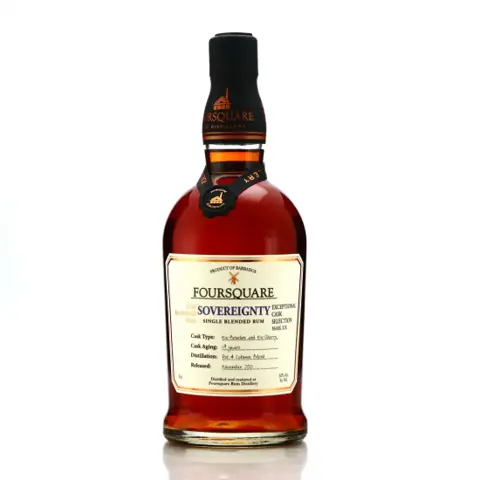 Foursquare ECS XIX Sovereignty 2007
Sherried Foursquare, hot but rewards resting
Your guide into a fascinating hobby
Part 1 of the RumX Collector Series, drawing on data from over 50,000 registered RumX users. In partnership with Catawiki.
50,000+
Registered RumX users
400K+
Bottles tracked
€50M+
Total collection value
280K+
Tasting notes

Before I dive in, quick note about me, otherwise this article sounds like a thousand others online. I’m Oliver, I founded RumX in 2018 because my Excel sheets for rum notes were getting out of hand. What I rarely talk about: I’m a collector myself. My pride and joy is a complete collection of Hampden rums from the 1990 vintage.
Why exactly that?
How far does this go? I got a “C<>H” tattoo. Continental Hampden. Irreversible. 😉
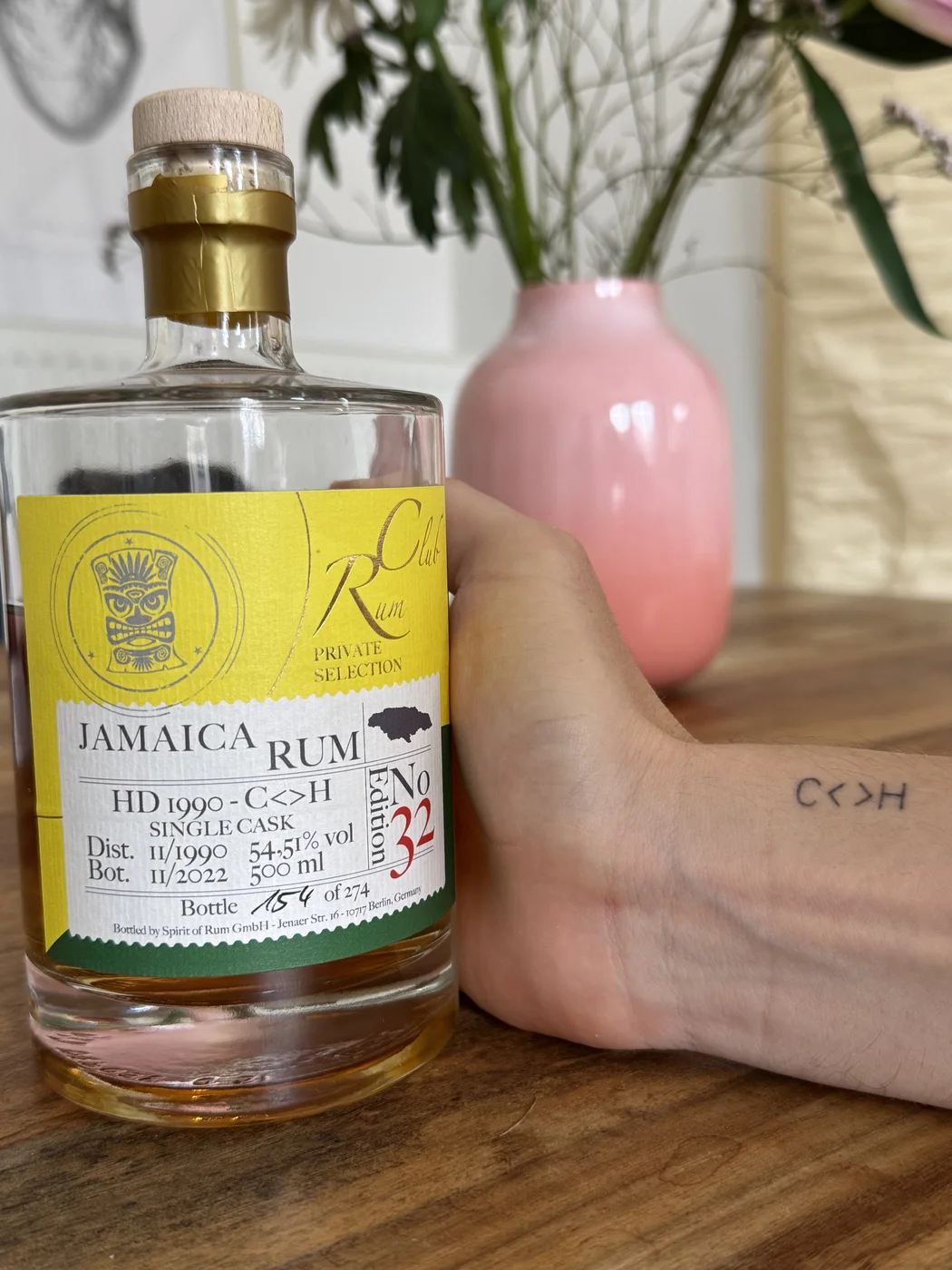
I’m telling you this because this article isn’t a top-down editorial guide. It’s what I would tell my ten-years-ago self if I had to start over, plus the data from 50,000 other registered users we now get to work with at RumX.
Let’s go.
It rarely starts with “investment.” Most often with a flavor that surprises, a Jamaican high-ester that tastes like banana, pineapple, and glue and is somehow still addictive. Or a Rhum Agricole from Martinique that carries more terroir than most wines. Or a bottle from a closed distillery like Caroni that you’ll never see produced new again. From that flavor comes curiosity, from curiosity a setup, from the setup a collection, and before you know it, you know the quirks of 30 distilleries, have a favorite bottler, and argue about ester content with strangers on the forum.
Behind it are essentially five drivers: enjoyment (taste as a sensory journey), stories (colonial-era trade routes, closed distilleries, legendary single casks), the hunt itself (the reward system fires on discovery), the personal identity a collection acquires over the years, and the community that forms around rare bottles.

Collecting is less an ownership hobby and more a mix of discovery, taste culture, and personal passion.
When I say “collectors”, I don’t mean every registered user. I mean the 8,416 people who currently track at least 8 bottles in their collection on RumX. Together they hold over 390,000 bottles with a market value of around €51 million (as of May 2026). Three things about that surprised me:
Median €1,365. Active collectors mostly sit in the 1–5k range.
1. The centre of gravity is higher than most people think. The median active collection sits at €1,365, roughly 20–25 bottles at €50–80 each. The top quarter holds over €3,800 in their collection, the largest collection has a market value of €688,838 (the absolute exception). You can absolutely start with 2–3 bottles, but the moment someone actually catches the bug, their collection drifts into the 1–5k segment fast. Not a rich-person hobby, but not an impulse-buy hobby either.
2. Half of active collectors are quiet curators. 50% of all active RumX collectors never write a tasting note. They track quietly, collect quietly, but know exactly what they’re doing. That worried me at first (“come on, write something!”), now I see it positively: collecting doesn’t have to be performative. Nobody forces you into a rating competition.
3. “Limited Edition” isn’t always actually limited, but when it’s real, it’s usually good. In our data we see: real limited editions don’t just trade higher, they also get better ratings on average. Correlation, not causation, but it suggests that whoever puts effort into a small bottling also puts effort into what’s inside.
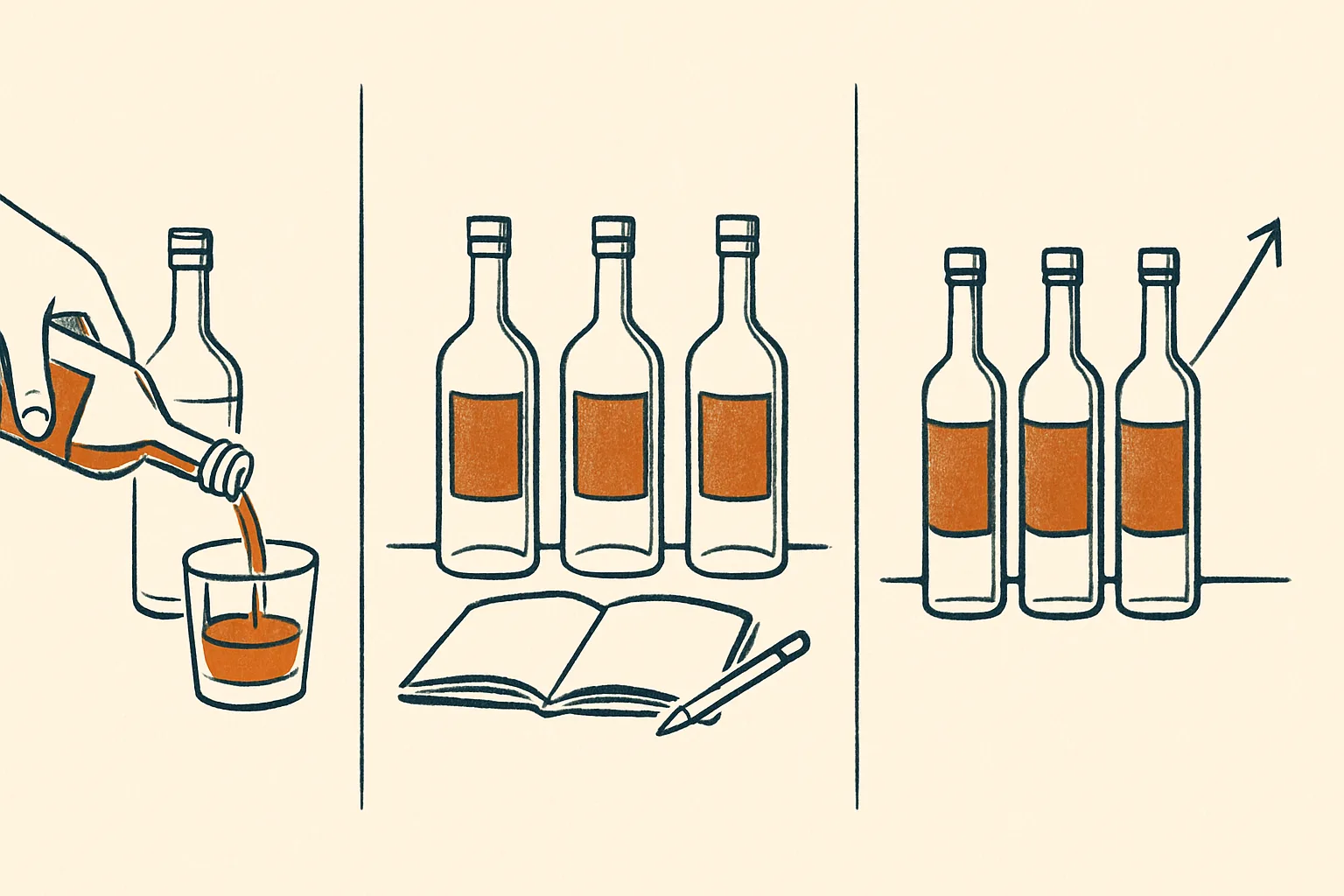
We roughly distinguish three types, and most people are a mix:
The Enjoyer buys what sparks curiosity and opens almost every bottle. The shelf is a flavor laboratory. Recommendations, tastings, and the urge to discover drive their purchases.
The Curator builds thematically: specific distilleries, countries, styles, or vintages. Reads deeply, compares bottlings, systematically watches auctions.
The informed Investor watches limitation, provenance, and price development. Bottles often stay sealed; buying decisions rest on market data.
Where do I fit? With Hampden 1990 I’m clearly a Curator. With the rest it’s a wild mix of Enjoyer and “oh, that’s only 312 bottles, quick.”
You may sense that rum is perceived differently today than a few years ago, less party drink, more sipping spirit. The market numbers confirm exactly that. The global rum market is estimated at around USD 36 billion in 2025, growing to nearly USD 43 billion by 2030 (source: Mordor Intelligence, 2025). More interesting than the total growth: premium and ultra-premium rums are growing above average. More single casks, more special releases, more seriously aged qualities.
For you as a beginner that means: you’re entering a market that’s getting more exciting, with more selection of genuinely high-quality rums than ever before.
Not every rum belongs on a collector’s shelf, and a high price alone doesn’t make a collector’s piece. Three rules that have guided me for years:
1. Real scarcity, not “Limited Edition” on the label. “Limited” appears on every second label and means: nothing, initially. What actually counts:
Such bottlings can be imitated stylistically, but never identically.
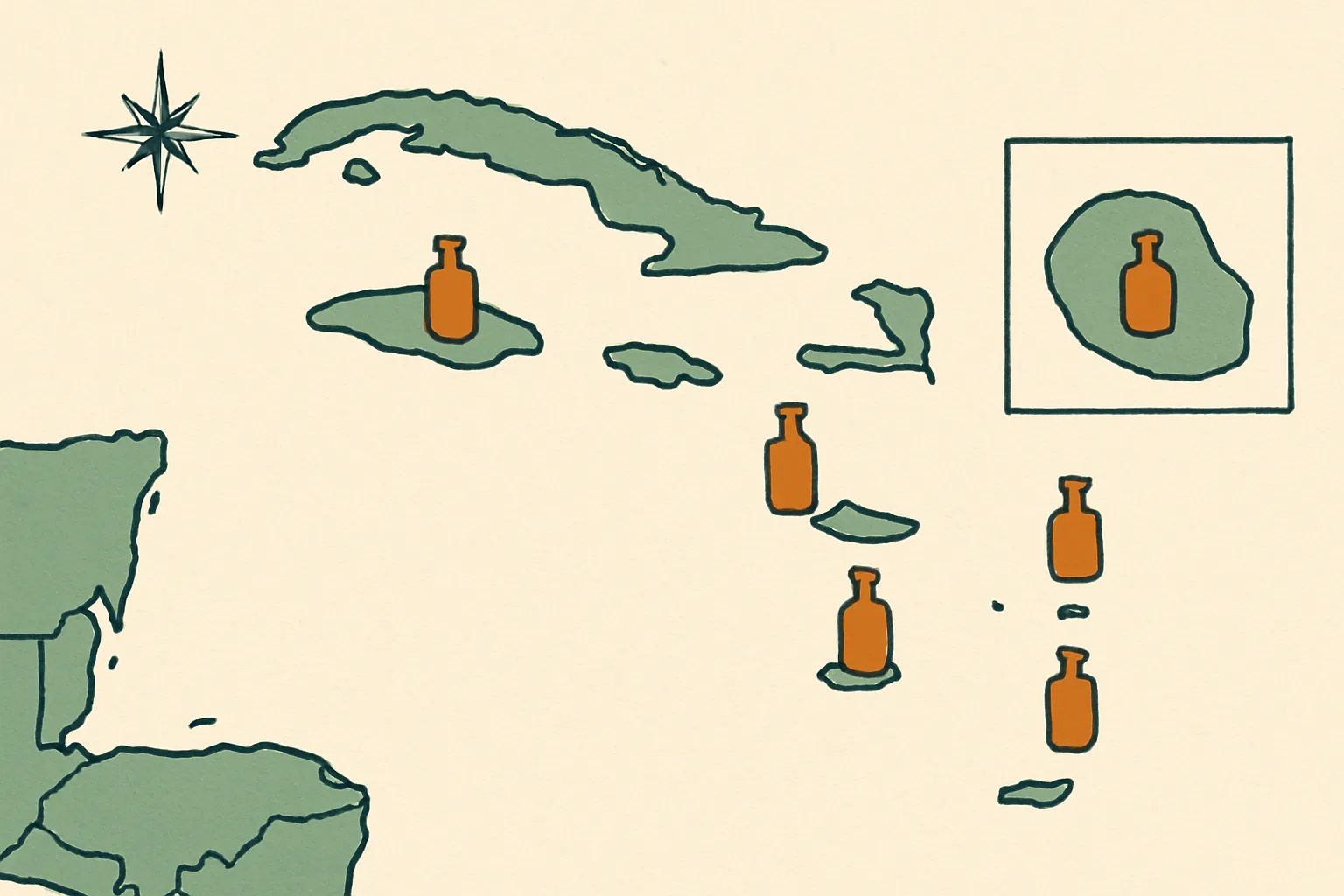
2. The names behind it matter. Like in wine. Distilleries like Foursquare (Barbados), Hampden (Jamaica), or Caroni (closed, expensive, for pros) have built reputations over years. Among independent bottlers, names like Velier, Habitation Velier, Maison Ferrand, or the Planteray (formerly Plantation) range lead the field.
Important for beginners: “Independent Bottler” isn’t an automatic quality promise. What counts is transparency, a good reputation over multiple years, and consistent quality.
3. Transparency: what’s really in it? Collectors prefer “honest” rums, no “spiced,” ideally no added sugar, clear specs on cask type, age, and ABV. In the EU, rum may be sweetened up to a defined limit (EU Spirits Regulation 2019/787). No problem for the casual drinker. More of an issue for a serious collection.
But beware dogma: limited editions of sweeter styles like Diplomático or Don Papa can be very popular and command strong demand. Taste beats theory. The best collection is the one you personally stand behind, not the one that the forum says is “right.”
The best start consists of two pillars: drinking (learning taste) and collecting (first deliberate decisions). Don’t start with expensive limited editions, start with curiosity. That sequence is also the cheapest way to skip the bottle you’ll regret six months later.
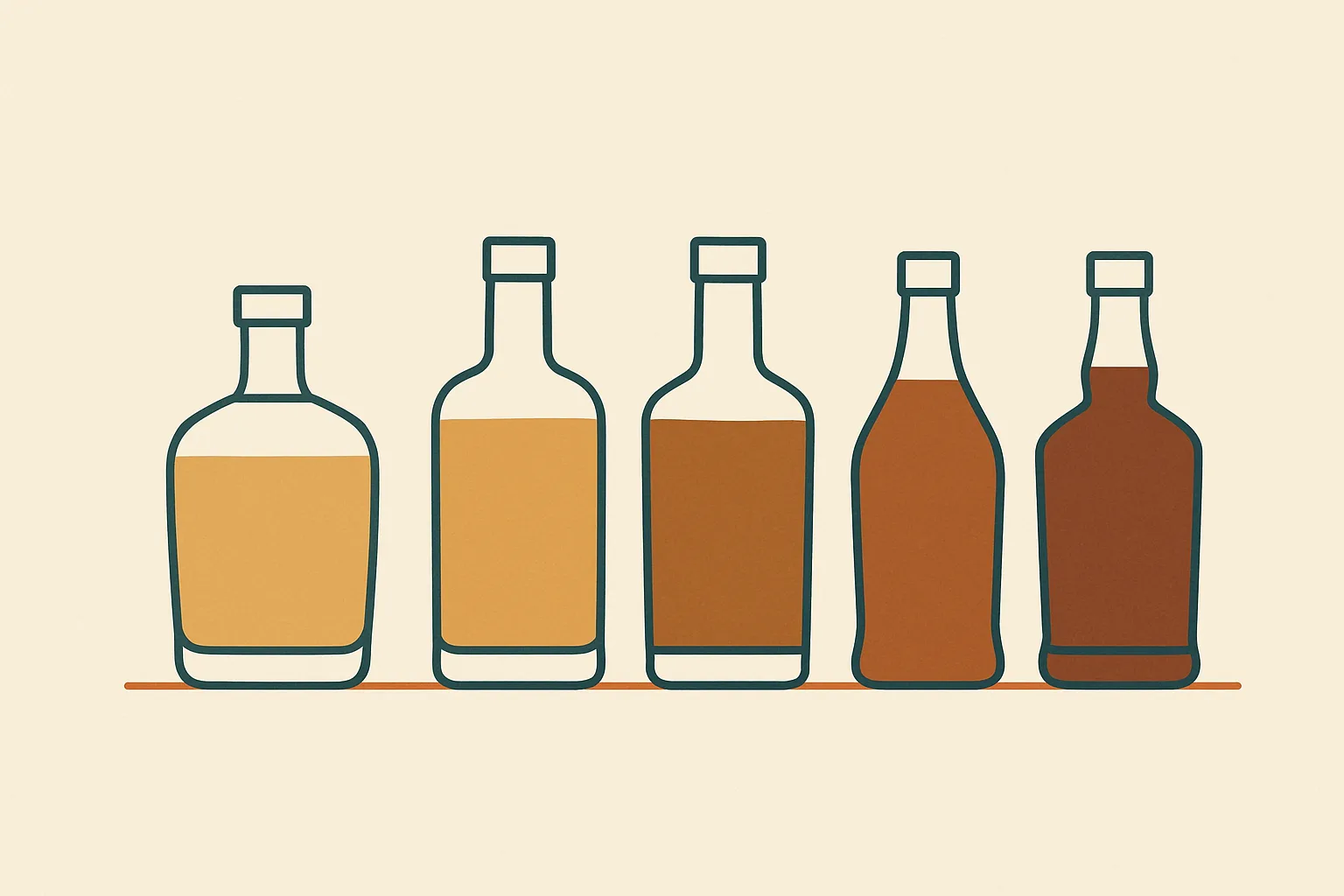
These bottles aren’t collector’s pieces but flavor tools:
Bottles you can drink but don’t have to:
One bottle from each of the three profiles below: a Foursquare ECS, a Hampden Great House Distillery Edition, and a Velier independent bottling.
Foursquare ECS XIX Sovereignty 2007Sherried Foursquare, hot but rewards resting
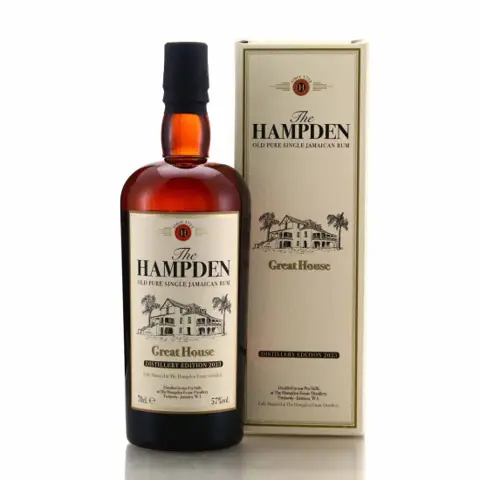 Hampden Great House (Distillery Edition 2023)
Rounded, fruit-forward Hampden with tamed esters
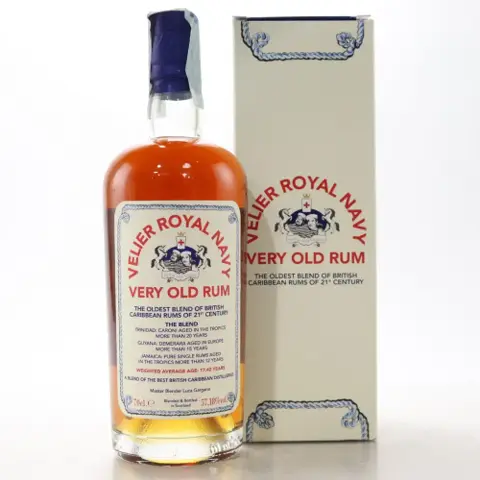 Velier Royal Navy
Dirty Caroni-led navy blend, deep and complex
Concrete recommendation: Start with 4–6 drinking bottles across different styles and countries, plus 2–3 deliberately chosen collector bottles (e.g., 1× Foursquare ECS, 1× Hampden Distillery Edition, 1× single cask from an established independent bottler). Total budget: EUR 300–500. Less than a weekend trip.
And: document everything from day 1. Purchase date, price, tasting notes, status. The RumX app does this in a few clicks, in a year you’ll be grateful you started.
The RumX marketplace aggregates offers from over 50 European partner shops and shows you the best price (shipping included). Since starting with one single shop in March 2023, it has become the central price-comparison infrastructure for rum collectors in Europe. For regular releases and well-available limited editions, this is the easiest route.
For sold-out, rare, or historically significant bottles, the path runs through auctions. The rum auction market is still young, but it’s growing fast.
What often makes beginners nervous: how do I know the bottle is real? How do I calculate fees? Who stands behind it if something goes wrong? This is where curated auction platforms shine, chief among them Catawiki, who we’re partnering with for this collector series. The principle: before a lot goes into auction, specialized experts check provenance, condition, and authenticity. For beginners that’s a decisive advantage, you’re not buying blind but with a quality layer between you and the seller. Weekly online auctions make it easy to systematically watch target bottles.
Practical tip for auction beginners: always calculate total cost. Hammer price + buyer’s premium (at Catawiki for example 9% + EUR 3) + shipping + possible customs duty. A “cheap” bottle can suddenly be more expensive than the specialist shop after all the add-ons.
At RumX we bundle live lots from various auction partners into a single feed in the Auctions Hub. Instead of having five tabs open, you see what’s currently available in one place, with direct links to each platform. And because we see what thousands of users are tracking on their wishlists, the hub gives you signal alongside the noise: which bottles are scarce, which are climbing, which are sitting.
Explore the RumX Auctions Hub →Don’t underestimate: good local retailers often have surprising stock, and at rum fairs (German Rum Festival, UK RumFest, Whisky & Rum Show) you find bottlings that have long sold out online. Plus: you meet other collectors, which takes the whole hobby aspect to another level.
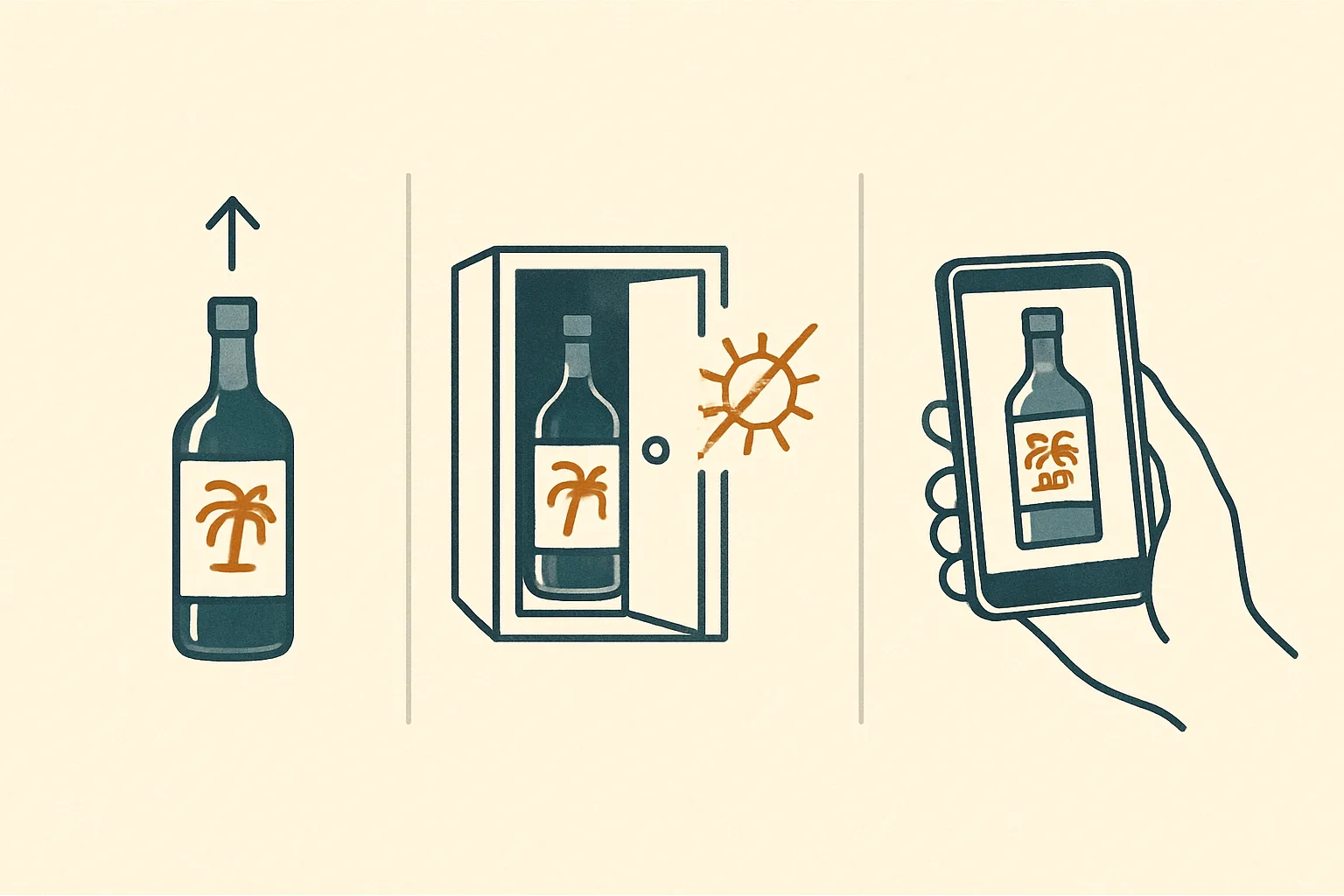
Whether it’s a EUR 30 bottle or a EUR 300 bottle, proper storage protects your rum (and its value, if you ever want to sell):
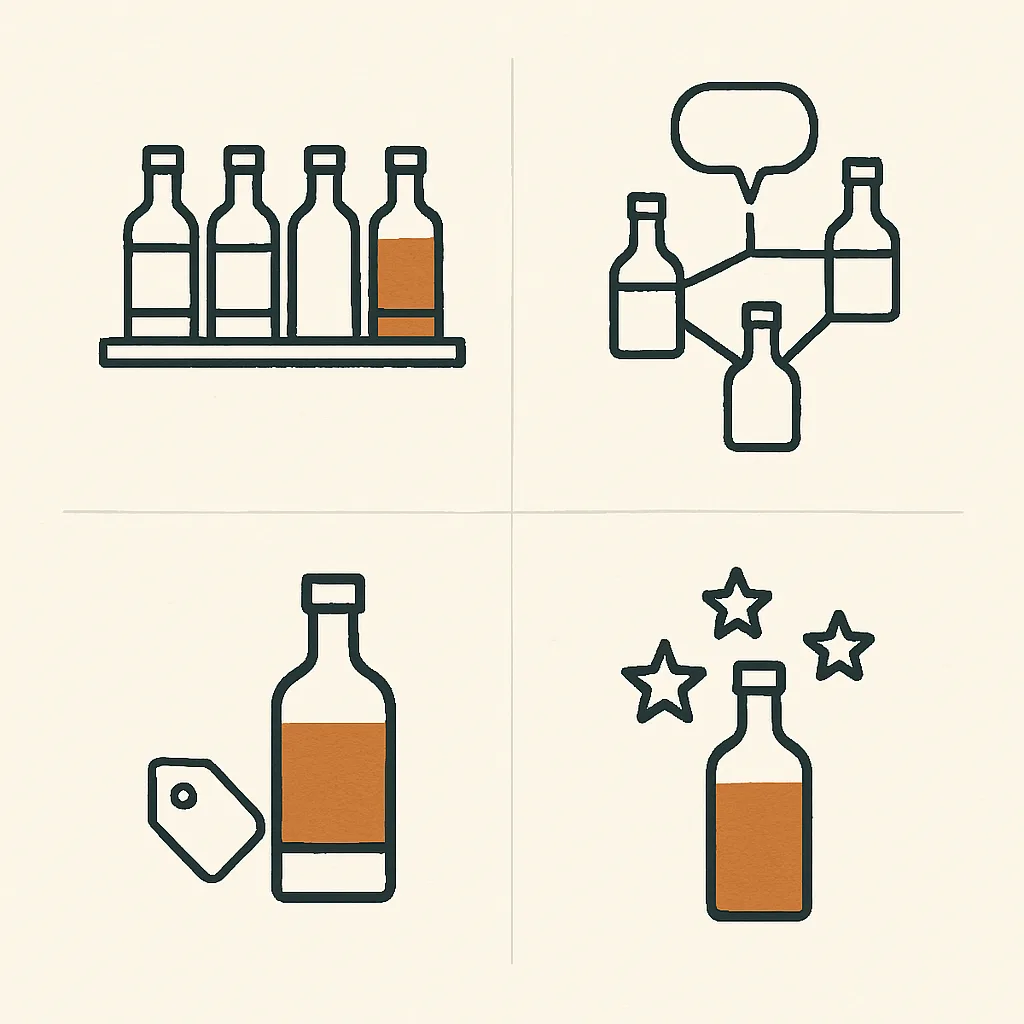
A quick tour of what we built and where to start:
One thing worth knowing about the ratings before you trust them: even though a 10-point scale is used formally, most ratings sit between 6 and 9. Typical value is around 8/10. Quick orientation: 7 is good, 8 is very good, 9 is absolute top. Very low ratings are rare, because few collectors bother scoring rums they wouldn’t buy anyway.
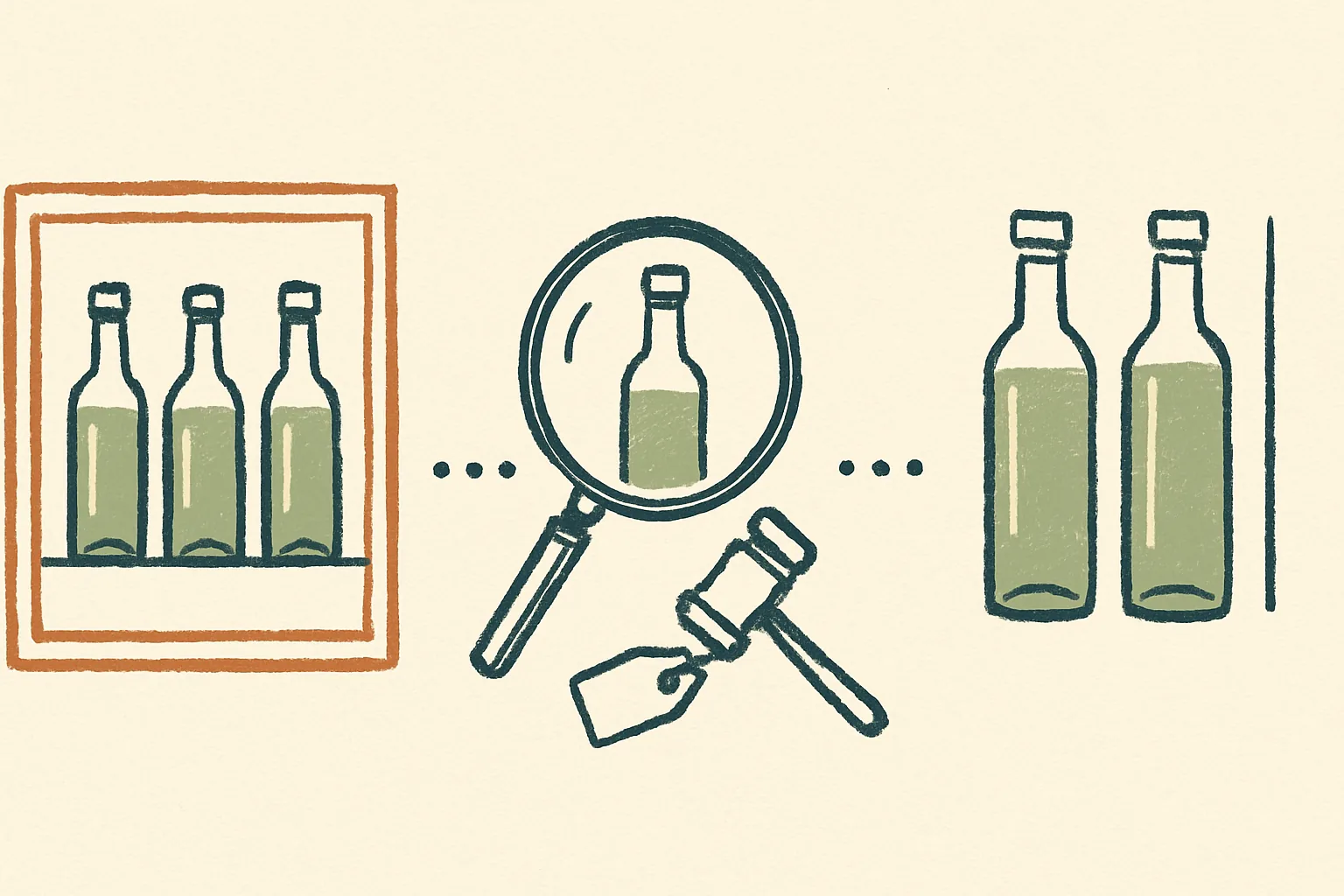
This Collector Series has three more parts ahead:
There’s a thread for this article on the RumX forum where you can ask your questions, whether “which first bottle should I get?” or “does Hampden 1990 really make sense as a collecting focus?”.
Cheers, Oliver (Founder, RumX)
This article is based on RumX platform data (as of February 2026) and market data from Mordor Intelligence (2025). All information without guarantee. Not investment advice.
This Collector Series is created in partnership with Catawiki. Catawiki provides us with research and creation resources but has no influence on the content.
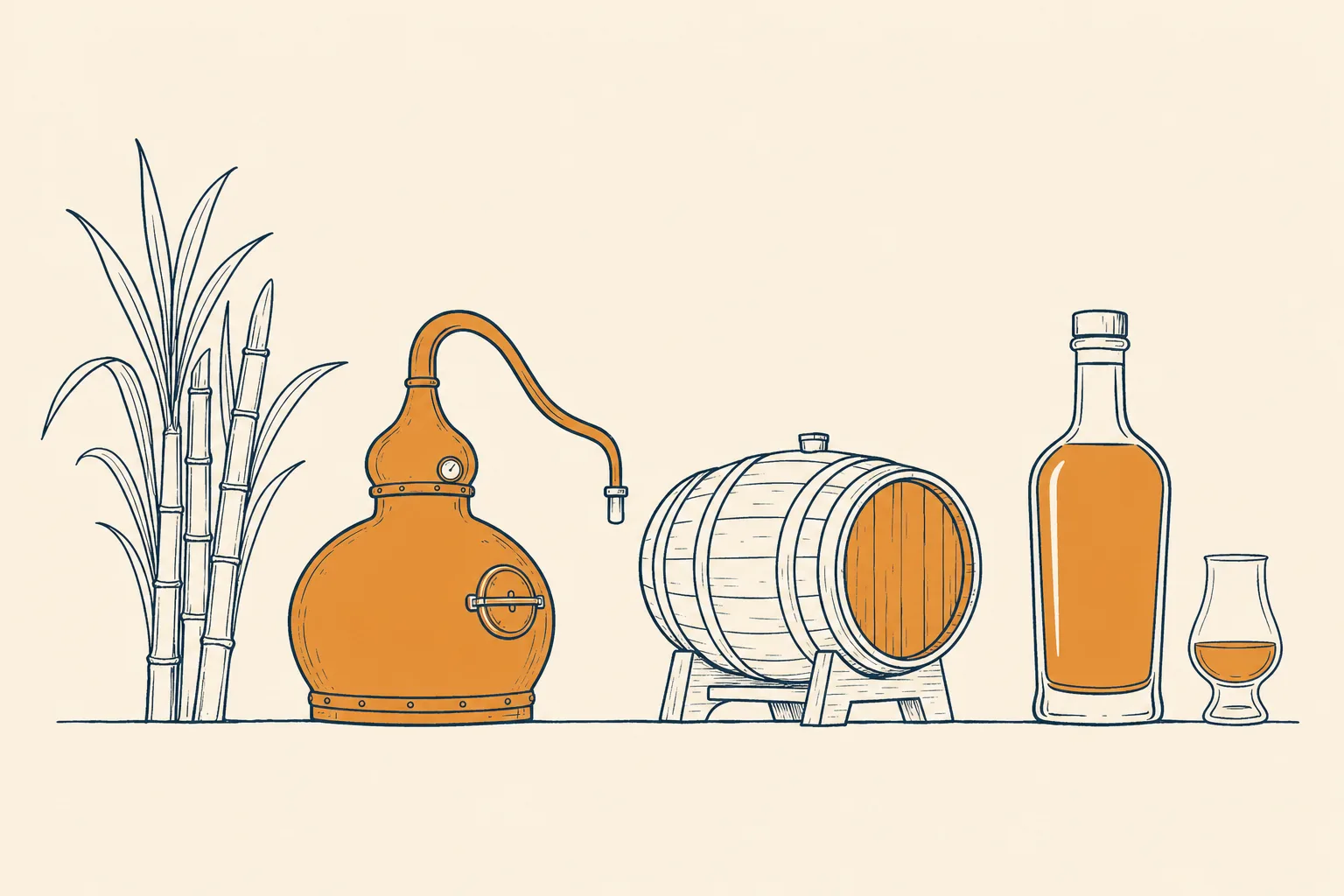
Rum is a spirit made from sugarcane — but raw material, fermentation, distillation, and ageing determine its style and quality. Learn what rum is, how it's made, and how to find the best bottles with RumX.
Read more →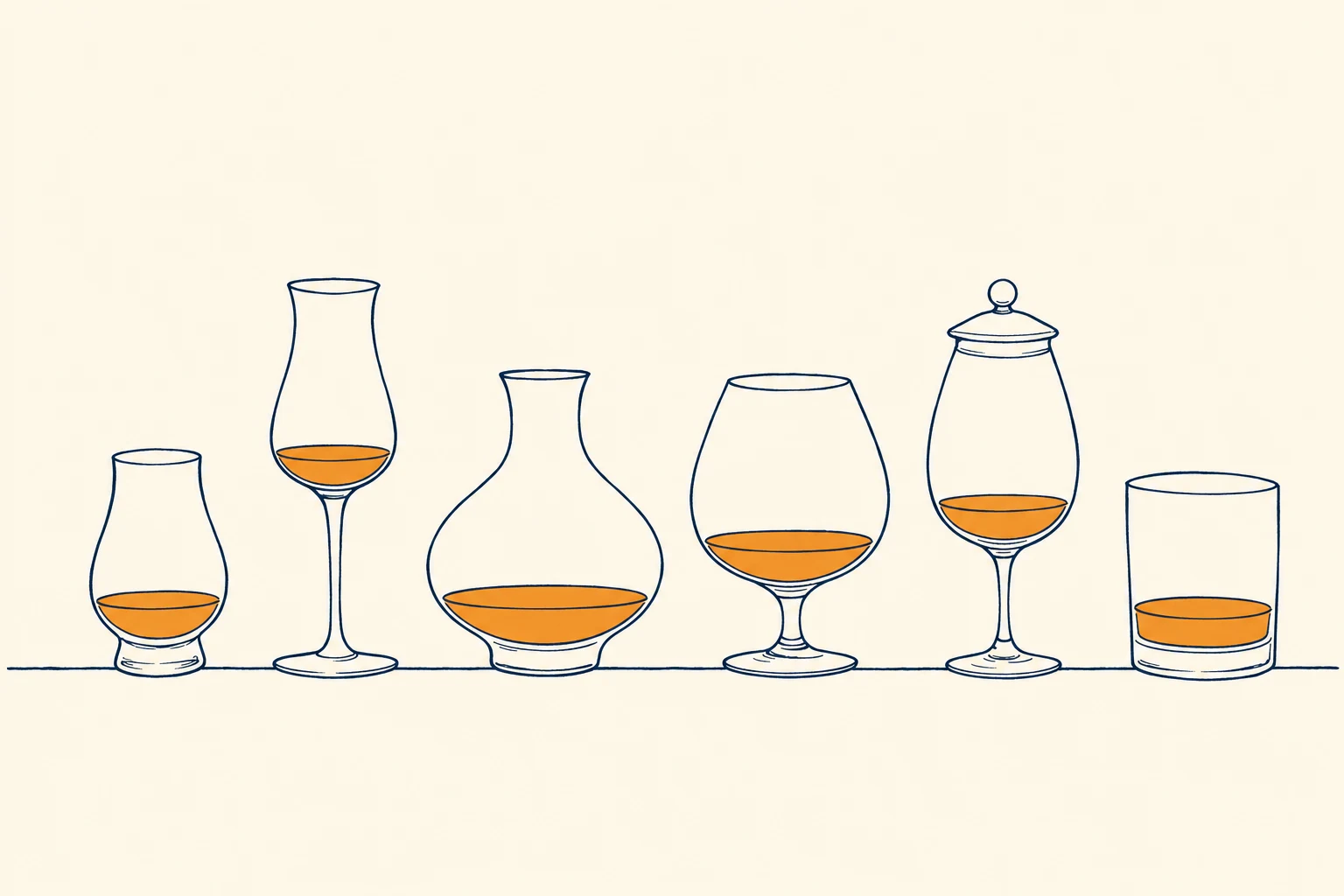
Rum glasses compared honestly: nosing glass, Glencairn, 1920s Blenders & Riedel – distilled from 227 community posts, with measurements and practical tips.
Read more →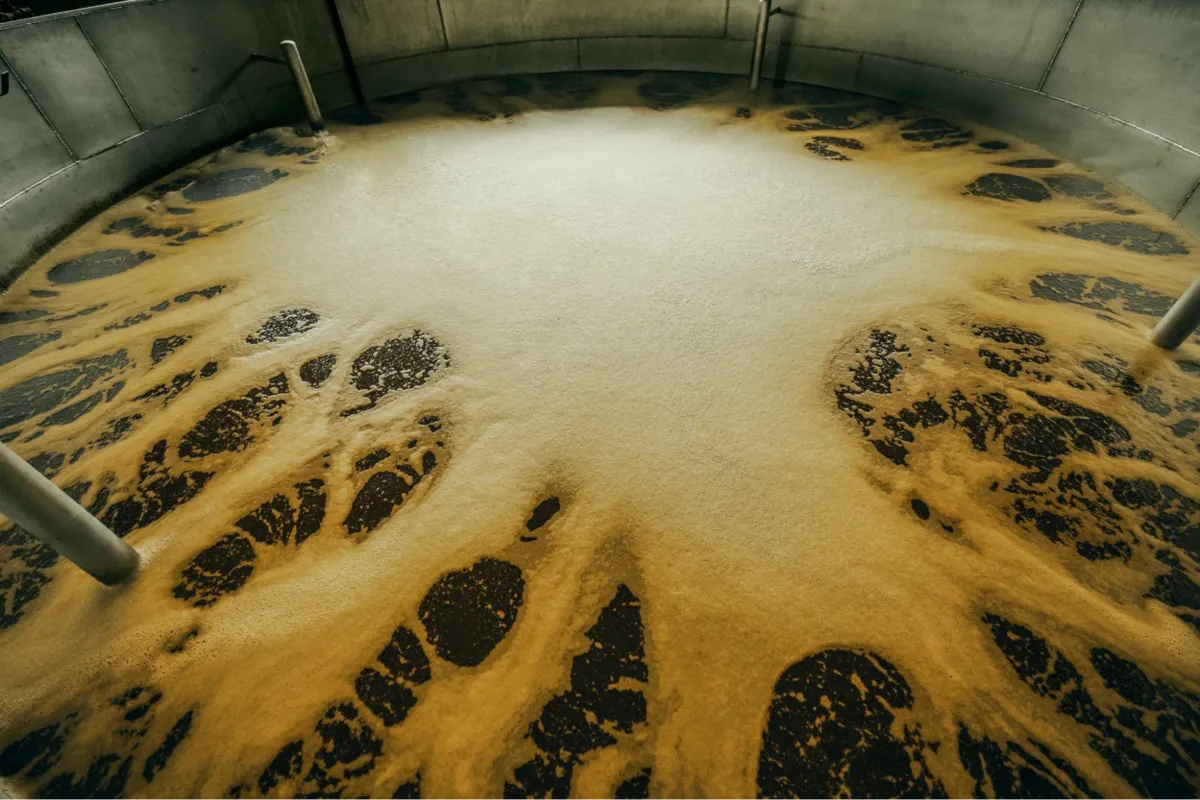
RumX analyzes Diplomático with 1,400+ community reviews. Three distillation methods, 60+ blending components, and community data reveal why this Venezuelan rum is the platform's most popular.
Read more →
From ABV to White Rum — learn the essential rum terminology. A complete glossary of rum production, styles, and tasting terms.
Read more →
Dear rum lovers, wherever you are sitting or standing – are you ready? What began years ago as a small project and is now eagerly awaited by rum fans around the world has developed into what is probably the most important award ceremony on the international rum scene.
Read more →