
Pusser's Rum Gunpowder Proof (Black Label)
 Pusser's Rum Gunpowder Proof (Black Label)
7.4/10 (299 reviews)
Spice · Vanilla · Burnt sugar
Everything you need to know
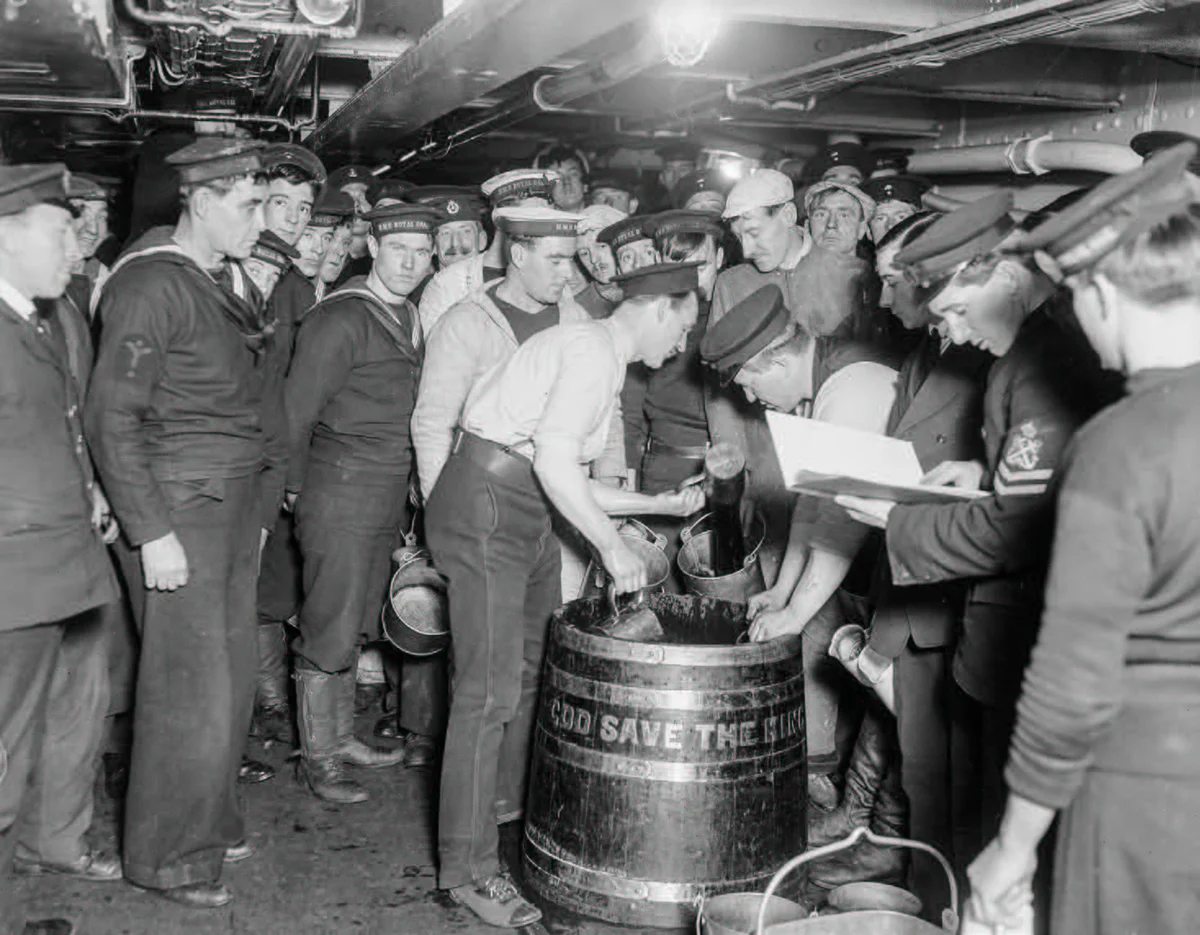
From the Royal Navy's daily “Tot” to the legendary Black Tot Day, navy rum is liquid history. Learn the story, debunk the most persistent myths, and discover the characterful and rare bottles that make this style immortal.
Fluttering sails in a stiff breeze, pounding turbines, palm trees on the horizon and cannon fire: welcome to the diverse world of Navy Rum, probably the most famous blend in the history of spirits.
What at first sounds like a simple mixture of molasses rum (molasses = residue from sugar production) from the former British colonies, primarily Jamaica, Trinidad, British Guiana and Barbados, is in fact a tradition dating back more than 300 years.
But let's start at the very beginning!
In the 17th century, the daily life of many sailors in the British Navy was often marked by scurvy, a vitamin deficiency disease, due to weeks of travelling at sea. They also suffered from mental health problems caused by the many naval battles. In order to curb infections and lift the general mood, the Royal Navy decided in 1655 to distribute a daily ration of rum to sailors on all its warships. This so-called ‘tot’ (which translates as “little sip”) consisted of one-eighth of an imperial pint (71 ml) of rum with 95.5 proof (54.6% alcohol content) and was issued at noon. Even today, this rum is still called ‘Navy Rum’ in reference to its close connection to the navy.
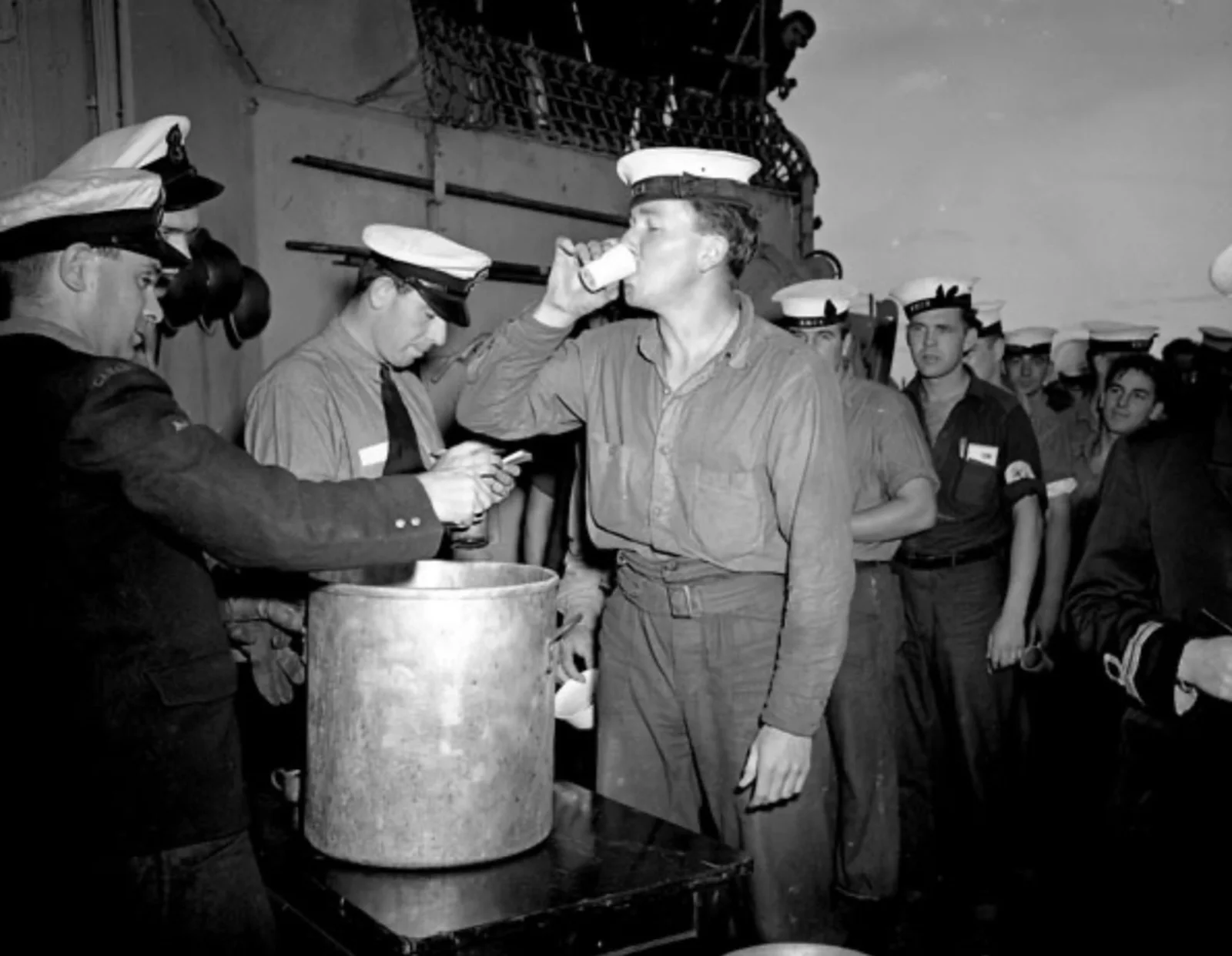
Sailors in the Royal Navy traditionally drank their navy rum from small tin or wooden cups known as ‘tot mugs’, ‘rum cups’ or ‘grog mugs’. These personal cups were used for the daily rum ration and were an integral part of the tradition on board. Today, Navy Rum is simply drunk from a tumbler or a tulip-shaped nosing glass so that the bouquet of the rum can fully unfold.
As the navy was in constant contact with gunpowder, which had to be functional at all times, it was important for the Admiralty to define a drinking strength for rum that did not impair its ignitability when in contact with gunpowder – the so-called Navy Strength. To prove this, rum was simply poured onto the gunpowder and the mixture ignited. However, the fact that this practice became the standard for testing alcohol content is pure sailor's yarn. You can find more on this and other myths at the end of the article.
This iconic alcohol content has not lost its relevance in the world of rum to this day. However, thanks to the introduction of alcohol measuring devices and safety standards in the war industry, its presence shifted from naval ships primarily to the labels of countless rums.
Advances in shipping and military technology did not stop at centuries-old traditions. In the late 20th century, the British government and its officers came to the conclusion that modern measuring devices and heavier artillery were no longer compatible with daily alcohol consumption and decided in 1970 in the British Parliament during ‘The Great Rum Debate’ to discontinue the daily rum ration for good.
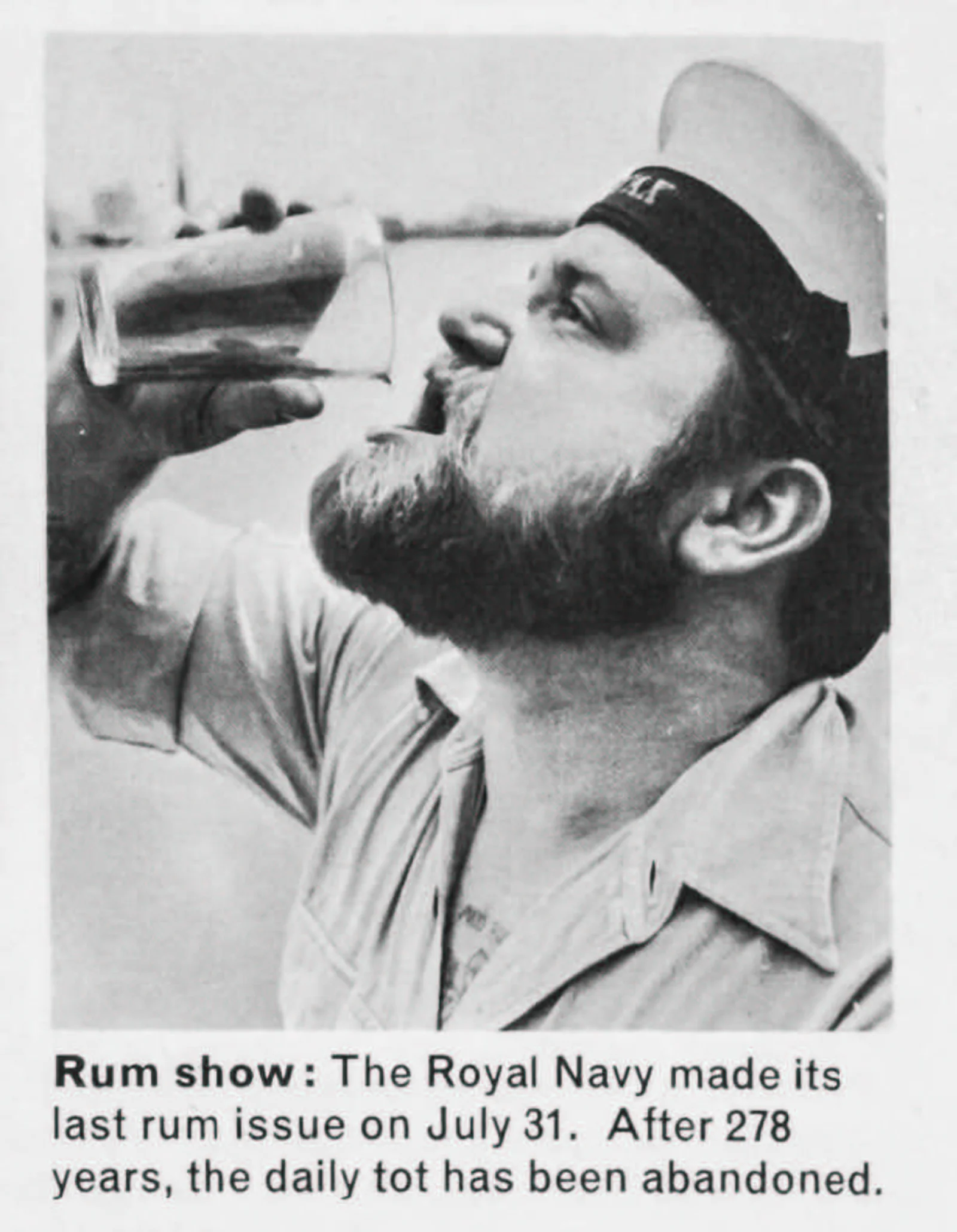
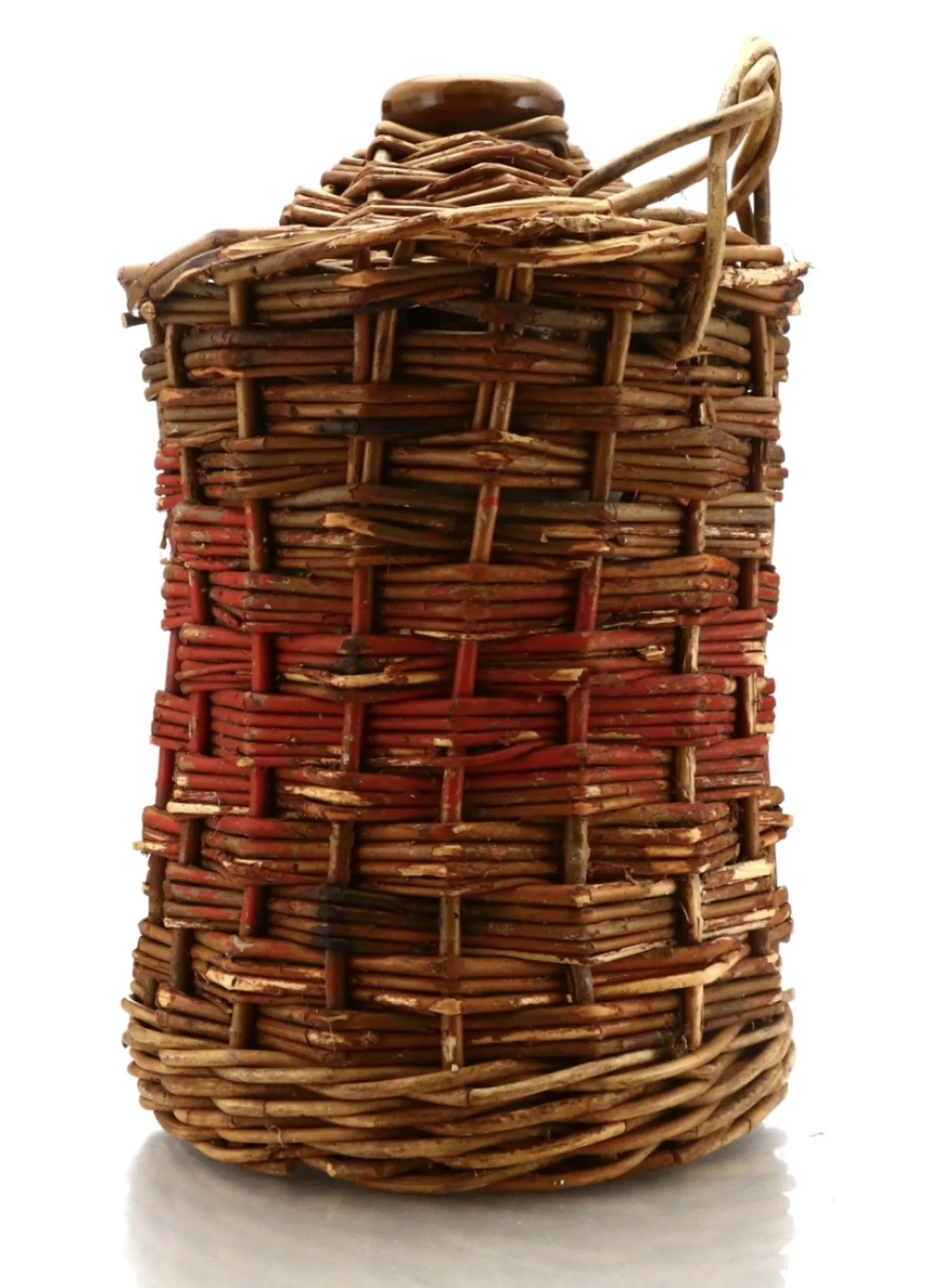
On 31 July 1970, the last rum ration was served. This day, considered deeply tragic by sailors, has since been celebrated as Black Tot Day not only by naval personnel but also by rum lovers worldwide. The Navy's remaining stocks were stored and later found their way into auctions as highly sought-after glass containers encased in wickerwork, where they still fetch top prices today. However, we know from many reports from the RumX community that buying one of these flasks is always a big gamble, and that the quality and blend compositions vary greatly.
Although the basic recipe for the blends was standardised by the Royal Navy over time, the ingredients used in each rum-producing country varied greatly in some cases. We have analysed thousands of rum reviews and tasting notes on RumX – what unites Navy Rums is a highly complex interplay of the typical aromas of the rum countries used:
The complexity and quality of a navy blend can be increased at will, from an inexpensive sailor's drink to a fine captain's drop, depending on the duration of the respective barrel ageing. But how can one find one's way through the variety of different navy rums? Let's take a closer look at the individual quality levels!
In 1979, Charles Tobias obtained the original recipe for Navy rum and began bottling it in Navy Strength. The recipe had been kept secret for a long time. He named the rum ‘Pusser's’ after the purser, the paymaster on board who used to be responsible for rum rations. Subsequently, other manufacturers and rum brands jumped on the bandwagon and a steadily growing group of enthusiasts of this style formed. These uncomplicated, easy-drinking entry-level representatives are the perfect companions for a wild sailor's party. Thanks to their easy availability and accessibility, often through the addition of sugar, these navy rums have now conquered markets worldwide.
Pusser's Rum Gunpowder Proof (Black Label)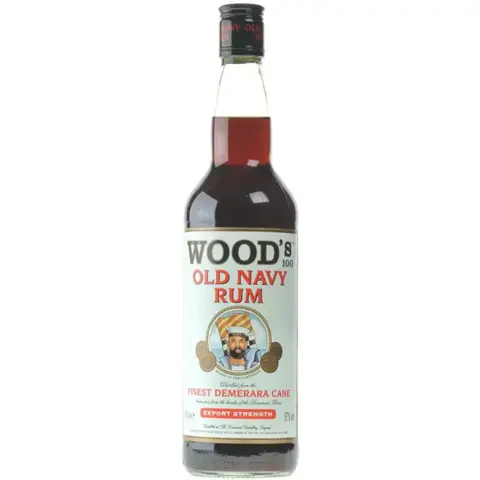 William Grant & Sons Diamond Wood's Old Navy Rum

In recent years, many rum brands have experimented with navy blend recipes and brought exciting bottlings to market. These representatives do not increase the alcohol content, but the quality! Significantly older casks provide more complexity and depth, taking you on an exciting journey of discovery into the world of British rum style.


You've sailed all seven seas, know your way around the world of rum, and after a hard day at sea, want to relax in your captain's cabin and enjoy only the very best Navy rums? Only the oldest and finest rum casks find their way into these Navy rums, which are priced at over 100€!
Interesting fact: brothers Sukhinder and Raj Singh, founders and long-time owners of The Whisky Exchange, purchased several 4.5-litre original flasks from the British Navy from a former sailor and, in 2007, had the opportunity to acquire the rest of the stock. They then bottled this liquid piece of rum history in high-quality 0.7 litre bottles, making the historic taste experience accessible to everyone with guaranteed quality: The Last Consignment!
Some of the distillations contained therein date back to the early 20th century. As a fitting extra, the rum bottle comes with a traditional metal tot mug in the package.
As you can see, navy rum has a firm place both in rum history and in the hearts of rum lovers worldwide. Reason enough for us at RumX to make our contribution to this special tradition: together with the french Rum brand Famille Ricci from the Côte d'Azur, we have realised our dream and created an exclusive Navy Rum for our huge RumX community. 100% according to our specifications, blended in a complex process over many weeks – with rums that have been aged for up to 31 years.

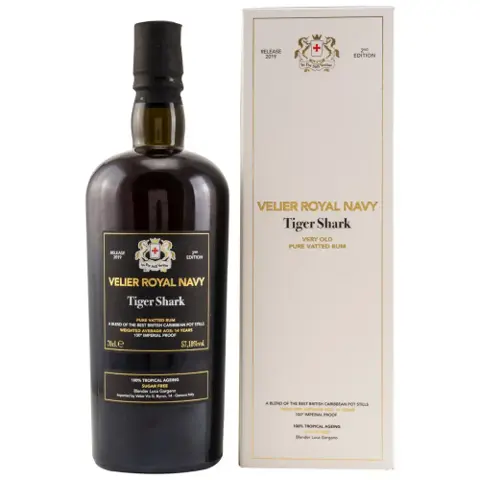 Velier Royal Navy Tiger Shark
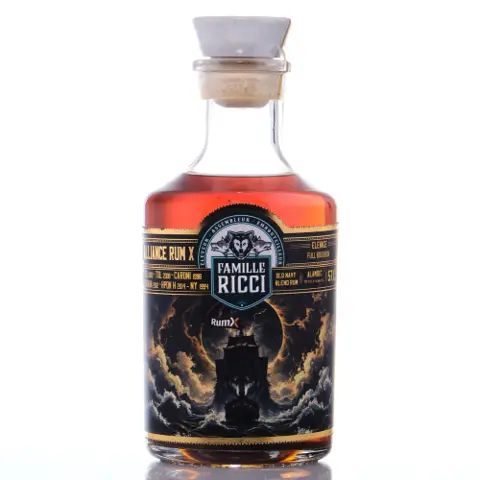 Famille Ricci Navy Blend by RumX 2025
Navy rums are true legends – steeped in history and rich in flavour, they are a delight for everyone, from curious novices to seasoned professionals. Speaking of professionals, we spoke to one of the most renowned rum experts and author Matt Pietrek about navy rum. He dispelled some myths and shared some fascinating side facts with us:
But enough talk and rambling, now it's your turn:
Write your answers in the comments!