
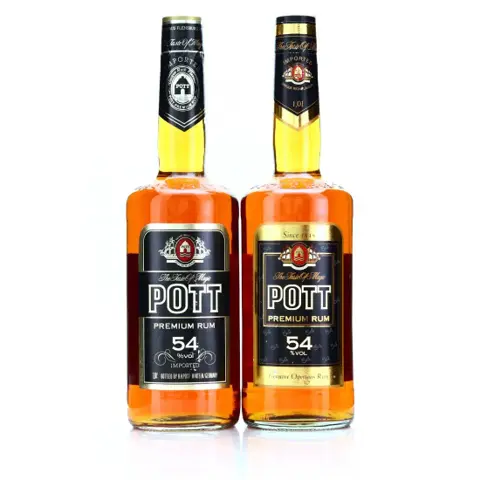
Pott
Pott Der Gute Pott Echter Übersee Rum
5.0/10 (31 reviews)
Alcoholic · Raisin · Brown sugar
What the EU spirit drinks regulation covers, what is only a word on the label, and how the RumX community rates these bottles against rums up to €20
Rum bottles in Germany and Austria carry four terms that sound like quality grades: Übersee-Rum (“overseas rum”), Echter Rum (“genuine rum”), Rum-Verschnitt (rum cut with neutral alcohol) and Inländer Rum (“domestic rum”). You may have seen them on a supermarket shelf or brought a bottle home from a holiday. Rum-Verschnitt is governed by the EU spirit drinks regulation itself, Inländer Rum by a protected name from Austria. The other two terms do not appear in the regulation. This page sets out what the regulation says, what producers state and how the RumX community rates these bottles.
What matters is the word that stands alone or right next to “Rum”. If the label only says “Rum”, the bottle has to meet the EU definition. “Übersee” and “echt” change nothing about that; “Verschnitt” and “Inländer” do.
| On the label | What the EU regulation and the specification say | Example |
|---|---|---|
| Rum | EU category: made from sugar cane only, at least 37.5 % ABV, no other alcohol, no flavouring | Planteray Original Dark (formerly Plantation) |
| Übersee-Rum, Echter Rum | Not in the EU regulation. The word that counts is “Rum” | Pott 54 |
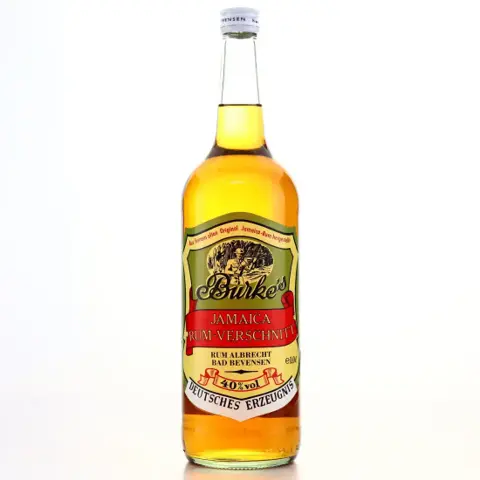
| Rum-Verschnitt | Special rule for Germany: rum with neutral alcohol, at least 5 % of the alcohol from rum. Legally a “spirit drink” | Burke’s Jamaica Rum-Verschnitt |
| Inländer Rum | Protected name from Austria: alcohol entirely from rum, flavoured with an essence. A spirit drink in its own right | Stroh 80 |
One example each of Übersee-Rum, Rum-Verschnitt and Inländer Rum. Scores and prices are live.
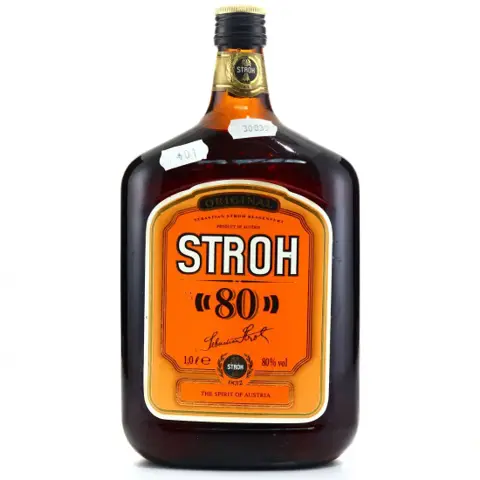
The examples are bottles whose designation appears in the bottle name, with the producer or with the retailer. This is not a ranking, and there are no paid placements.
Rum is a spirit drink distilled exclusively from sugar cane. That is what Annex I point 1 of Regulation (EU) 2019/787 says. What is fermented and distilled is molasses, syrup from cane sugar production or the sugar-cane juice itself.
Four rules separate rum from everything that merely has a similar name:
Anything that does not meet these rules may not use the word rum as its name, not even together with words such as “like”, “type” or “style” (Article 10(7)). A spirit that fits no category has the plain legal name “spirit drink”.
Colour tells you little here. Whether you buy dark rum or white rum, the definition is the same. The basics of raw material and production are explained in What is rum?, and you will find all types of rum in the overview.
The term Übersee-Rum does not appear in the EU spirit drinks regulation. The regulation sets neither an origin rule nor a minimum quality for it. We have not checked whether German rules govern the term.
On the label it is an addition to the word Rum. The regulation allows the legal name to be supplemented where the law of the Member State provides for it or where the name is customary, and only provided that this does not mislead the consumer (Article 10(6)). Whether Übersee-Rum falls under that, it does not say.
What the suppliers themselves state about origin:
None of the three says which country the rum comes from. Übersee Rum leaves that open. If origin matters to you, look for a country or a distillery on the label.
Under the EU regulation, nothing extra. “Echter Rum” (genuine or real rum) is not in it either, and we have not checked German rules on it. Every bottle sold as rum has to meet the definition in Annex I, with or without the word “echt”.
The designation next to it tells you more than the adjective. There are three cases on the shelf:
RumX lists Rum-Verschnitt and Inländer Rum as a “spirit drink on a rum base”. That is a classification by law and not a verdict on taste.
Rum-Verschnitt is rum that has been mixed with neutral alcohol. The EU regulation covers it as a rule specific to Germany in Annex II point 1: it is produced in Germany, and at least 5 % of the alcohol in the final product has to come from rum. Up to 95 % may therefore be ethyl alcohol of agricultural origin.
The regulation prescribes three things:
The last rule helps you when shopping. The word may not be in small print or hidden on the back. If the front only says “Rum”, it is not a Verschnitt.
Rum-Verschnitt exists in this form only in Germany. Where it is sold abroad, the label has to state its alcoholic composition.
Inländer Rum is a protected geographical indication from Austria and legally a spirit drink in its own right. The specification in the Austrian food code (Österreichisches Lebensmittelbuch, chapter B 23, section 7.2; the document is in German) classes Inländerrum as “Sonstige Spirituose” (other spirit drink) and not in the rum category.
The production fits that. Inländer Rum is made from rum, it gets its taste from an Inländerrum essence, and further traditional additions are allowed for rounding off. Rum in the sense of the EU category may not be flavoured. Stroh 80 is Inländer Rum and so, according to the specification, an “other spirit drink” and not a rum of the EU category. The producer describes Stroh 80 as having an aroma of almonds, vanilla and cinnamon.
Inländer Rum differs from German Rum-Verschnitt above all in the alcohol:
It was not always so. According to the food code, Inländer Rum began as “Kunstrum” (artificial rum) made from diluted spirit with essences and caramel colouring, because shipping rum from overseas was expensive and unreliable. Only since a transition period after Austria joined the EU ended, that is since 1999, has it been made on a base of rum alcohol.
On the label the protected indication may replace the name “spirit drink”. The specification also allows the strength to be added to the name, for example “Inländerrum 38”. The indication is registered as one word; the Stroh distillery writes Inländer Rum.
It says nothing about the kind of bottle. For rum the EU regulation only knows the lower limit of 37.5 %; there is no step at 54 % in it. “Rum 54” is a trade strength in which many Übersee-Rums are sold next to the 40 % version, for example from Pott, Silverstone and James Cook.
It is similar at 80 %. The best-known bottle at that strength is Stroh 80, an Inländer Rum. Its specification names strengths up to 80 % as customary, and Stroh itself sells it at 40, 60 and 80 %.
Neither strength is rated well. Übersee-Rum and Rum-Verschnitt at 54 % reach a median score of 4.5 out of 10 in the RumX community (60 ratings, a good half of them for Pott 54), the versions at 37.5 to 40 % reach 3.9 (85 ratings, as of 27 November 2026). For Pott 54 members mostly tick alcohol, brown sugar and raisin as aromas, for Stroh 80 alcohol, fruit and caramel.
Pott and Stroh themselves recommend their strong versions for the kitchen and for hot drinks. Two guides go into that: Which rum for Feuerzangenbowle? (the German flaming punch) and Which rum for baking?
Markedly lower. Tasted neat, Übersee-Rum, Rum-Verschnitt and Inländer Rum sit clearly below the rums up to €20 in the RumX community. For most of these bottles RumX itself has no price; where there is one, 10 of 12 bottles cost €20 at most. That holds for the scores overall and for the members who have had both in the glass.
| On the label | Basis | Median score | Direct comparison |
|---|---|---|---|
| Übersee-Rum | 20 bottles, 119 ratings | 4.0 out of 10 | 51 of 66 members rate rum up to €20 higher |
| Rum-Verschnitt | 10 bottles, 38 ratings | 5.0 out of 10 | together with Übersee-Rum: 61 of 76 |
| Inländer Rum | 14 bottles, 91 ratings | 3.1 out of 10 | 60 of 62 members rate rum up to €20 higher |
| Rum up to €20 | 72 bottles, 5,179 ratings | 6.6 out of 10 | comparison group |
As of 27 November 2026. The Rum-Verschnitt row rests on 22 members, and a third of the ratings are for a single bottle. That it stands above Übersee-Rum is therefore not a finding. Too few members have rated both for Rum-Verschnitt on its own, which is why it appears in the comparison together with Übersee-Rum.
How a score on RumX comes about is explained under How does RumX calculate the ratings?
Three things belong with these figures:
On Burke’s Jamaica Rum-Verschnitt several members write that they recognise the Jamaican rum, and at the same time call it thin and watered down.
In the comparison group up to €20 there is rum that does better in the same glasses. Of 31 members who have rated Planteray Original Dark and an Übersee-Rum or Rum-Verschnitt, 28 gave the Planteray the higher score. For Pampero Aniversario it was 32 of 40. Mount Gay Eclipse from Barbados is a third example from the comparison group.
Three bottles from the comparison group that RumX lists as rum. Scores and prices are live.
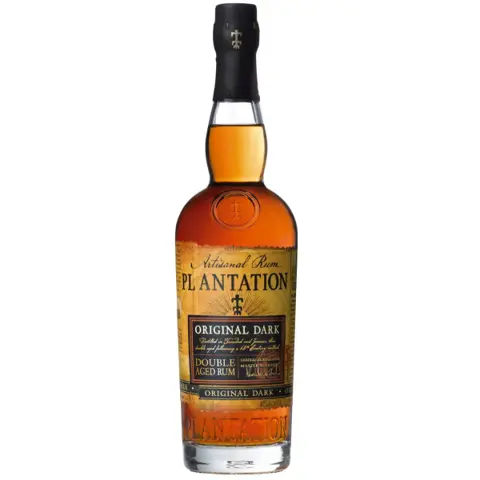
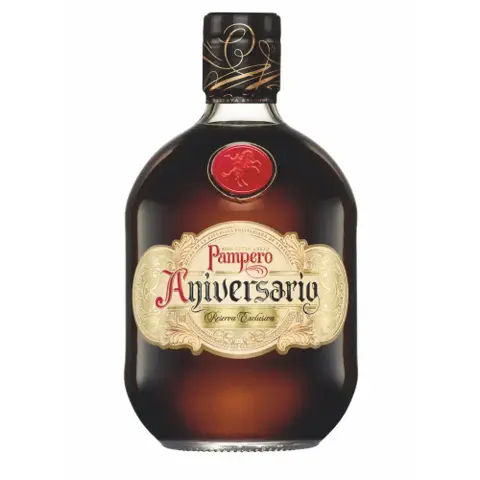
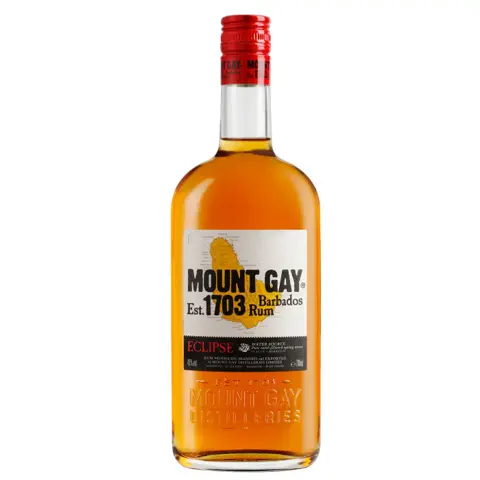
These are three examples. The whole selection with current prices is in the list of good rums under €30. If you are standing in front of the shelf, the guide Which supermarket rum is good? covers the bottles you will find there.
Rum is a spirit made from molasses, sugarcane syrup or sugarcane juice, bottled at 37.5% ABV or more in the EU. How it is made, and how it differs from rhum agricole, cachaça and rum-based spirit drinks.
Read more
Rum for baking: what RumX members use for cakes, Stollen and rum balls, what German Backrum and rum flavouring are, and how much alcohol is left after baking.
Read more
Rum for Feuerzangenbowle, the German flaming punch: producer's recipe and TÜV safety advice assume 54 % ABV. Bottles from 54 %, their taste, RumX ratings.
Read more