
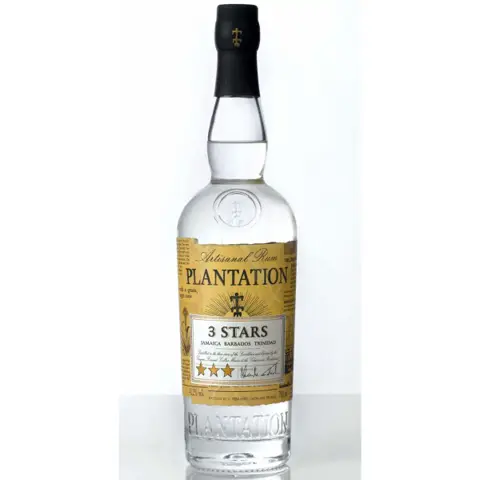
Plantation
Plantation 3 Stars White
7.0/10 (314 reviews)
Vanilla · Sugarcane · Alcoholic
White or dark rum, 40 or 54 % ABV: what the choice changes in the glass, with bottles and numbers from the RumX community
Which rum for Eierlikör, the German egg liqueur? White rum stays in the background, aged rum adds vanilla and caramel. Plus 40 or 54 %, spiced rum, raw eggs.
Eierlikör is the German egg liqueur. For a classic, mild one, use a white rum; for more vanilla and caramel, an aged dark rum; and if the rum should come through clearly, one from Jamaica. Two things matter more than the colour: which aromas the rum brings and how strong it is. Both can be backed up, with the tastings of the RumX community and a short calculation.
| You want | Bottle | Why |
|---|---|---|
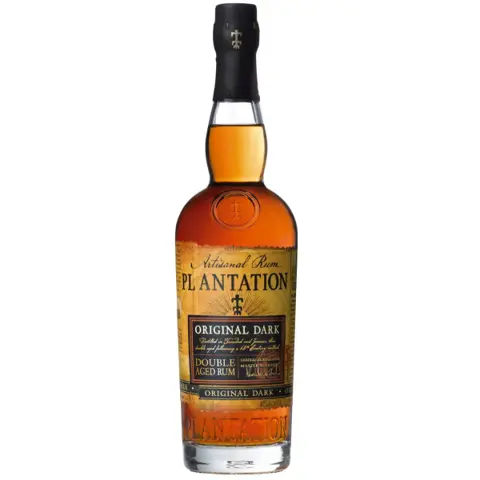
| Mild, egg and vanilla up front | Planteray 3 Stars (white, 41.2 %) | a white rum that still brings vanilla |
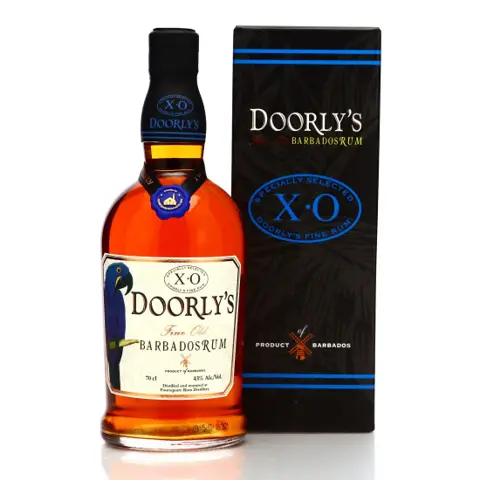
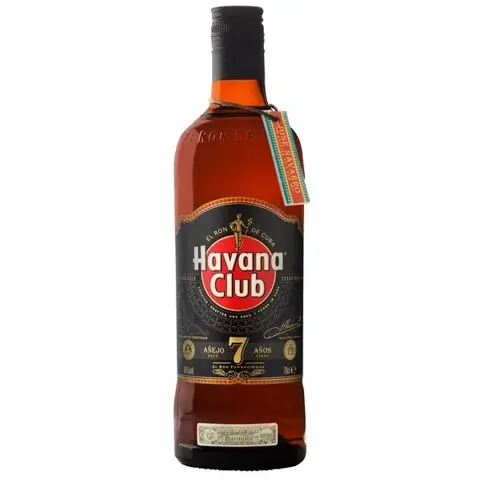
| Vanilla, caramel, a little wood | Doorly’s XO (43 %), alternatives: Planteray Original Dark or Havana Club 7 | aged, few esters, plenty of cask |
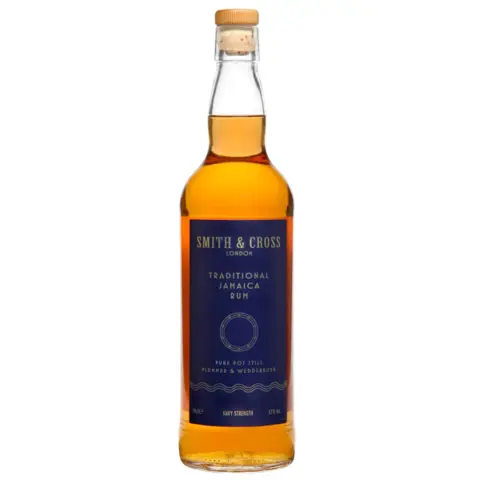
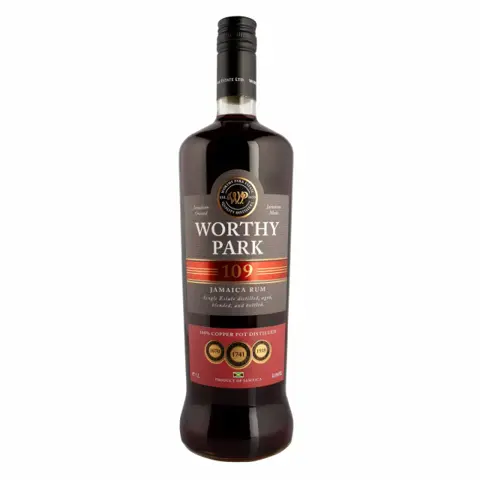
| A rum you can taste in it | Smith & Cross (57 %), gentler: Worthy Park 109 (54.5 %) | Jamaican rum with ripe fruit and more than 54 % |
| The way it used to taste | Der Gute Pott 54 % | a German “Übersee-Rum” (overseas rum) at 54 %, in the forum the taste guests expect |
The cards further down show the current price.
A neutral white rum lets egg and vanilla pod speak for themselves; an aged dark rum brings vanilla, caramel and wood of its own. The aroma ticks of the RumX community show it: for unaged rum, members almost never tick vanilla and caramel, for aged rum in roughly every second tasting.
| Style | Vanilla | Caramel | Esters and funk |
|---|---|---|---|
| Unaged rum | 5 % | 5 % | 33 % |
| Aged column-still rum (e.g. Cuba) | 48 % | 50 % | 10 % |
| Jamaican pot-still rum | 34 % | 25 % | 75 % |
| Spirit drinks on a rum base (spiced, sweetened) | 44 % | 46 % | 3 % |
Share of tastings with aroma ticks in which the aroma appears. RumX community, as of 26 November 2026. “Esters and funk” combines the ticks ester, funky, glue and solvent.
Three things you can read from this:
So the colour alone says little. White does not always mean unaged, because some white rums are aged and then filtered. And a Cuban rum and a Jamaican rum have the same colour and make two different liqueurs.
RumX lists the following bottles as rum, not as a spirit drink on a rum base. According to the catalogue they have 40 % ABV or more, and enough tastings with aroma ticks for a reliable profile. The scores on the cards are for the rum neat; for the choice in the liqueur, the profile is what counts.
| Bottle | Vanilla | Caramel | Esters and funk |
|---|---|---|---|
| Planteray 3 Stars (white) | 62 % | 7 % | 34 % |
| Bacardi Carta Blanca (white) | 0 % | 11 % | 22 % |
| Havana Club 7 | 64 % | 68 % | 0 % |
| Planteray Original Dark | 62 % | 50 % | 30 % |
| Doorly’s XO | 72 % | 64 % | 5 % |
| Worthy Park 109 | 10 % | 64 % | 48 % |
| Smith & Cross | 30 % | 32 % | 74 % |
Share of tastings with aroma ticks per bottle (46 to 195 tastings). RumX community, as of 26 November 2026.
Planteray 3 Stars (formerly Plantation) is the exception among white rums: clear in the glass, but with vanilla in almost two out of three tastings. Of 65 members who rated both it and Bacardi Carta Blanca, 63 gave the 3 Stars the higher score. In the forum it appears in one member’s Eierlikör recipe, together with vodka and a dash of Jamaican rum.
Doorly’s XO from Foursquare in Barbados has the highest figures for vanilla and wood in this selection and hardly any esters. Foursquare was also the first suggestion in the forum, as a base for anything sweet. Of 75 members who rated both Doorly’s XO and Havana Club 7, 65 gave the Doorly’s the higher score.
Havana Club 7 is the more neutral choice: plenty of caramel and wood, and not a single tasting with an ester tick. Planteray Original Dark, by contrast, already brings a little banana and funk.
Smith & Cross carries an ester or funk tick in three out of four tastings, and banana almost as often. At 57 % ABV it is the strongest rum in the selection; what that means for the liqueur is in the next chapter. Worthy Park 109 at 54.5 % ABV is gentler: caramel and wood are up front, and only every second tasting mentions esters.
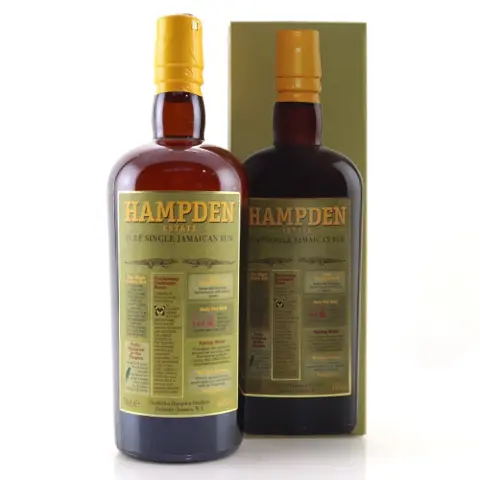
You don’t have to swap the whole amount: in one forum member’s recipe, three centilitres of Hampden 8 are added to mild rum and vodka. Keep an eye on the total amount of alcohol when you do this. By our rough calculation, that recipe comes out at just under 10 %, which puts it at the threshold from the next chapter, not above it.
In the usual basic ratio, rum at 54 % ABV brings the finished liqueur to around 11 to just under 15 %, and rum at 40 % ABV to just over 8 to around 11 %. The range is there because the volume of the finished liqueur can only be estimated. In its 2003 opinion, Germany’s Federal Institute for Risk Assessment (Bundesinstitut für Risikobewertung, BfR) gives at least 10 % for home-made Eierlikör, plus a standing time, see below. So with 40 % rum in this ratio you are close to that threshold or below it.
The basic ratio comes from the recipe the RumX forum also refers to, “Eierlikör nach DDR-Tradition” (Eierlikör in the East German tradition) by sweetgwendoline on the German recipe site Chefkoch: 8 egg yolks, 250 g icing sugar, 1 sachet of vanilla sugar, 375 ml evaporated milk and 250 ml rum at 54 %. The recipe itself gives a yield of about 1.2 litres. If you add up the ingredients, you get just over 0.9 litres. That is why we calculate with both volumes:
| Strength of the rum | Liqueur at 1.2 l (per the recipe) | Liqueur at just over 0.9 l (ingredients added up) |
|---|---|---|
| 35 % | just over 7 % | around 9.5 % |
| 37.5 % | just under 8 % | around 10 % |
| 40 % | just over 8 % | around 11 % |
| 43 % | around 9 % | just under 12 % |
| 54 % | around 11 % | just under 15 % |
| 57 % | just under 12 % | around 15.5 % |
Our own rough calculation with 250 ml of rum: millilitres of rum times per cent, divided by the total volume. Right-hand column with 18 g per egg yolk. Not a measurement. The recipe heats the mixture in a bain-marie, and alcohol can evaporate in the process. Both columns are therefore upper limits.
What follows from this:
For comparison: Regulation (EU) 2019/787 requires at least 14 % for anything sold as egg liqueur, plus at least 140 g of egg yolk and 150 g of sugar or honey per litre. For your kitchen that is not a rule, but it is a measure of what counts as egg liqueur on the shelf.
The recipe specifies rum at 54 %. A well-known rum at this strength is Der Gute Pott at 54 %, from the German brand Pott. On RumX it has ten tastings with aroma ticks, led by alcohol, raisin and brown sugar. In the forum, one member describes it as the taste guests expect. If you want the strength and more aroma, you’ll find it in Worthy Park 109 and Smith & Cross.
Yes, only legally it is not rum, and two things change in the liqueur: the strength and the aroma. In the EU, rum may not be flavoured, may contain at most 20 grams of sweetening per litre and must have at least 37.5 % ABV. Anything that is spiced, sweetened more heavily or weaker may not be called rum. RumX lists such bottles as a spirit drink on a rum base.
One member writes in their review that they mix Captain Morgan with a second rum for eggnog to balance the sweetness. There is more on sweetened bottles on the sweet rum page.
In the forum, six of the nine members who recommend a bottle name an ester-rich rum, mostly from Hampden. The basis is the topic “Eierlikör selbst gemacht: Rum?” (home-made Eierlikör: rum?), which is in German, with 24 posts from October 2023 to April 2025.
The most important pointer comes from MarcT: the liqueur with Foursquare and Jamaican rum tasted too strongly of rum for some guests. Since then he has made two versions, one with Hampden for himself and one with Pott or another baking rum for everyone who expects the familiar taste. So first ask yourself who is going to drink the liqueur.
In the reviews on RumX, Eierlikör is rare. It appears eleven times in the review texts, counting American eggnog as well (as of 26 November 2026). Six members report a bottle they used for it: besides Davidsen’s and Captain Morgan, El Dorado 8, Appleton Signature and, twice, Foursquare Spiced.
Germany’s Federal Institute for Risk Assessment (BfR) ties its recommendation for Eierlikör made with raw eggs to two conditions that apply together. This is what the BfR opinion of 26 February 2003 (in German) says:
According to the BfR, alcohol kills salmonella in the egg yolk. How strongly depends on alcohol content, duration and temperature together, and at room temperature it works more strongly than in the fridge. On heating, the BfR writes in the same opinion that pasteurisation at around 64 °C for five to six minutes usually makes the yolk mixture set, which is why it is usually not heated at home.
For the basic ratio from the chapter on strength this means: by our rough calculation you do not reach the 10 % with every rum, and the standing time does not appear in the recipe. The Chefkoch recipe and the recipe from the forum heat the mixture in a bain-marie without specifying temperature and duration. Whether 70 °C for two minutes is reached in the process depends on you and the thermometer.
What the BfR says about raw eggs in general applies here too (questions and answers on salmonella, in German, as of 27 September 2024):
We have not found an official time limit for how long home-made Eierlikör keeps. Chefkoch gives up to six weeks in the fridge for the recipe, without a source. One forum member writes three to four weeks for his version with cream. None of these figures is substantiated, which is why we do not give one of our own here.
The forum topic is still running. It is in German; write there which bottle you used and how the liqueur turned out:
Rum for baking: what RumX members use for cakes, Stollen and rum balls, what German Backrum and rum flavouring are, and how much alcohol is left after baking.
Read more
Which rum for mulled wine, punch and grog? Picks from RumX data on aroma, strength and sweetness. Plus: how much rum, when to add it, Stroh and Jagertee.
Read more
Rum is a spirit made from molasses, sugarcane syrup or sugarcane juice, bottled at 37.5% ABV or more in the EU. How it is made, and how it differs from rhum agricole, cachaça and rum-based spirit drinks.
Read more