
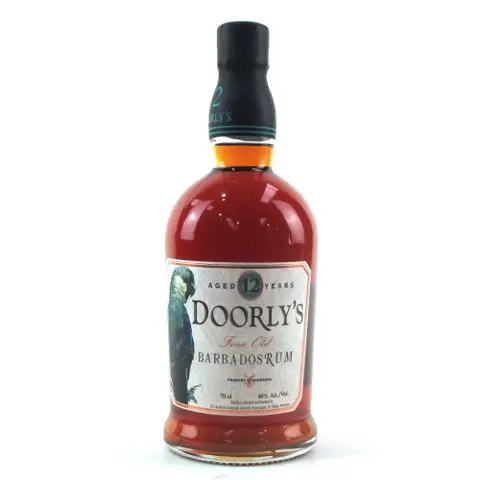
Foursquare Doorly's 12 Years
7.8/10 (343 reviews)
Vanilla · Caramel · Spicy
What the law regulates, what is merely custom and what strength means for the score: analysed with the RumX catalogue and the community's ratings
The alcohol content is printed on every rum bottle as a percentage, and around it you often find words like overproof, navy strength or cask strength. Surprisingly little of this is regulated: the minimum, and the way the figure gets onto the label. Everything else is custom. This guide sets out what the law says, how strengths are distributed in the RumX catalogue and what strength means for the community’s score, separately for beginners and experienced members.
At least 37.5 % ABV, most often 40 %. The minimum is set by the EU spirit drinks regulation, which has no upper limit for the bottle. In the RumX catalogue the range goes up to more than 90 %, and half of all bottles are at 45 % or below.
| Tier | Strength | Who sets it? | Example |
|---|---|---|---|
| Minimum strength | 37.5 % | EU law: nothing below it may be called rum | |
| Standard | 40 % | Nobody. Most common strength in the catalogue, one bottle in five | Doorly’s 12 |
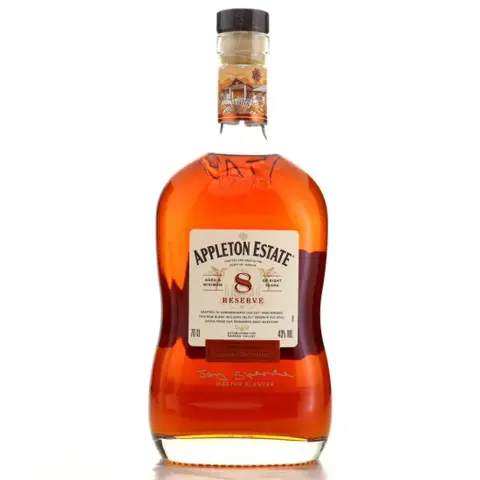
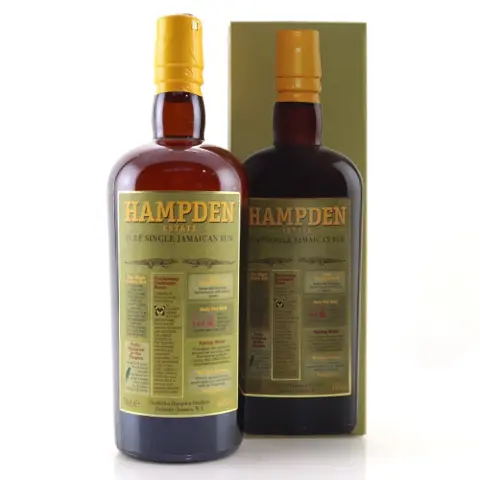
| A little more | 43 to 46 % | Nobody. Just under one bottle in five | Appleton Estate 8 Reserve at 43 %, Hampden 8 at 46 % |
| Navy Strength | most often 57 % | Nobody. In the catalogue 54.5 to 77 % | CDI Jamaica Navy Strength |
| Overproof | mostly 58 to 65 % | Nobody in the EU. The word appears most often at 63 % | Hampden Rum Fire at 63 % |
| Cask strength | mostly 54 to 63 % | Nobody. It means: bottled without water | |
| 151 | 75.5 % | Nobody. 151 is a proof number, and US law only defines the conversion |
Five bottles as examples of the tiers, from 40 to 63 %. Not a ranking; scores and prices are live.
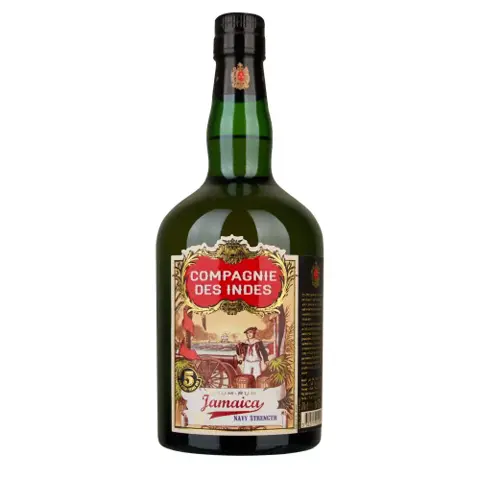
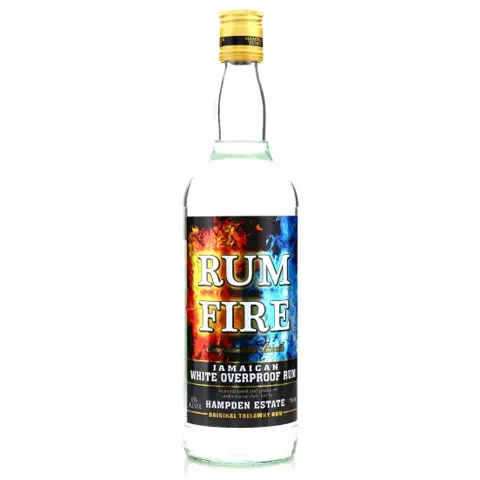
The examples illustrate the tiers; they are not a recommendation. If you are looking for a selection, you will find it in the lists of the best overproof rums and the best cask strength rums; there are no paid placements there.
How a score on RumX comes about is explained under how we evaluate the ratings.
EU law regulates three things: the minimum, the meaning of the figure and the way it is written. Tiers such as overproof or cask strength do not appear in it.
So a rum with “40 % vol.” on the label can measure between 39.7 and 40.3 %.
Rum gets its alcohol content in two steps. It usually comes off the still stronger than it is sold, and before bottling most producers adjust it with water. That is how Nicolas Kröger describes it in the expert chapter. How rum is made is explained in What is rum?
Below 37.5 %, a bottle may not be sold as rum in the EU. RumX lists such bottles as a spirit drink on a rum base: of the bottles below 37.5 % in the catalogue, that applies to a good nine in ten. The same minimum alcoholic strength of 37.5 % applies to Rum-Verschnitt (rum cut with neutral alcohol, a German speciality); for Inländer Rum it is 38 % according to the Austrian specification. What then has to be on the label is explained in the guide Übersee-Rum, Inländer Rum, Rum-Verschnitt.
In the USA the minimum is higher. Rum there must be bottled at not less than 40 %; the rule gives 80 proof in brackets.
40 % is by far the most common strength, but far from the only one. In the RumX catalogue, one bottle in five has exactly 40 %. Almost four in ten bottles have 50 % or more.
| Strength | Share of bottles in the RumX catalogue |
|---|---|
| below 37.5 % | 6 % |
| 37.5 to below 40 % | 5 % |
| exactly 40 % | 20 % |
| above 40 to below 43 % | 6 % |
| 43 to below 46 % | 14 % |
| 46 to below 50 % | 10 % |
| 50 to below 57 % | 17 % |
| 57 to below 60 % | 7 % |
| 60 to below 70 % | 12 % |
| 70 % or more | 2 % |
As of 27 November 2026. All bottles with a stated strength in the RumX catalogue, including spirit drinks on a rum base. Rounded, which is why the sum is not exactly 100 %.
Three things stand out:
Beginners and experienced members rate bottles of different strengths. Beginners give six in ten of their ratings to bottles below 43 %. For members with more than 200 rated rums it is the other way round: a good six in ten ratings go to bottles at 50 % or more.
All four describe the alcohol content, and all four are words of the trade and the producers. The EU spirit drinks regulation uses none of them: the text contains neither cask strength (or the German Fassstärke) nor overproof, navy or proof. So only usage shows what they mean. We counted at which strengths the words appear in the bottle name in the RumX catalogue (as of 27 November 2026).
By cask strength, producers and bottlers mean: bottled the way the rum came out of the cask, without water. Nobody checks this. German labels say Fassstärke, French bottles say Brut de Fût. Drinking strength is the counterpart: before bottling, the rum was brought down with water to a chosen strength, mostly 40 to 46 %.
Cask strength does not come with a fixed number, because every cask ends up somewhere else. In the RumX catalogue, just under one bottle in six is flagged as cask strength. The middle half of them lies between 54 and 63 %, and just under one in ten stays below 50 %.
Two mix-ups are worth avoiding:
Full Proof is used on labels in a similar way to cask strength. We have not found a rule for it: the 26 bottles with the word in their name range from 43 to 67 %, the 57 bottles with Cask Strength in their name from 47 to 75.9 %.
Single casks and pot still rums from Jamaica, Trinidad and Guyana; for rum from Cuba or the Dominican Republic, cask strength is the exception.
| Group in the RumX catalogue | Share at cask strength | Median strength |
|---|---|---|
| Single cask | 40 % | 55 % |
| Pot still rum | 34 % | 56 % |
| Jamaica | 29 % | 56 % |
| Trinidad | 29 % | 55 % |
| Guyana | 25 % | 51 % |
| Barbados | 24 % | 50 % |
| Martinique | 11 % | 45 % |
| Dominican Republic | 9 % | 40 % |
| Cuba | 7 % | 40 % |
As of 27 November 2026. Share of bottles flagged as cask strength in the RumX catalogue. Median strength = median of all bottles in the group.
Overproof means: clearly stronger than usual (in German it is mostly called “hochprozentiger Rum”, high-strength rum). There is no legal threshold in the EU, even though one retailer states 57.15 % as a mandatory figure. In the RumX catalogue, the middle half of the bottles with Overproof in their name lies between 58 and 65 %. 18 of the 135 bottles stay below 57 %, and a few are already at 50 %.
The word appears most often at exactly 63 %. That is the strength of the white overproof rums from Jamaica, such as Hampden Rum Fire, which is bottled unaged. So overproof has nothing to do with the cask: many of these rums have never seen one.
Every site draws the line itself. The RumX list of the best overproof rums includes bottles from 57.5 %; the Rum-Schnacker speaks of at least 57 % in one video.
Navy Strength is a term used by producers and most often means 57 %: of 25 bottles with the term in their name, 11 have exactly this strength. The rest range from 54.5 to 77 %, and one Danish brand calls 55 % Navy Strength.
The term refers to the British navy. We have not found the strength of its rum ration in any primary source, and the figures given differ. The channel The Rum Revival gives 54.5 %, Rumperium gives 57 %. The brand Pusser’s bottles its Gunpowder Proof at 54.5 %.
Gunpowder Proof comes with an often-told story about rum and gunpowder. In his video on the bottle, Rumtastisch tells one version of it: rum that accidentally got into the black powder let it keep burning. He calls it one of the stories that surround the name. We know of no source from the period, which is why we give it here as a story that has been handed down.
The term is not to be confused with the type. RumX lists navy rum as a type of its own, and there one bottle in six has exactly 40 %.
Proof on today’s labels is almost always US proof: twice the percentage of alcohol by volume. That is how US law defines it, measured at 60 degrees Fahrenheit. 80 proof is 40 %, 100 proof is 50 %, and 151 proof is 75.5 %. That is where the number on bottles such as Lemon Hart 151 or Don Q 151 comes from: of 51 bottles with “151” in their name, 48 have exactly 75.5 %.
Stating proof is not mandatory in the USA either. There, too, alcohol by volume is what is required; proof may appear on the label in addition.
British proof was something different. As late as 1979, the UK’s Alcoholic Liquor Duties Act still defined “proof” by the weight of the spirit in relation to water. A statutory instrument from the same year replaced the proof figures in the legislation with percentages by volume. It also gives a conversion factor: one gallon of spirits “at proof” is taken to be 2.595 litres of alcohol, which is around 57 % vol. So 100 British proof corresponded to about 57 %. That Navy Strength comes from this is not stated in any legal source we have read, and neither is the often-quoted figure of 57.15 %.
In the EU, only the figure in “% vol.” counts. If a bottle also carries a proof number, read the percentage. How to read the other details on the bottle is explained in the guide Reading a rum label.
In the scores of the RumX community, yes, up to about 50 %. Above that, more strength hardly brings a higher score any more. The link also holds within the same price band, but it sets in later for beginners than for experienced members.
Across all prices the picture is steep. Bottles at exactly 40 % reach a median score of 7.0, bottles at 46 to below 50 % reach 8.0, bottles at 60 % or more 8.4. But that is not a fair comparison: stronger bottles cost more, and they are rated by different people. At 40 %, a good half of the ratings come from experienced members; from 50 % upwards it is almost nine in ten.
Yes. The overview page shows it under What strength should rum have? for two price bands: between €30 and €50 the median score rises from 7.1 at 40 to below 43 % to 8.0 from 50 %, between €50 and €100 from 7.8 to 8.1 to 8.2. The price is only really the same in the lower band: between €50 and €100, the bottles at 50 % or more cost a median of around €79, those at 40 to below 43 % around €62.
No. Experienced members give more from 43 % upwards, beginners only from 50 %.
| Strength | €30 to €50: beginners | €30 to €50: experienced | €50 to €100: beginners | €50 to €100: experienced |
|---|---|---|---|---|
| 40 to below 43 % | 7.7 | 7.0 | 8.0 | 7.6 |
| 43 to below 50 % | 7.7 | 7.6 | 8.0 | 7.9 |
| 50 to below 60 % | 8.0 | 7.9 | 8.3 | 8.2 |
| 60 % or more | 8.2 | 8.0 | 8.5 | 8.2 |
As of 27 November 2026. Median of all ratings given by the group, purchase price per 0.7 litres. Beginners: fewer than 10 rated rums, experienced members: 50 or more. The smallest cell (beginners, €30 to €50, 60 % or more) rests on 64 ratings, all others on at least 400.
How to read the table:
Be careful with the beginners in the lower rows. Between €30 and €50, around 6,650 of their ratings go to bottles at 40 to below 43 % and a good 530 to bottles at 50 % or more. A beginner who rates a rum at 57 % has picked it out deliberately. This number does not speak for all beginners.
The two cannot be fully separated, and in part it is the kind of rum. Strong and weak bottles in one price band are different rums. Of the 79 bottles at 50 to below 60 % that members bought for €30 to €50, RumX lists almost half as white rum and only 11 as aged. Spirit drinks on a rum base and sweet rum, by contrast, cluster at 40 %. Among the aged bottles of this price band alone, 43 to below 50 % and 50 to below 60 % are level at 7.6 (76 and 11 bottles). The 8.0 of the stronger group comes mainly from white rums.
Two cross-checks:
This comparison only says something about experienced members. Among the 472 there is not a single beginner; 430 have rated at least 50 rums.
Above 50 % the picture no longer shifts. Of 554 members who have rated bottles at 50 to below 60 % and bottles at 60 % or more between €50 and €100, 314 give the stronger ones the higher score and 153 the weaker ones. The median gap is 0.1 points, which is not a finding.
The comparison is cleanest when the brand is the same and it is mainly the strength that changes. Three such pairs have enough ratings in common:
Two brands at two strengths each. The cards show the score from all members; the comparison in the text counts only members who have rated both bottles.
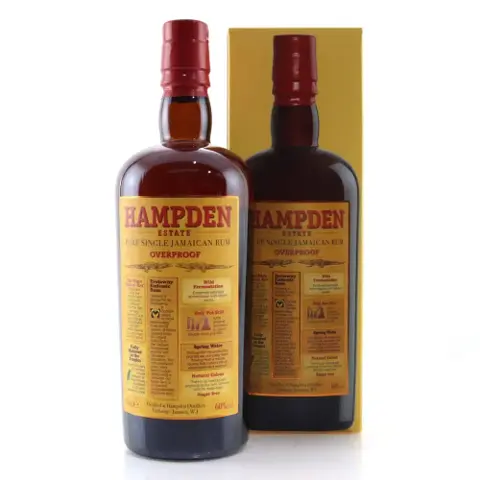
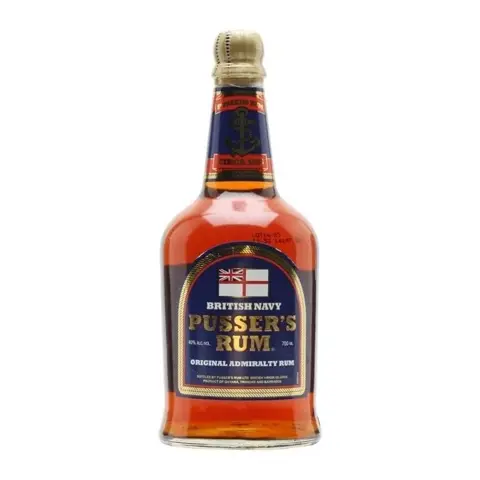
We do not know whether the versions of a pair come from the same casks. For the two pairs that are around fourteen percentage points apart, the majority give the stronger version the higher score. That version is also the more expensive one in each case, and almost all of those who have rated both are experienced members. With three pairs, this is not a rule.
Those in the RumX community who write about water with strong bottles describe it as a gain more often than as a loss. But few write about it, and some never do.
We searched the reviews of bottles at 50 % or more for water, diluting and drops, and read 200 hits by hand. 106 of them really are about diluting; the rest mean something else, such as the German phrase “guter Tropfen” (“a fine drop”, said of a good bottle).
| What the member writes | Reviews in the sample |
|---|---|
| Added water themselves and describes the rum afterwards as more open, calmer or better | 38 |
| Advises water or considers it necessary, without describing their own addition | 17 |
| Added water and describes a change, without a clear verdict | 22 |
| Needs no water, or water did not help | 13 |
| Criticises that the bottler diluted too much | 12 |
| Mentions the bottler’s dilution neutrally or positively | 4 |
As of 27 November 2026. Random sample of 200 from 2,577 reviews of bottles at 50 % or more in which one of the search words occurs, read by hand. 94 of the 200 are about something else. The sample counts texts, not members; nine of the texts in the first two rows come from one member, with the same wording.
What the members describe is similar. With a few drops, they say, the alcohol steps back, fruit comes forward and the rum seems rounder. One member writes, in essence, that they had not used water for months but did with this bottle at almost 70 %, and that the aromas were nicer to taste afterwards. Others disagree: one member finds that water does not suit their rum, another did not dare to add any at all because the rum was such a pleasure neat.
The fifth row stands out. Experienced members remark on it when, in their view, a bottler has gone down too far, and they praise bottles that were “thankfully not diluted”.
In the RumX forum, habits differ just as much. One member there reports that rum at 55 to 60 % suits them best, a second uses a pipette for the water, and a third has had only bad experiences with water and prefers to leave the rum in the glass for longer.
How to drink rum neat, at what temperature and from which glass, is explained in the guide How do you drink rum?
That many choose stronger bottles as they gain experience, and that cask strength means: no water. The statements come from eleven videos by five channels whose videos RumX matches to the bottles: the Rum-Schnacker, Rumtastisch, Rumperium, Nicolas Kröger (founder of the rum brand Wagemut) and the English-language channel The Rum Revival. The videos of the four German channels are in German. Most of the statements come from the Rum-Schnacker.
Where at least two channels say the same thing:
The statements are given in essence; the link jumps to the spot in the video.
| Topic | Expert | Statement | Video |
|---|---|---|---|
| Experience | Rum-Schnacker, 2026 | Beginners mainly look for mildness: it should not taste of alcohol and should not burn | watch |
| Experience | Rum-Schnacker, 2026 | Many beginners come from long drinks at around 10 %; the step to 40 % neat is big, which is why it burns for most of them | watch |
| Experience | Rum-Schnacker, 2026 | Advanced rum lovers look for more alcohol, 43, 46, perhaps towards 50 %; they mostly do not end up at cask strength yet | watch |
| Experience | Rum-Schnacker, 2026 | Those he calls “experts” mostly drink 46, 48, 50 % and more and look for more power | watch |
| Experience | Rum-Schnacker, 2026 | At the end of the road it is no longer about ever more: 40 % no longer does it for you, 43 % is mostly the lower limit, and there are exceptions | watch |
| Experience | Rumtastisch, 2026 | With three strengths of the same rum: choose by whether you are a beginner or like more power | watch |
| Cask strength | Rumtastisch, 2026 | 40, 44 or 74 %: the same rum, only less diluted | watch |
| Cask strength | Nicolas Kröger, 2026 | After maturation, a spirit is usually brought to drinking strength with water; he says that is entirely normal | watch |
| Cask strength | Nicolas Kröger, 2026 | With his cask strength bottling, the only difference is that no water was added | watch |
| Cask strength | Rumperium, 2026 | The version of the same rum at a good 40 % is diluted down from cask strength | watch |
| Cask strength | Rumperium, 2024 | At high strength, the same amount of rum yields fewer bottles, because less water is added | watch |
| Overproof | Rum-Schnacker, 2026 | For him, overproof means: at least 57 % | watch |
| Navy Strength | The Rum Revival, 2024 | A bottle at 57.1 % is, strictly speaking, not Navy Strength; measured against the British navy it would be 54.5 % | watch |
| Navy Strength | Rumperium, 2024 | Gives 55 % as the Navy Strength of the Danish navy and 57 % for the English | watch |
| Diluting | Rum-Schnacker, 2026 | To compare it with a bottle at 43 %, he brings the cask strength version to 43 % with water in the second round | watch |
| Proof | Rumtastisch, 2021 | Tells the gunpowder story as one of the stories that surround the name Gunpowder Proof | watch |
The one at which you taste the rum and not just the alcohol. The data give a direction; the decision is made in your glass.
The kitchen has rules of its own. Feuerzangenbowle (German flaming punch) involves an open flame; everything documented on that, including the safety notes, is in the guide What strength does the rum need for Feuerzangenbowle? And what the strength of the rum means for home-made Eierlikör (German egg liqueur) is worked out in the guide Rum at 40 or 54 %?
If you do not yet know which style suits you, the Rum Finder works it out in a few questions. You will find all types of rum, from aged rum to rhum agricole, in the overview.
How do you recognise a good rum, and what does it cost? Seven criteria to check on the label, plus RumX community scores for each price band.
Read more
Übersee-Rum and Echter Rum on German bottles are not in the EU spirit drinks regulation. Rum-Verschnitt is; Inländer Rum is a protected name from Austria.
Read more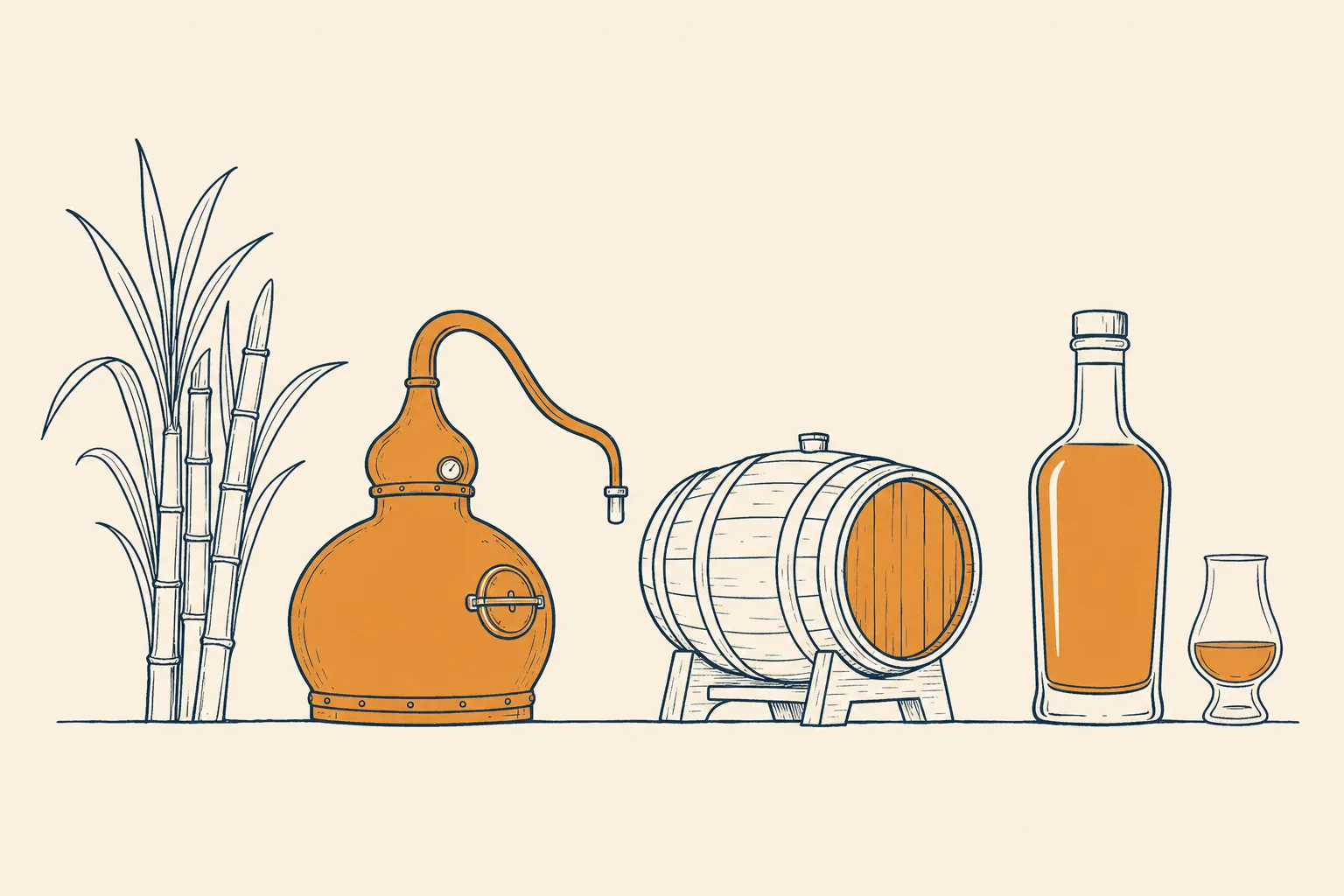
Rum is a spirit made from molasses, sugarcane syrup or sugarcane juice, bottled at 37.5% ABV or more in the EU. How it is made, and how it differs from rhum agricole, cachaça and rum-based spirit drinks.
Read more