
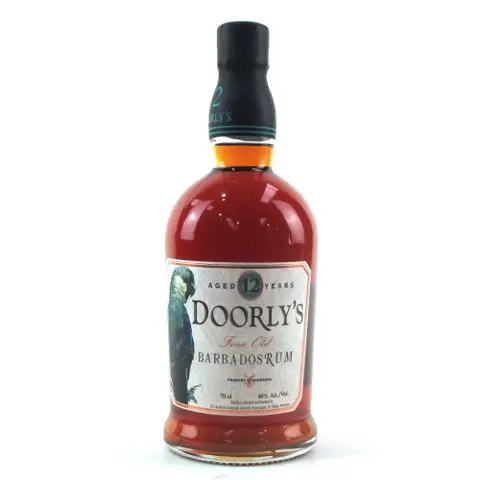
Foursquare Doorly's 12 Years
7.8/10 (343 reviews)
Vanilla · Caramel · Spicy
For every term the question of whether it is regulated and by whom, answered from the primary source and with the data of the RumX community
A rum label carries abbreviations, numbers and words from three languages. Some are fixed by law, most are not. This guide answers three questions for every term: Is it regulated, and by whom? What does it usually mean? What do the data of the RumX community show?
You can rely on only a few things: the legal name, the percentage and an age statement in years. Almost everything else is not fixed for rum in the EU and means whatever the producer means by it.
| Term | Regulated? | What it usually means |
|---|---|---|
| Age statement in years | Yes, EU regulation | Age of the youngest rum in the bottle |
| XO, VSOP, VO | Not in the EU. French product specifications, for example Martinique and Guadeloupe: at least 6, 4 and 3 years | XO stands for “Extra Old” |
| Vieux, Hors d’Âge | The same product specifications: at least 3 and 6 years | French for aged |
| Añejo | Not in the EU. Cuba uses it to classify its own rum | Spanish for aged, with no fixed number of years |
| Reserva, Premium | Not in the EU. In the French product specifications, Réserve Spéciale (4 years) and Grande Réserve (6 years) are tiers | Otherwise the name of a bottling |
| Solera | Not for rum, only for brandy | Ageing in stages; the number often names the oldest component |
| Blend | Yes, EU regulation | A mixture of several rums |
| Single cask | Not in the EU | A bottling from one single cask |
| Cask strength | Not in the EU | Bottled without dilution |
| Vintage | Not in the EU. French product specifications: at least 6 years | Year of distillation |
| Pure Single Rum | No, a private classification | Pot still rum from one single distillery |
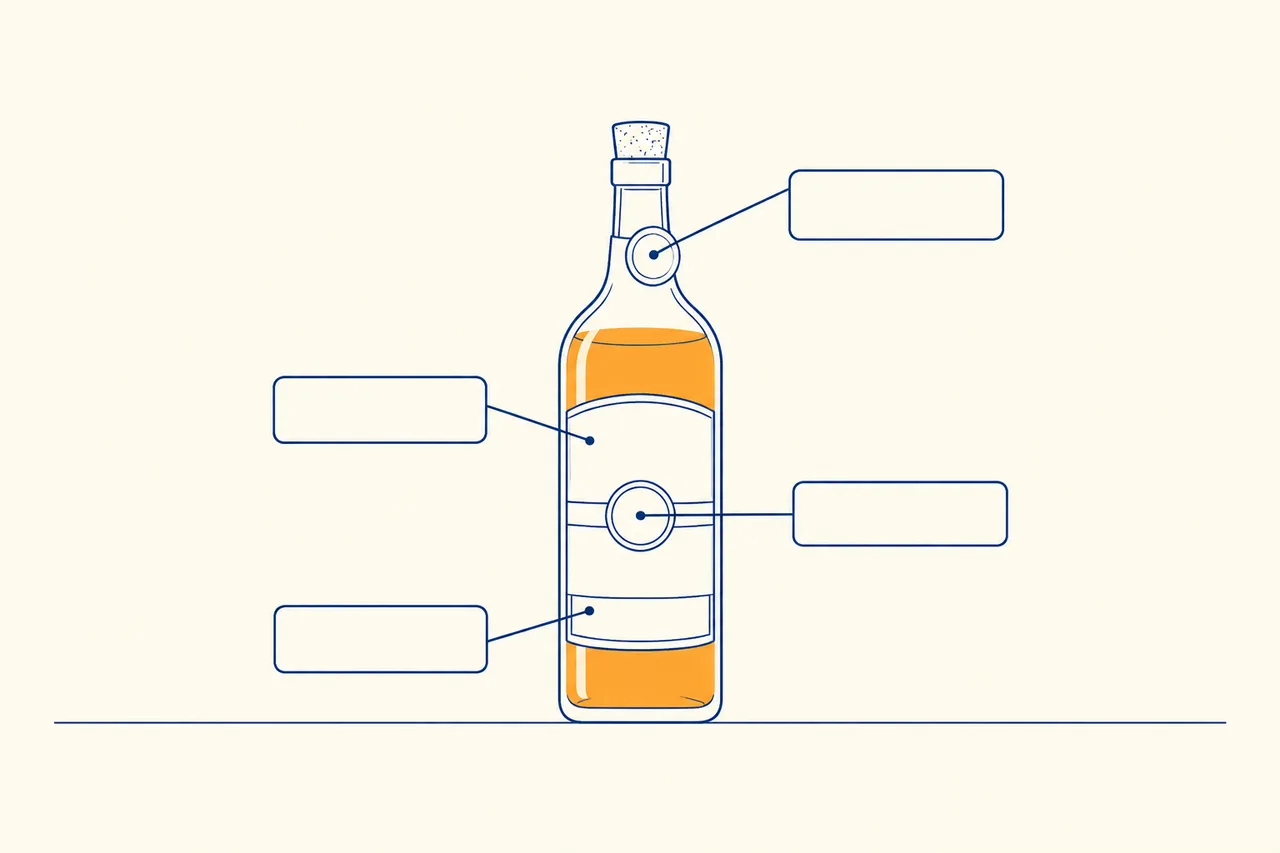
“Regulated” refers to the EU spirit drinks regulation and to the rules of origin that we have read in their official wording. A product specification (in French, cahier des charges) is the official rulebook of a geographical indication.
The most important thing remains the legal name itself, which under Article 10 of the regulation must be shown clearly and visibly on the label. If it says “rum”, the bottle has at least 37.5 % ABV. If it says “spirit drink” (on German labels “Spirituose”), the rules for rum do not apply. More on this in the guide Übersee-Rum, Inländer Rum, Rum-Verschnitt.
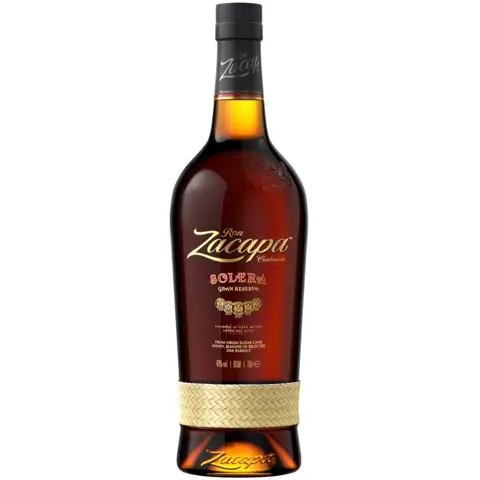
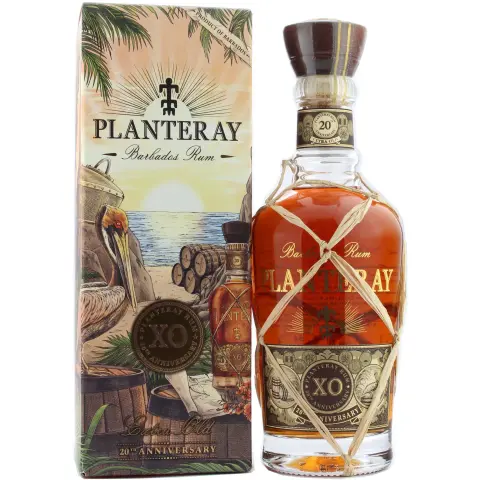
Three examples: the RumX catalogue lists the Doorly’s 12 with a fixed 12 years. It lists the Zacapa 23 with “up to 23 years”. It lists the Planteray XO with a range of 10 to 15 years.
Three ways of stating age, according to the RumX catalogue: a fixed age, an “up to” figure, the abbreviation XO. Not a ranking. Scores and prices are live.
It states the age of the youngest rum in the bottle. Article 13(6) of the EU spirit drinks regulation allows a maturation period to be specified only where it refers to the youngest alcoholic component. The ageing must also have taken place under revenue supervision or supervision providing equivalent guarantees.
So if the label says “12 years”, older rum may have been blended in, younger rum may not.
The regulation does not say what a number without the word “years” means. So with a 15 or a 23 in the name, do not rely on it meaning “15 years”. In the RumX catalogue you can tell the difference: bottles whose number means the highest age in the blend are listed with “up to” in front of the number.
More age does not mean more enjoyment: in the RumX community, at the same price the higher number does not bring a higher score.
Many bottles carry no age at all. That is not a flaw, as is also said on Rum-Schnacker TV. You will find aged bottles under aged rum.
XO stands for “Extra Old”. The abbreviation does not appear in the EU spirit drinks regulation, and neither do VSOP or VO. XO has a fixed meaning where a geographical indication defines it.
The French product specifications do that. We have read six: the AOC Rhum de la Martinique and the geographical indications Rhum de la Guadeloupe, Rhum de la Réunion, Rhum de la Guyane, Rhum des Antilles françaises and Rhum des départements français d’outre-mer. All six have the same three thresholds of 3, 4 and 6 years. The table shows Martinique. There, the age tiers from VO upwards are reserved for aged rhum agricole (“vieux”, French for old) and apply from a minimum ageing period without interruption:
| Term on the label | Minimum ageing under the AOC Martinique |
|---|---|
| Élevé sous bois (“matured in wood”) | 12 months in oak containers |
| Vieux, VO | 3 years in oak casks of less than 650 litres |
| VSOP, Très Vieux, Réserve Spéciale, Cuvée Spéciale | 4 years |
| XO, Extra Vieux, Hors d’Âge, Grande Réserve | 6 years |
Source: cahier des charges of the AOC “Rhum de la Martinique” (in French), approved on 29 December 2020, sections on ageing and on labelling.
The five others, for example the one for Rhum de la Guadeloupe of 10 September 2021, differ: “Très Vieux” is allowed there from 3 years, and they add “Very Old” (3 years), “Vieille Réserve” (4 years) and “Extra Old” (6 years).
The regulation expressly allows this: a geographical indication may be supplemented by terms that its product specification permits. For an XO from Barbados, Panama or the Dominican Republic, nothing follows from the French product specifications. We have not checked whether these countries have rules of their own. None follows from the EU regulation.
The median is 8 years, and the range runs from 1 to 40 years. In the RumX catalogue, 507 bottles carry XO or Extra Old in their name, among them 49 that RumX lists as a spirit drink on a rum base. This is how the catalogue lists their age:
| Age according to the RumX catalogue | Bottles with XO in their name |
|---|---|
| Fixed age under 6 years | 14 |
| Fixed age 6 to 9 years | 124 |
| Fixed age 10 to 14 years | 60 |
| Fixed age 15 years or more | 55 |
| “Up to” figure (maximum age) | 35 |
| Age range, for example 5 to 17 years | 22 |
| No age in the catalogue | 197 |
As of 27 November 2026. Age according to the RumX catalogue, not according to the label.
Two rules of thumb from the internet do not hold up against this. On “XO means at least ten years”: of the 253 bottles with a fixed age, only 115 reach ten years. On “XO means at least six years”: for the bottles from Martinique it is true, all 40 with a fixed age in the catalogue are six years old or more. Among the rest, 14 of 213 are below that.
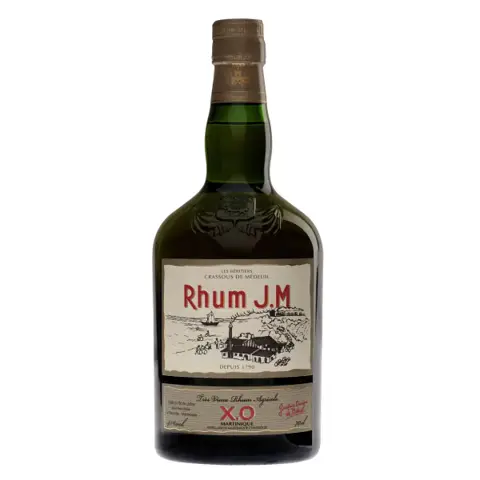
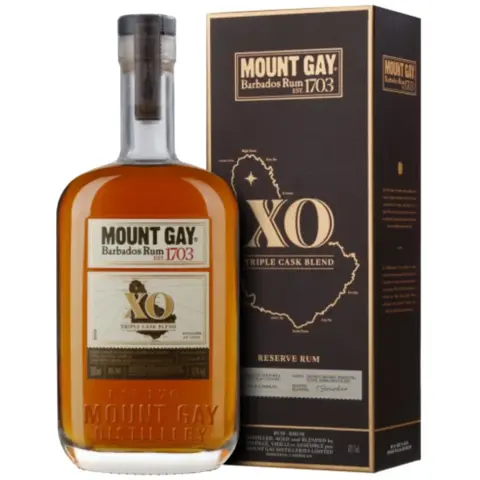
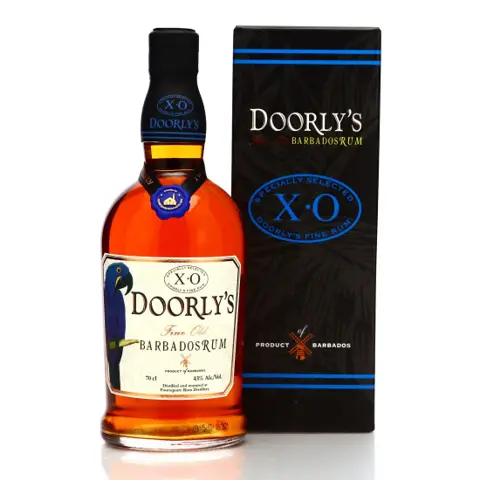
One example of the rule is the Rhum J.M XO from Martinique, which the catalogue lists at 6 years. It lists the Mount Gay XO from Barbados with a range of 5 to 17 years, and the Doorly’s XO at 7 years.
Three times XO, three different ages in the RumX catalogue. Scores and prices are live.
Yes, with one difference: VSOP is found mainly on French rum. Of 84 bottles with VSOP in their name, 61 come from Martinique, Guadeloupe and other French territories, and a further 12 from Mauritius. For the bottles from Martinique the catalogue shows a median of 4 years, which matches the tier in the product specification. More on this style under rhum agricole.
Añejo is Spanish for aged and is not regulated in the EU regulation. Reserva, Gran Reserva and Premium do not appear there either. These words alone do not tell you how long an añejo or a reserva has aged.
Cuba uses the word to classify its own rum. The regulations of the designation of origin “Cuba” of 2013 (in Spanish) name six types from Ron Añejo Blanco to Extra-Añejo, without a number of years per type. What they do lay down is that the base distillate ages for at least two years in white oak casks and that every rum passes through at least two ageing stages. The regulations do not apply to rum from other countries. More on the page rum from Cuba.
In the RumX catalogue, 438 bottles carry Añejo in their name. For 206 of them the catalogue lists a fixed age; it ranges from 1 to 30 years, and the median is 7. For 197 it lists none.
Reserva, Reserve or Réserve is in the name of 1,106 bottles, across all countries and price bands. At the same price their scores do not differ from the rest: between €50 and €100 they come to 8.0, exactly like the price band as a whole. The word does form a tier in the French product specifications: there, Réserve Spéciale means at least four years and Grande Réserve at least six. Premium is in the name of 288 bottles. RumX lists 41 of them as a spirit drink on a rum base and 31 as unaged.
Usually a rum that was aged in several stages and continuously blended along the way. For rum the word is not defined: the EU regulation regulates the solera system only for brandy.
For brandy, Annex III describes the principle. The casks form ageing scales. From the last scale, the solera, a portion is drawn off for shipping. It is replenished from the scale before it.
The regulation allows derogations from the “youngest component” rule only for brandy from this system, and only by a delegated act of the Commission. There is no such derogation for rum: anyone who states a maturation period for a solera rum is measured against the youngest component. The regulation does not say whether a number without “years” counts as a maturation period.
In the RumX catalogue, 134 bottles carry Solera in their name. For only 7 of them does the catalogue list a fixed age; 82 are in it with an “up to” figure, such as the Zacapa 23 with “up to 23 years”.
Beginners score these bottles higher than experienced members do. The figures are in the section Scores.
That does not make a solera rum bad. RumX also lists some of these bottles as sweet rum. You should just know that the big number does not promise an age.
A blend is a mixture of several rums, a single cask the bottling of one individual cask. One is defined in the EU, the other is not.
The regulation calls it “to blend”: two or more spirit drinks of the same category are combined that differ, for instance, in the stills used, the maturation period or the area of production. The result remains rum. The term “blend” or “blended” may only appear on the label if the rum has actually been blended in this way.
The word is not a verdict on quality. At the same price, bottles with Blend in their name are level with the rest of their price band in the RumX community.
It usually means a bottling from exactly one cask, without mixing with other casks. For rum the term is not regulated: neither single cask nor single barrel appears in the EU regulation. The edition is correspondingly small: in the RumX catalogue the median for single casks is around 250 bottles, and for a good half a cask number is recorded.
The RumX catalogue lists 7,601 bottles as single cask. Three in four come from independent bottlers, who buy casks from distilleries and bottle them under their own name. You will find many of them among the single cask rarities.
Is a single cask better than the standard bottling from the same distillery? At first glance, yes; at the same price, hardly at all.
As of 27 November 2026. Single cask according to the RumX catalogue, bottles with 20 or more ratings, at least five bottles per group, at least three in the price comparison.
Small batch is the little sister: several casks, a small edition. That is not regulated either, and the producer decides how small “small” is.
All three stand for a lot of alcohol, and none of them is regulated for rum in the EU. Only the lower limit of 37.5 % ABV is fixed. Cask strength, in French brut de fût and in German Fassstärke, usually means: bottled as the rum came out of the cask, without dilution with water.
The percentage next to it is the reliable figure. In the RumX community the score rises with strength, within the same price band too. Between €50 and €100, bottles with Cask Strength or a related term in their name are 0.25 points ahead of the price band. That is below our threshold, and we did not compare bottles of equal strength here. What the percentage means and from what point a rum counts as overproof is explained in the guide to the alcohol content of rum.
Usually the year in which the rum was distilled. The word vintage does not appear in the EU regulation. The French product specifications know the vintage as “millésime”: a rum that states one must have aged for at least six years.
A vintage does not replace an age statement: you only know how old the rum is when the year of bottling is given as well.
In the RumX catalogue, 11,783 bottles have a vintage, and two in three come from independent bottlers. Between €30 and €50, bottles with a vintage are at 7.9, bottles without one at 7.4. The vintage alone does not explain that: in this band the bottles with a vintage have a median of 50.5 % ABV, those without one 40 %. If you compare bottles of equal strength, a gap of 0.4 points remains only between 43 and 50 %. Between €50 and €100 the gap is 0.2 points. You can browse under rums by vintage.
Pot still and column still name the type of still; Pure Single Rum is a private classification. The EU regulation does not define any of these terms for rum.
The pot still is a batch still and usually yields heavier, more aromatic rums. The column still works continuously and as a rule yields lighter ones. Pure Single Rum comes from the classification that Luca Gargano of the bottler Velier presented in 2015. It means rum from the pot still of one single distillery. It is not a ranking, and there is no law behind it. The four tiers are explained in the section on the Gargano classification on the Velier page.
Two French words, by contrast, are regulated. “Traditionnel” and “agricole” (“agricultural” in the English version of the regulation) may supplement the legal name rum only in the case of registered geographical indications. For both: distilled at less than 90 %, not sweetened. Agricole additionally requires sugar-cane juice as the raw material and is reserved for the French overseas departments and Madeira.
On bottles from Jamaica and Guyana you will often find sequences of letters such as HLCF or PM. These are marks, a distillery’s shorthand for a particular style. What they mean is in the glossary. The codes of the distilleries in Guyana are explained in the section How do you read an Uitvlugt bottle? In the RumX forum, members collect the abbreviations in the thread The great rum glossary (in German).
Two examples: the Hampden 8 carries Pure Single in its name and is in the catalogue with pot still and 8 years. The catalogue lists the Bielle Brut de Fût 2014 as a single cask with vintage 2014, 7 years and 56.9 % ABV.
Two bottles with many verifiable details according to the RumX catalogue. Scores and prices are live.
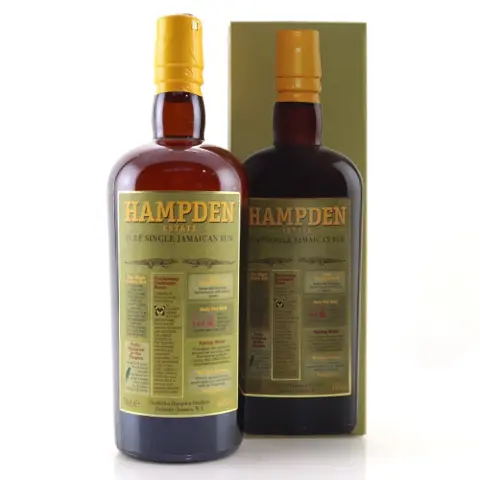
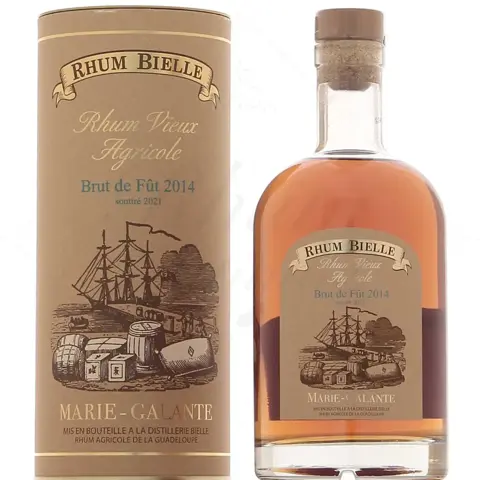
At the same price, none of the terms in this table lifts the score. For XO and solera, beginners and experienced members are further apart than elsewhere, but that hinges on two heavily rated bottles.
| Term in the name | Bottles | Score of the bottles | Beginners | Experienced members |
|---|---|---|---|---|
| XO, Extra Old | 33 | 7.5 | 8.0 | 7.3 |
| Solera | 14 | 7.3 | 7.8 | 7.1 |
| Reserva, Reserve | 47 | 7.3 | 7.6 | 7.2 |
| Añejo | 14 | 7.2 | 7.5 | 7.1 |
| VSOP | 13 | 7.5 | 7.6 | 7.5 |
| All bottles in the price band | 398 | 7.5 | 7.8 | 7.4 |
As of 27 November 2026. Purchase price €30 to €50 per 0.7 litres. Score of the bottles = median of the bottle scores. Beginners and experienced members = median of all ratings by the group, at least 120 ratings per cell. Term in the name according to the RumX catalogue.
How to read the table:
Between €50 and €100 the gap for XO shrinks to 0.2 points. For solera there are only seven bottles in that band, and without the most-rated one 0.5 points remain.
The same as the legal texts: the age statement counts, XO and solera are not age statements. The statements come from ten videos by four German channels: the Rum-Schnacker, Rumtastisch, Rumperium and Nicolas Kröger (founder of the rum brand Wagemut). Added to these is one video from our own channel. The videos of the German channels are in German. Most of the statements come from Rum-Schnacker TV, some of them made there in conversation with guests.
Where at least two channels say the same thing:
The statements are paraphrased, and each link jumps to the relevant moment in the video.
| Term | Expert | Statement | Video |
|---|---|---|---|
| Age statement | Rum-Schnacker TV, 2026 | The number has to correspond to the youngest drop, everything else is at least that old | watch |
| Age statement | Nicolas Kröger, 2026 | If a bottle in the EU says 12 years, the youngest drop has to be 12 years old | watch |
| Age statement | Rumtastisch, 2026 | With a blend, the youngest age has to be on the bottle | watch |
| Age statement | RumX (own channel), 2026 | With an age statement, what counts in the EU is the youngest rum in the bottle | watch |
| No age statement | Rum-Schnacker TV, 2026 | Small numbers put people off, which is why hardly anyone prints a young age | watch |
| No age statement | Rum-Schnacker TV, 2026 | A rum without a vintage and an age statement is not automatically bad | watch |
| Abbreviations and numbers | Rum-Schnacker TV, 2026 | Abbreviations such as XO or a number next to Solera raise an expectation about age | watch |
| XO | Rumtastisch, 2026 | There is no fixed rule for XO in the rum world; mostly it is around ten years, he says, sometimes six | watch |
| XO | Rum-Schnacker TV, 2026 | Outside rhum agricole, XO does not mean anything fixed on rum | watch |
| XO | Rumperium, 2026 | XO mostly stands for Extra Old, so somewhat older than normal; he relies on at least six years | watch |
| Solera | Rumtastisch, 2025 | On solera bottles, the theoretically oldest drop has so far provided the number | watch |
| Solera | Rumperium, 2022 | Reads the number on a solera bottle as a maximum age; he says he does not know the composition | watch |
| Solera | Rumperium, 2026 | There is no need to grumble about solera, he says; it is an ageing method | watch |
| Blend | Rum-Schnacker TV, 2026 | A blend makes you less dependent on the individual cask; the aim is a consistent style | watch |
| Single cask | Nicolas Kröger, 2022 | Independent bottlers often bottle casks individually, just as the cask is | watch |
| Single cask | Rum-Schnacker TV, 2026 | A single cask is considerably more expensive than a blend of several casks | watch |
| Single cask | Rum-Schnacker, 2026 | Suspects that long-standing rum lovers now give their highest scores only to single casks; he himself scores differently | watch |
So read the legal name, the percentage and the age in years first.
How do you recognise a good rum, and what does it cost? Seven criteria to check on the label, plus RumX community scores for each price band.
Read more
Übersee-Rum and Echter Rum on German bottles are not in the EU spirit drinks regulation. Rum-Verschnitt is; Inländer Rum is a protected name from Austria.
Read more
From ABV to White Rum — learn the essential rum terminology. A complete glossary of rum production, styles, and tasting terms.
Read more